
Last updated October 16, 2026
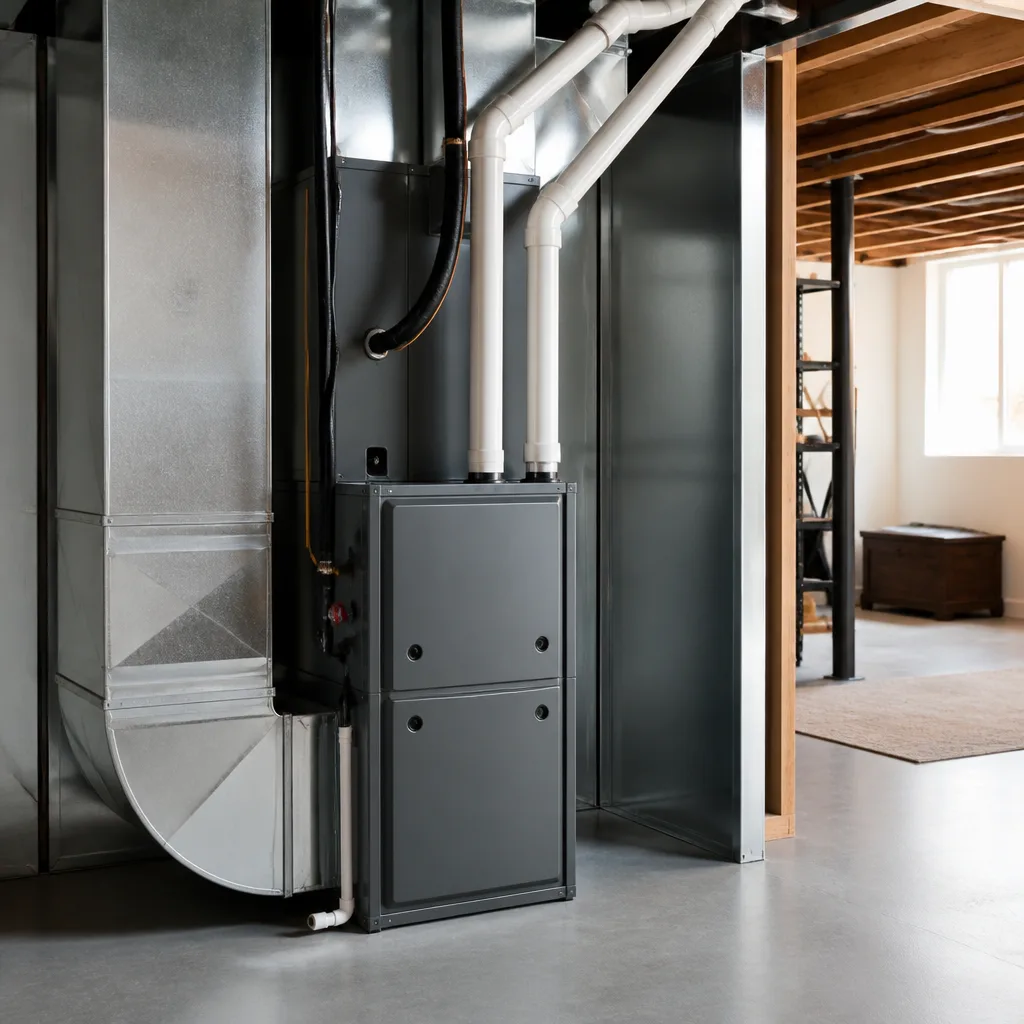 Furnace & heating
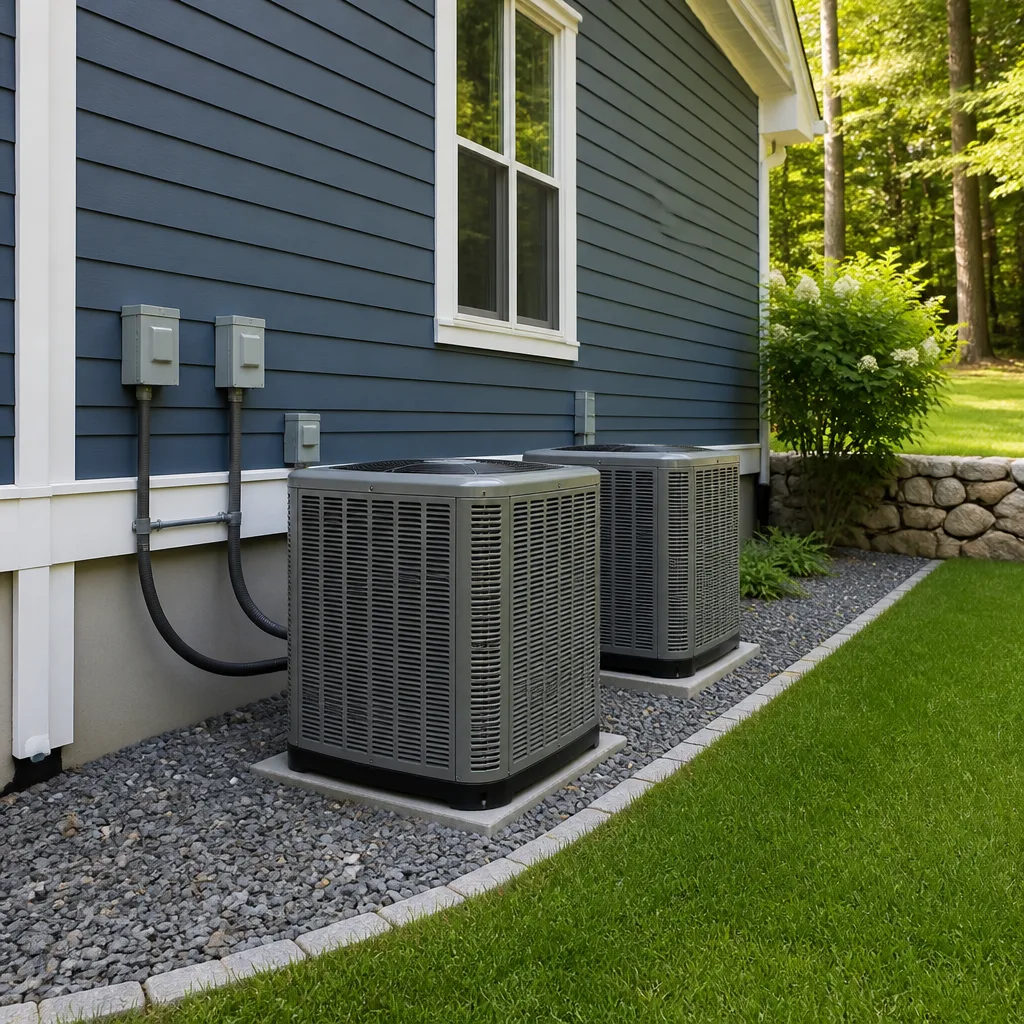 Heat pumps
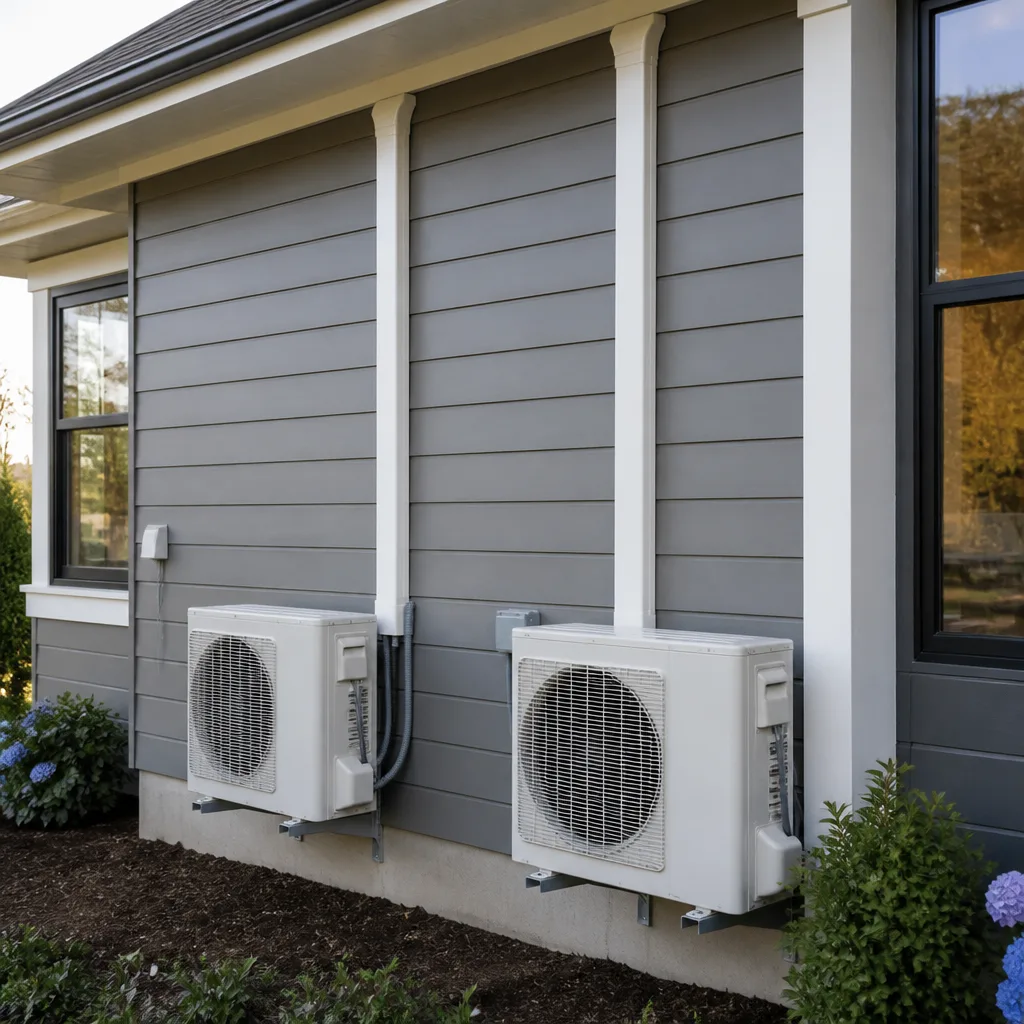 Ductless mini splits
 Carrier
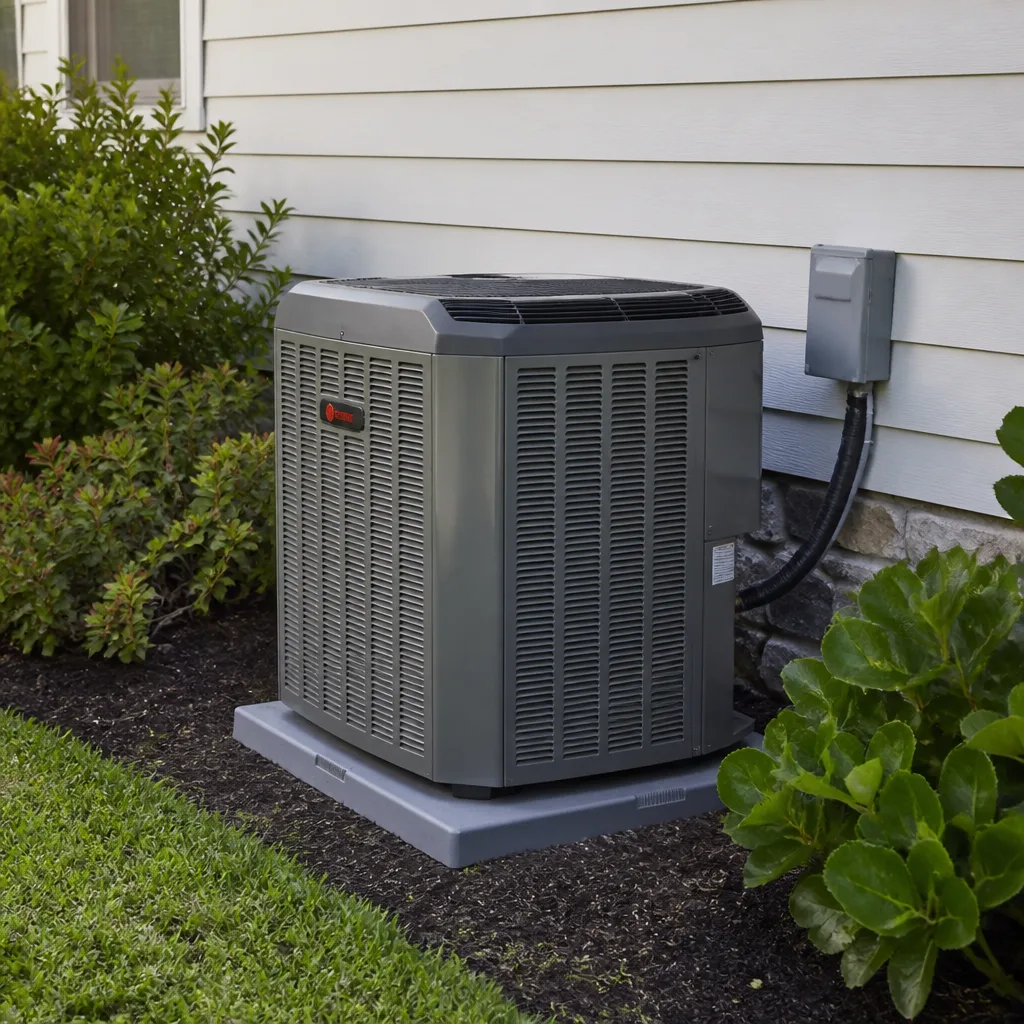 Trane
Trane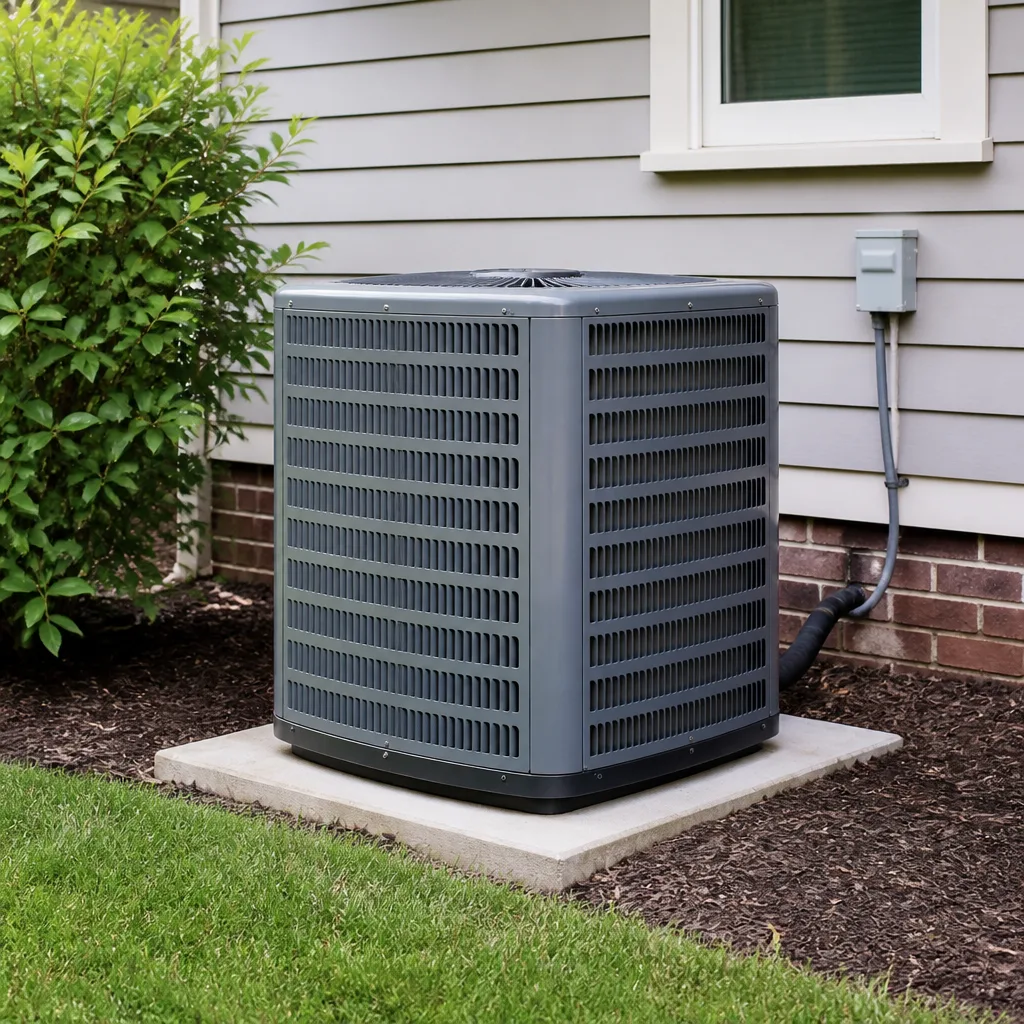 Goodman
Seasonal tune-up and full diagnostic on your Carrier, Trane, or Goodman system - readings shown to you before any repair is proposed
Diagnosis first, numbers second - you approve the repair price before a single part goes in.
Get your free estimateHVAC Cost Breakdown: The Queens Homeowner’s Reference for 2026
A ductless mini-split that costs $3,800 installed in a Long Island suburb routinely costs $5,200 or more in a Queens rowhouse. The difference isn’t contractor markup. It’s hoisting equipment through narrow side yards, navigating attached-home access constraints, and filing NYC paperwork that suburban quotes simply don’t include. This guide pulls those hidden costs into the open. You’ll learn exactly what drives HVAC pricing in Queens in 2026, how to read a quote for missing line items, and what a legitimate price guarantee actually protects. For more guides & resources, see our blog. No vague ranges. No “starting at” bait. Just the real numbers, the way a Queens job actually lands.
Quick Answer
In 2026, Queens homeowners should budget $4,800 – $8,500 for a central AC installation, $4,200 – $7,200 for a single-zone mini-split, $3,500 – $6,800 for a furnace replacement, $450 – $1,200 for boiler service, and $180 – $650 for a typical emergency HVAC repair. These figures include the Queens-specific costs most national guides ignore: NYC permit filing, equipment access and hoisting, and disposal of old units in attached homes. Get a written, line-item quote before any work starts, and never accept a verbal number as final.
Styles & brands we work with
Table of Contents
- Central AC Installation Cost in Queens
- Mini-Split Installation Cost in Queens
- Furnace Replacement Cost in Queens
- Boiler Service and Maintenance Cost
- Emergency HVAC Repair Cost
- The Hidden Costs Every Queens Quote Should Include
- How to Read an HVAC Quote: Spotting Missing Line Items
- What a Written Price Guarantee Should Actually Say
- Financing and Payment Red Flags in New York
Central AC Installation Cost in Queens
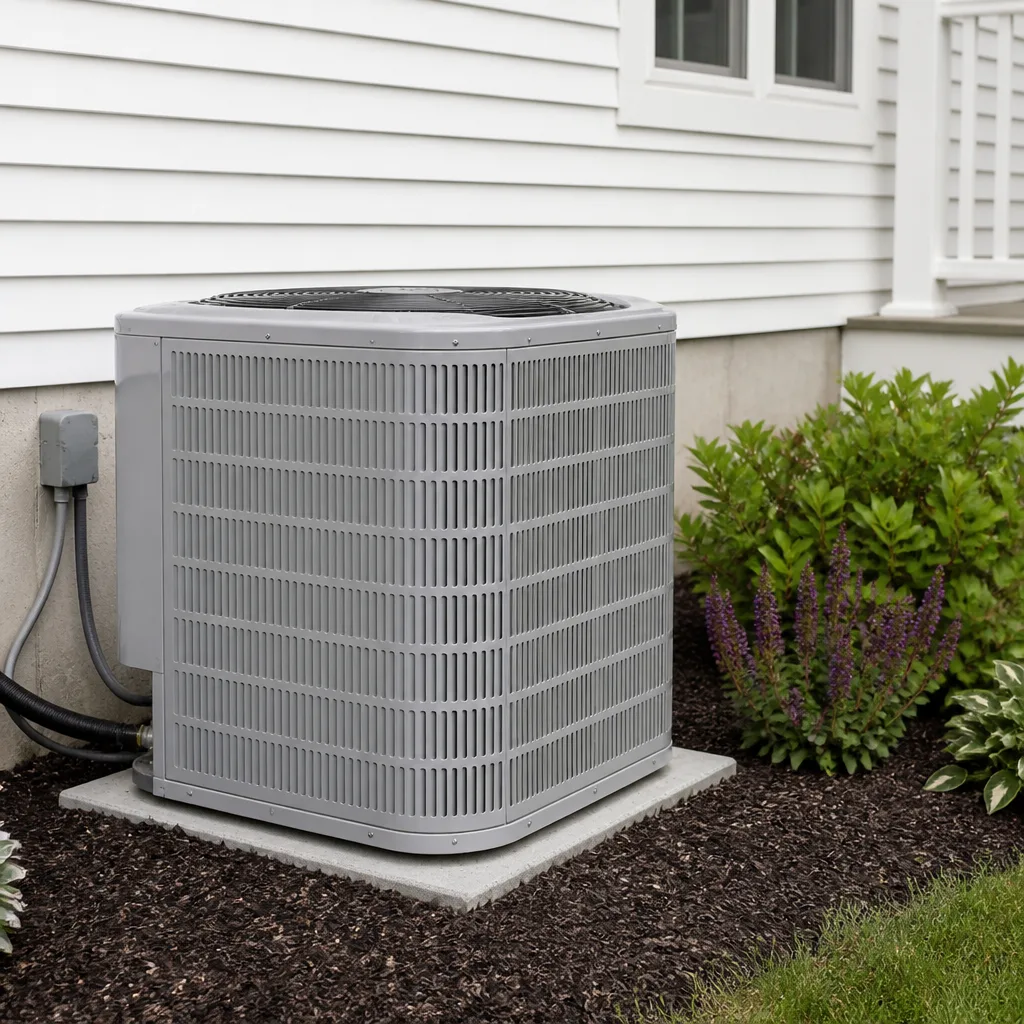
Central air conditioning installation in Queens runs $4,800 to $8,500 in 2026, with most attached-home jobs landing between $5,500 and $7,200. That’s a wider range than you’ll see in national guides because Queens housing stock varies enormously. A 1950s brick rowhouse in Ridgewood with radiators and no existing ductwork is a fundamentally different job than a 2000s condo in Long Island City with central air rough-ins already in place.
Here’s what actually drives the price on a Queens central AC install:
- Condenser placement and access. In attached homes, the outdoor unit often has to go in a rear yard accessible only through a narrow side passage. If crews can’t wheel equipment through, labor hours climb.
- Ductwork condition. Many Queens homes built before 1980 have no central ductwork, or ducts that were sized for heat only. Replacing or adding ducts adds $1,800 – $4,000.
- Electrical panel capacity. Older Queens homes frequently have 100-amp panels. A central AC system that needs a panel upgrade adds $1,200 – $2,800.
- Refrigerant type. R-410A systems are being phased out under EPA rules. New A2L systems meeting 2026 standards cost 8 – 15% more than legacy R-410A units but are the only compliant option for new installs.
Brandt HVAC Co Queens starts every central AC estimate with a walkthrough of access points, panel condition, and duct routing. We write the full price before any work begins, including permit filing, refrigerant, and disposal. No surprises on invoice day. If you’re comparing quotes, AC repair in Queens pricing can tell you what your existing system might cost to keep alive versus replacing it outright.
Line-Item Breakdown: Typical Queens Central AC Install (3-Ton System)
- Condenser and air handler (Bryant or Carrier 3-ton, 16 SEER): $3,200 – $4,600
- Ductwork modification or replacement: $1,200 – $3,800 (if needed)
- Electrical work, including disconnect and whip: $350 – $800
- NYC permit filing and inspection coordination: $250 – $450
- Old unit removal and disposal: $200 – $450
- Hoisting/access labor (attached homes, roof or yard rigging): $300 – $900
- Startup, testing, and refrigerant charge verification: Included in labor
- Total range: $4,800 – $8,500
One thing we see in Queens regularly: a quote that looks low because it omits hoisting and permit filing. Those two items alone can add $550 – $1,350. Ask every contractor to show those as explicit line items before you compare numbers.
Mini-Split Installation Cost in Queens
A single-zone ductless mini-split installation in Queens averages $4,200 to $7,200 in 2026. Multi-zone systems serving two to four rooms run $8,500 to $16,000 depending on the number of indoor heads and the complexity of line-set routing. Queens-specific costs apply here more than anywhere: in attached homes, line sets frequently run through exterior penetrations that require careful sealing against the elements and against pests, a detail suburban installations in freestanding homes rarely have to address with the same care.
Mini-splits are increasingly common in Queens for two practical reasons. First, homes with radiators or baseboard heat have no ductwork, and adding it means opening walls and ceilings across multiple floors. Second, many co-op boards and condo associations approve ductless systems where central ductwork would require invasive structural changes.
The brand you choose matters less than the install quality. We service all major residential brands at Brandt HVAC Co Queens home including American Standard, Trane, Bryant, and Carrier. A well-installed value-brand system will outperform a poorly installed premium one every time.
Step-by-Step: What a Queens Mini-Split Quote Should Include
- Indoor unit(s) with specified BTU capacity. A proper load calculation, not a rule-of-thumb guess, determines sizing.
- Outdoor condenser placement. In Queens, this often means a rear wall mount or roof mount with vibration isolation so neighbors aren’t disturbed.
- Line-set routing. The copper lines connecting indoor and outdoor units. Specify length, wall penetrations, and whether concealment (line hide or channel) is included.
- Condensate drainage plan. Where does the water go? A gravity drain to daylight is standard; a condensate pump adds $150 – $350.
- Electrical circuit. Each condenser needs a dedicated circuit. Panel capacity must be verified.
- Permit and inspection. NYC requires a permit for mini-split installation. Filing fees and inspection scheduling should appear as a line item.
- Disposal. If replacing an old window unit or failed system, removal and proper refrigerant recovery must be listed.
We’ve seen flats in Astoria and Sunnyside where a “cheap” mini-split quote left out the condensate pump, the line-set concealment, and the permit. The final invoice was $1,100 higher than the quote. A written price prevents exactly that.
Furnace Replacement Cost in Queens
Furnace replacement in Queens costs $3,500 to $6,800 for a standard 80% AFUE gas furnace in 2026, with high-efficiency 96% AFUE condensing units running $5,500 to $8,500 installed. The spread reflects venting requirements. High-efficiency furnaces need PVC venting to an exterior wall, which is straightforward in a freestanding home but often requires creative routing in a Queens rowhouse with shared party walls.
Queens homes split roughly into two furnace camps. Pre-war and mid-century homes in neighborhoods like Woodhaven, Jackson Heights, and Flushing often have steam or hot-water boilers, not furnaces. Post-1960 construction and converted properties more commonly have forced-air furnaces. If you’re not sure which you have, check whether heat comes from radiators or from vents. That single distinction determines which equipment category applies.
When we replace a furnace in Queens, three local factors consistently affect the quote:
- Chimney liner condition. 80% furnaces vent through existing chimneys. A deteriorated terra-cotta liner needs a stainless steel reline, adding $800 – $2,200.
- Gas line capacity. Older Queens homes sometimes have undersized gas piping. Upgrading the meter or line adds $500 – $1,500.
- Access to the mechanical room. Basement stairs that turn sharply, or mechanical closets on upper floors, can add 2 – 4 labor hours.
If you’re comparing repair versus replace on an aging furnace, start with furnace repair in Queens pricing context. A $900 repair on a 22-year-old furnace with a cracked heat exchanger is usually money better spent toward replacement.
Boiler Service and Maintenance Cost
Boiler service in Queens ranges from $180 to $350 for an annual tune-up and inspection, up to $450 – $1,200 for repairs like circulator pump replacement, expansion tank replacement, or zone valve repair. A full boiler replacement, when the old unit is beyond economical repair, runs $6,500 to $12,000 depending on size and venting configuration.
Boilers are still the dominant heating system in much of Queens. The dense pre-war housing stock in neighborhoods like Forest Hills, Kew Gardens, and Sunnyside built around steam and hot-water heat means boiler work is a core service here in a way it isn’t in newer markets. Annual service is not optional for these systems. A neglected steam boiler develops sludge, surging, and uneven heat, and the failures tend to arrive on the coldest nights of the year. Our Seasonal HVAC Care for Queens: Year-Round Homeowner’s Guide shows how to stay ahead of these problems.
A proper Queens boiler service visit should include:
- Visual inspection of the heat exchanger for cracks, corrosion, or soot buildup.
- Burner cleaning and adjustment to verify proper combustion and efficiency.
- Safety control testing including low-water cutoff, pressure relief valve, and rollout switch.
- Flue and vent inspection for blockages or deterioration.
- Expansion tank check for waterlogged or failed condition on hot-water systems.
- Water quality assessment for pH, sludge, and sediment in steam systems.
- Written report of what was found, what was done, and what may need attention within the next 12 months.
Our technicians are not paid on what they sell. The report you get is what they found, not a sales script. If something needs repair, you’ll get a written price and can decide on your own timeline. To keep your cooling side in shape, pair this with AC maintenance in Queens on a seasonal schedule.
Emergency HVAC Repair Cost in Queens
Emergency HVAC repair in Queens runs $180 to $650 for most jobs in 2026, with the most common calls falling into a $250 – $450 band. The Queens-specific factor here is call density. On the hottest days of July and the coldest nights of January, every HVAC company in the borough is running at capacity. Watch for HVAC Warning Signs: A Queens Homeowner’s Reference Guide to catch issues before they become emergencies. Response time, not hourly rate, becomes the real cost variable.
Here’s what we see most often on Queens emergency calls, with typical price ranges:
- Capacitor replacement: $180 – $320. The capacitor gives the compressor and fan motor their starting jolt. It fails suddenly, and it’s the single most common AC emergency.
- Igniter replacement (furnace): $200 – $380. Hot surface igniters are consumable parts. When they crack, the furnace won’t fire.
- Condensate drain blockage: $150 – $300. Algae and sludge block the drain line, tripping the float switch and shutting down the system.
- Refrigerant leak repair and recharge: $400 – $900. A recharge, which means refilling the fluid that moves heat out of your home, should never be done without finding and fixing the leak first.
- Blower motor replacement: $450 – $850. When the motor fails, the system runs but no air moves.
- Thermostat replacement: $180 – $450 depending on whether it’s a basic digital unit or a smart thermostat requiring wiring changes.
Word to the wise on emergency calls in Queens: the difference between a $250 fix and a $1,200 “emergency replacement” sometimes comes down to which company you called. We give a written price before any work begins, even at 2 a.m. If you don’t like the number, you owe nothing for the visit. A live person answers our phone 24 hours a day, 7 days a week, nights, weekends, and holidays. Call (845) 328-4955 anytime and you’ll get a real conversation, not a voicemail.
The Hidden Costs Every Queens Quote Should Include
Here’s the section most cost guides skip entirely. Queens HVAC work carries costs that suburban pricing doesn’t account for, and if your quote omits them, they’ll arrive on the invoice later. Knowing these before you call puts you ahead of 90% of homeowners.
NYC Permit Filing and Inspection
New York City requires permits for most HVAC installations and replacements, including central AC, mini-splits, and furnaces. See our detailed guide to HVAC Permits, Codes & Inspections in NY: What You Need to Know. Permit filing fees and inspection coordination typically run $250 – $450 per job. We file the paperwork and coordinate the inspection. If a contractor tells you a permit isn’t needed, walk away. Unpermitted work creates problems at resale and can void your homeowners insurance in the event of a related claim.
Equipment Hoisting and Access Labor
Queens attached homes frequently require equipment to be lifted to rooftops, carried through narrow side yards, or routed through basements with tight stairwells. Hoisting a 250-pound condenser to a roof involves a lift or a crew of four with straps and rigging. That’s $300 – $900 in labor that a driveway install in Nassau County never incurs. Expect this line item and ask about it if it’s missing.
Asbestos Testing in Pre-1980 Homes
If your Queens home was built before 1980 and the job requires cutting into walls, ceilings, or duct insulation, NYC regulations may require asbestos testing before work begins. Testing runs $250 – $600. If asbestos is found, abatement by a licensed contractor adds significantly more. A legitimate Queens HVAC contractor will flag this early, not after demolition starts.
Old Unit Disposal and Refrigerant Recovery
You can’t leave an old AC unit at the curb in Queens. EPA regulations require proper refrigerant recovery, and the city requires proper disposal. This is a $200 – $450 line item on most replacement jobs. Quotes that omit it either plan to skip legally required recovery or plan to surprise you later.
Electrical Panel Upgrades
Older Queens homes with 100-amp panels often can’t support a new central AC or multi-zone mini-split without a panel upgrade. That’s $1,200 – $2,800 and it’s not optional work. A careful contractor will check your panel before quoting, not after the new unit is sitting in your yard.
How to Read an HVAC Quote: Spotting Missing Line Items
A quote is a contract in waiting. Reading it carefully before you sign is the single highest-leverage thing you can do to avoid a bad outcome. Here’s the framework we recommend to every Queens homeowner comparing bids.
Step-by-Step: The 7 Line Items a Complete Queens HVAC Quote Must Contain
- Equipment with exact model numbers. Not “3-ton AC unit.” You want “Bryant 126CNA036000” or equivalent. Without model numbers, the contractor can install anything and claim it matches the quote.
- Labor hours and rate. Some contractors bill flat-rate, which is fine, but the total should be explicit. If labor is lumped into one number with no explanation, ask for the breakdown.
- Permit and inspection fees. If missing, verify whether the contractor plans to pull permits at all. This is the most commonly omitted line item in Queens.
- Hoisting or access labor. Specifically ask: “Is there a separate charge for getting the equipment to the installation site?” If the answer is no and the quote seems low, get that in writing.
- Electrical work scope. Who does the electrical? Is a licensed electrician included, or is it subcontracted? What’s the amp draw and does your panel support it?
- Disposal and refrigerant recovery. Explicit line item, not “included in labor.”
- Warranty terms in writing. Not just equipment warranty, but workmanship warranty. How long is the labor guaranteed, and what exactly happens if it fails?
A missing line item is not necessarily a red flag in itself, but it’s a question you should ask before signing. If the contractor can’t explain where the cost sits in the quote, that’s a sign the final number might move.
What a Written Price Guarantee Should Actually Say
Every HVAC company says they stand behind their work. Few put it in writing with enough specificity to matter. Here’s what a real, enforceable price and workmanship guarantee covers, and what verbal promises don’t protect you from.
A legitimate written guarantee should include:
- A specific dollar figure for the total job. Not a range, not an estimate, not a “subject to change” clause. A fixed number.
- A statement that no additional charges apply unless a written change order is signed by you first. This is the difference between a quote and an opening offer.
- A defined workmanship warranty period with a specific duration stated in days or years, not “we’ll take care of you.”
- What happens if the repair fails. Specific language: “If this repair fails within 365 days, we will return and perform the repair again at no charge, including parts and labor.” That sentence, in writing, is a guarantee. Everything else is marketing.
- Who pays for parts versus labor if a component fails under warranty but the labor to replace it is outside the warranty window.
At Brandt HVAC Co Queens, every repair includes a written guarantee, and if a repair fails within the guarantee period, a return visit is provided free of charge under our 365-Day Done Right Promise. That’s the standard. If a contractor won’t put the guarantee in writing, assume it doesn’t exist.
Financing and Payment Red Flags in New York
New York State law governs contractor deposits, and Queens homeowners should know where the legal lines are. Under New York General Business Law, a home improvement contractor may not demand more than one-third of the total contract price as a down payment. That’s a hard ceiling, not a suggestion. If a contractor asks for 50% or more before any work begins, that is outside New York State contractor law norms, and it’s a strong signal to get another quote.
Other payment red flags we’d flag for any Queens homeowner:
- Cash-only pricing. A contractor who only wants cash is often avoiding the paper trail that protects you. Legitimate companies accept multiple payment forms.
- Pressure to sign same-day for a “discount” that disappears if you take 24 hours to think. Real pricing doesn’t expire overnight.
- No written contract at all. In New York, home improvement contracts over $500 must be in writing. A verbal agreement over that amount is unenforceable and tells you everything you need to know.
- Financing with unexplained rates or terms. If the interest rate isn’t disclosed in writing before you sign, the financing is likely predatory.
- A contractor who won’t show proof of insurance. If a worker gets hurt on your property and the contractor isn’t insured, the claim can land on your homeowners policy. Ask for proof of liability insurance and workers’ comp before work starts.
Every job at Brandt HVAC Co Queens begins with a written price. No work starts before you see and agree to the cost in writing. That’s not a sales tactic. It’s how we protect ourselves and you from the exact situations described above.
Common Mistakes to Avoid
- Comparing quotes without matching line items. A $6,800 quote with permits, hoisting, and disposal included is cheaper than a $5,900 quote missing all three. Normalize the quotes before comparing.
- Delaying maintenance until the system fails. Queens summers and winters are hard on HVAC equipment. A $200 maintenance visit prevents a $600 emergency repair more often than not.
- Replacing a system without checking the existing ductwork. New equipment on leaky, undersized ducts delivers mediocre performance at a premium price. Have the ducts inspected as part of any replacement quote.
- Accepting a verbal promise as a guarantee. If the guarantee isn’t in writing with specific terms and a specific duration, it’s not a guarantee. It’s a conversation.
- Ignoring the permit question. Unpermitted HVAC work in Queens can complicate resale, trigger fines, and void insurance claims. Always ask about permits, and verify the permit is actually pulled.
- Choosing the cheapest quote by default. The cheapest quote in Queens usually means something was omitted. Find out what before you celebrate.
See the difference
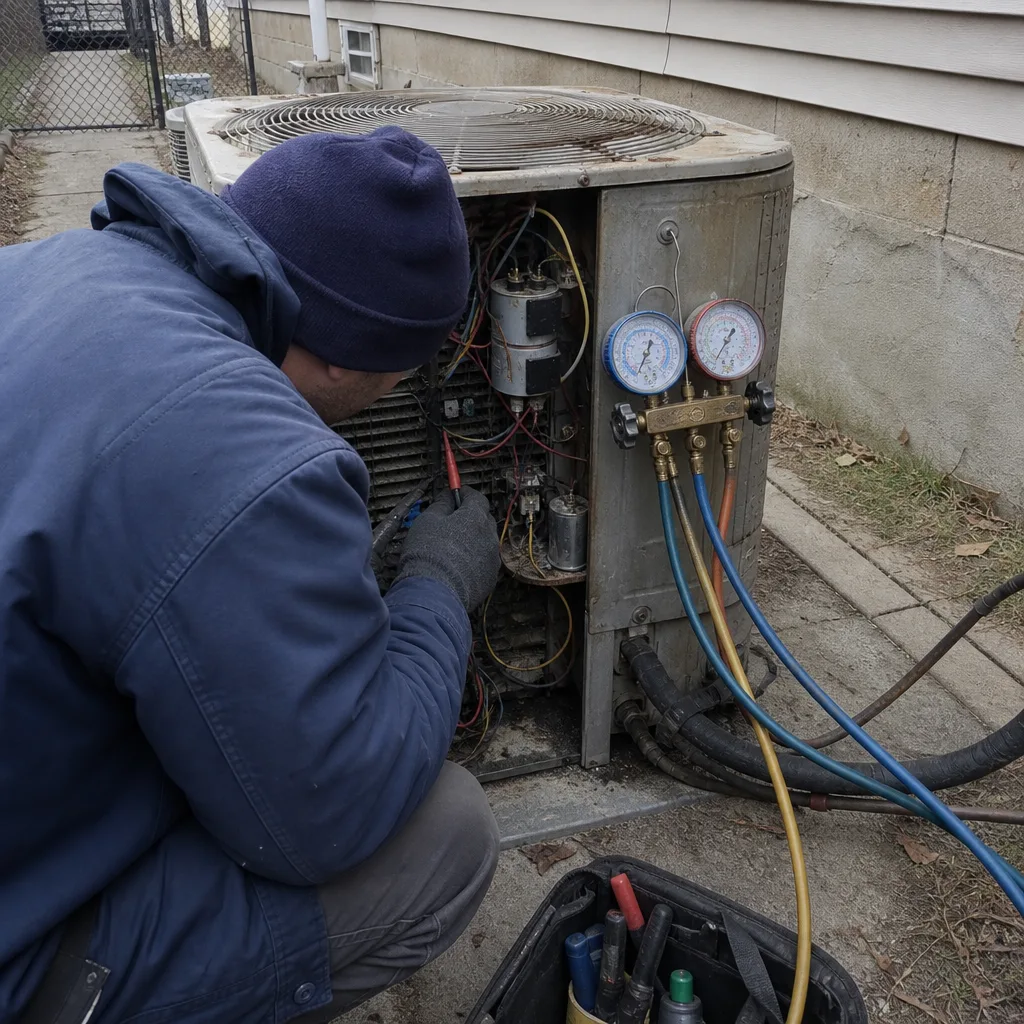 Before
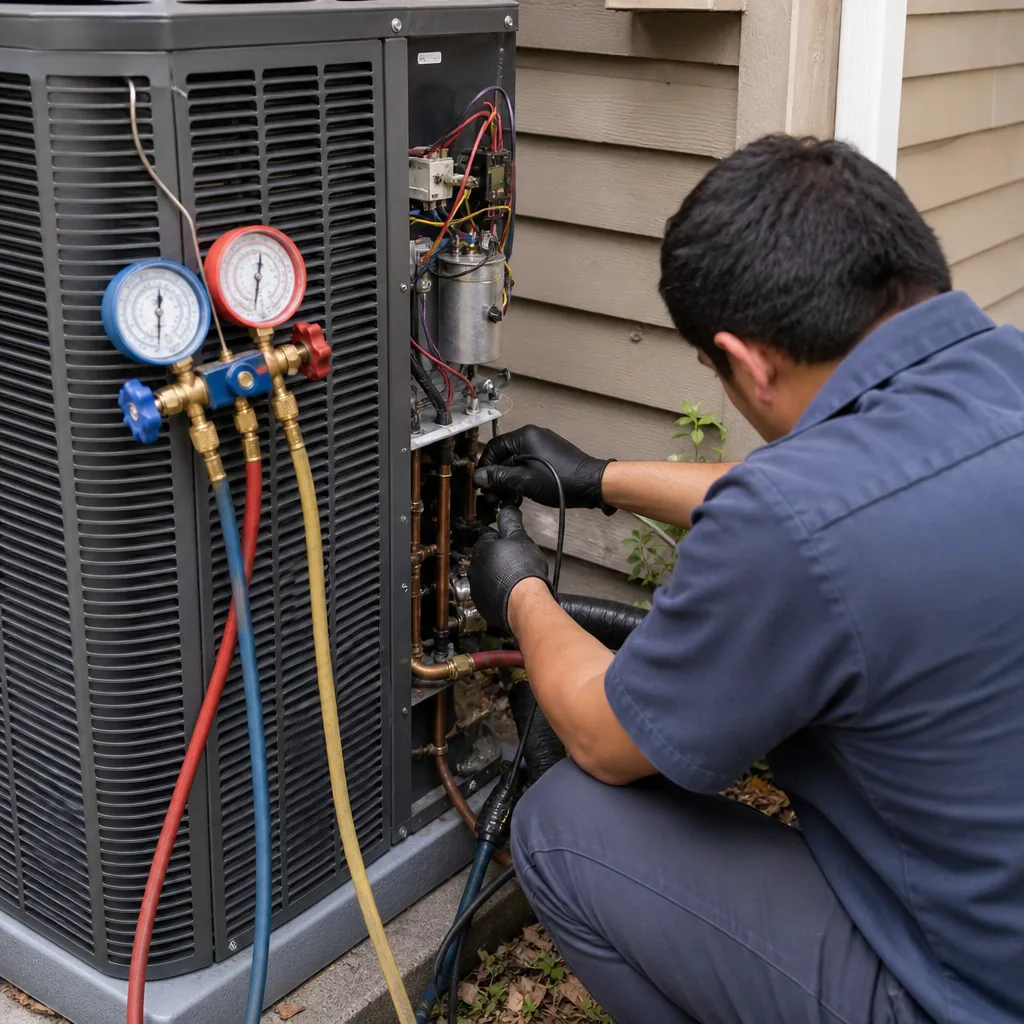 After
After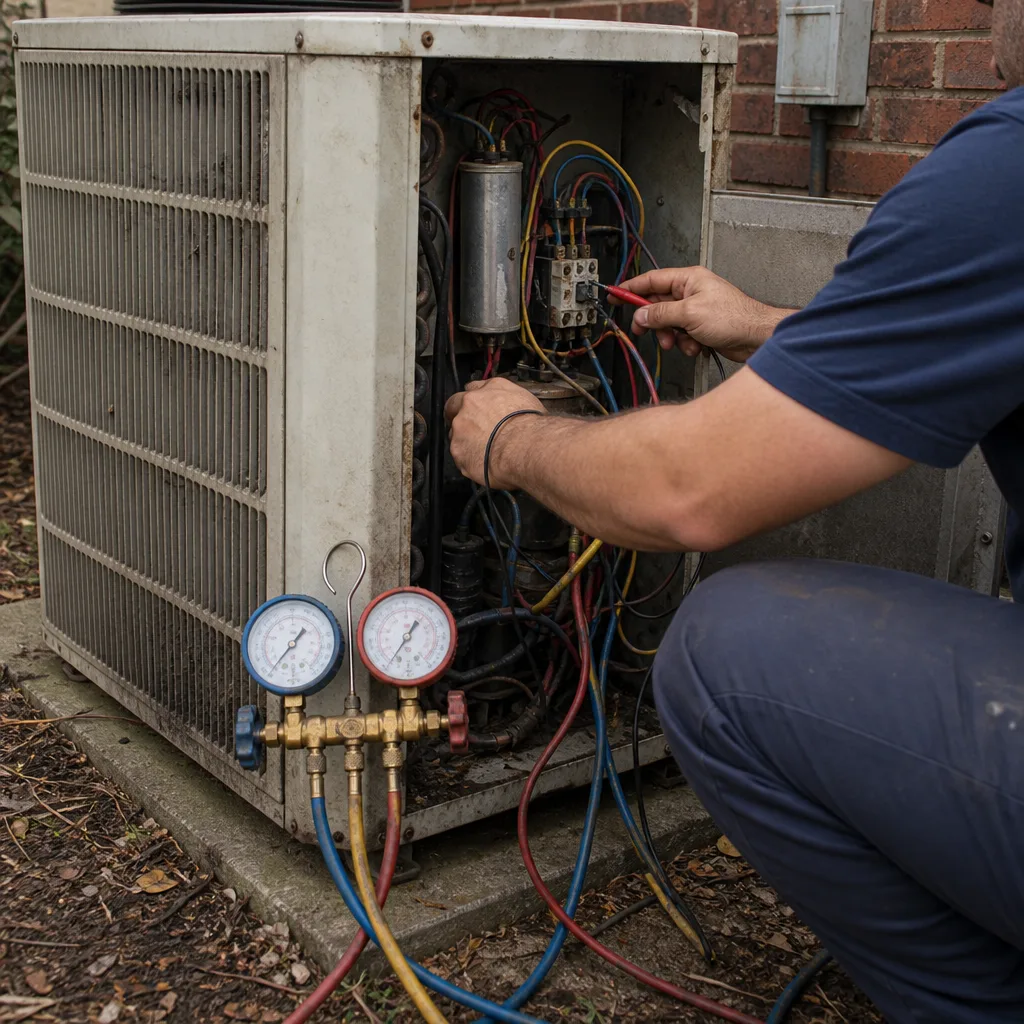 Before
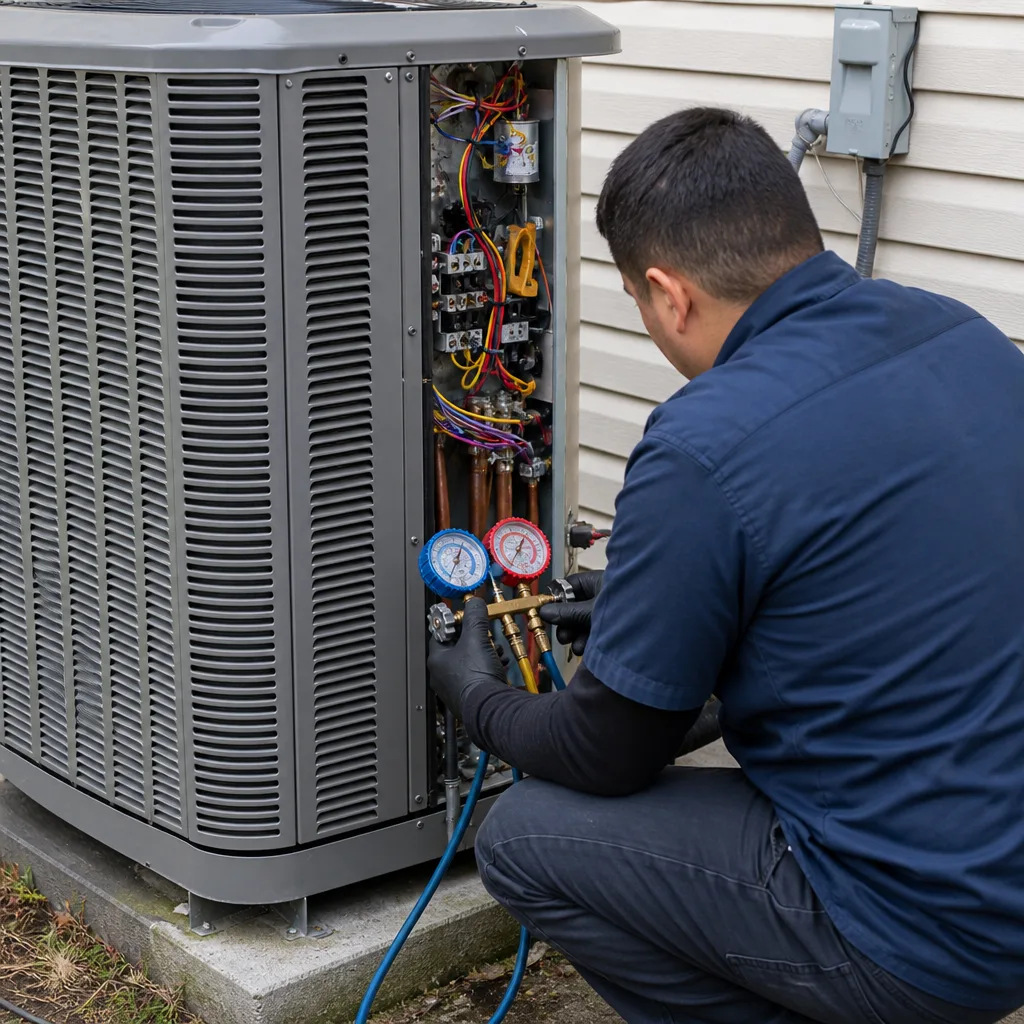 After
After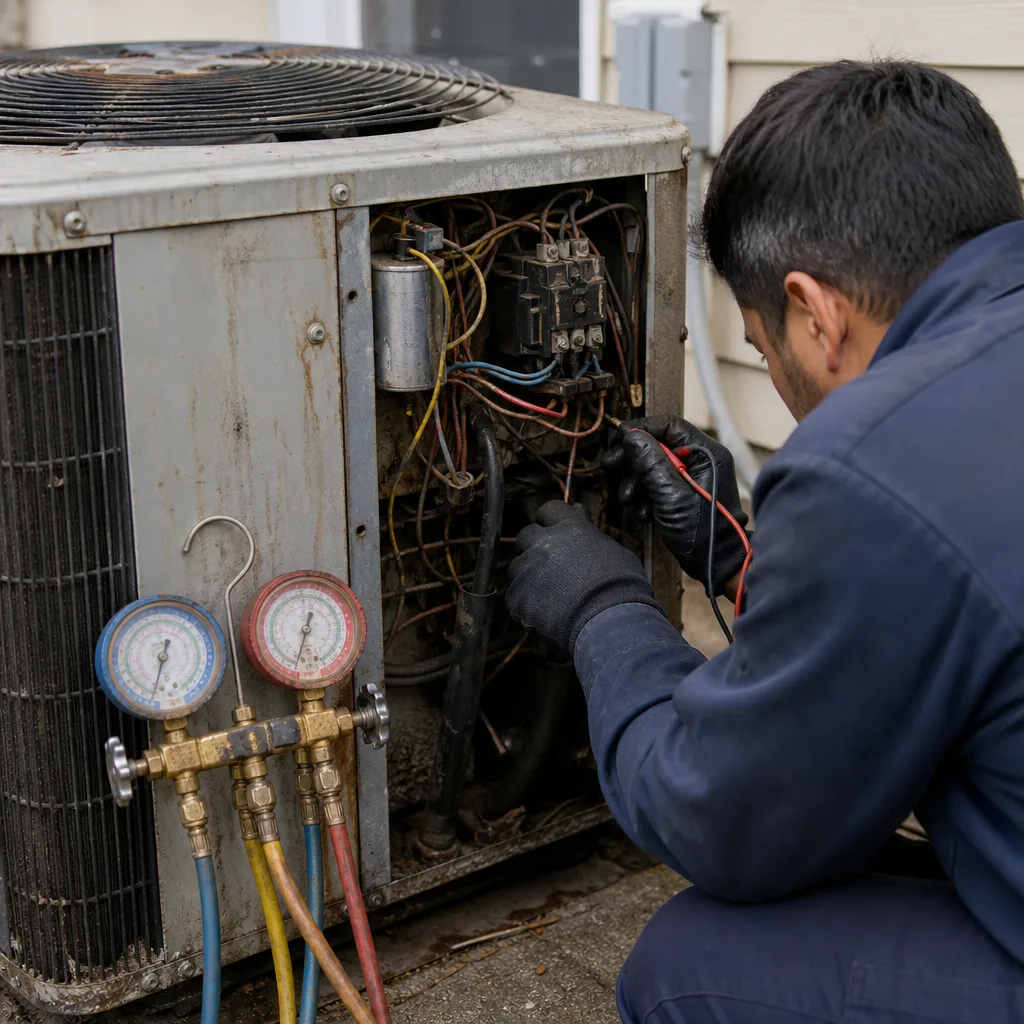 Before
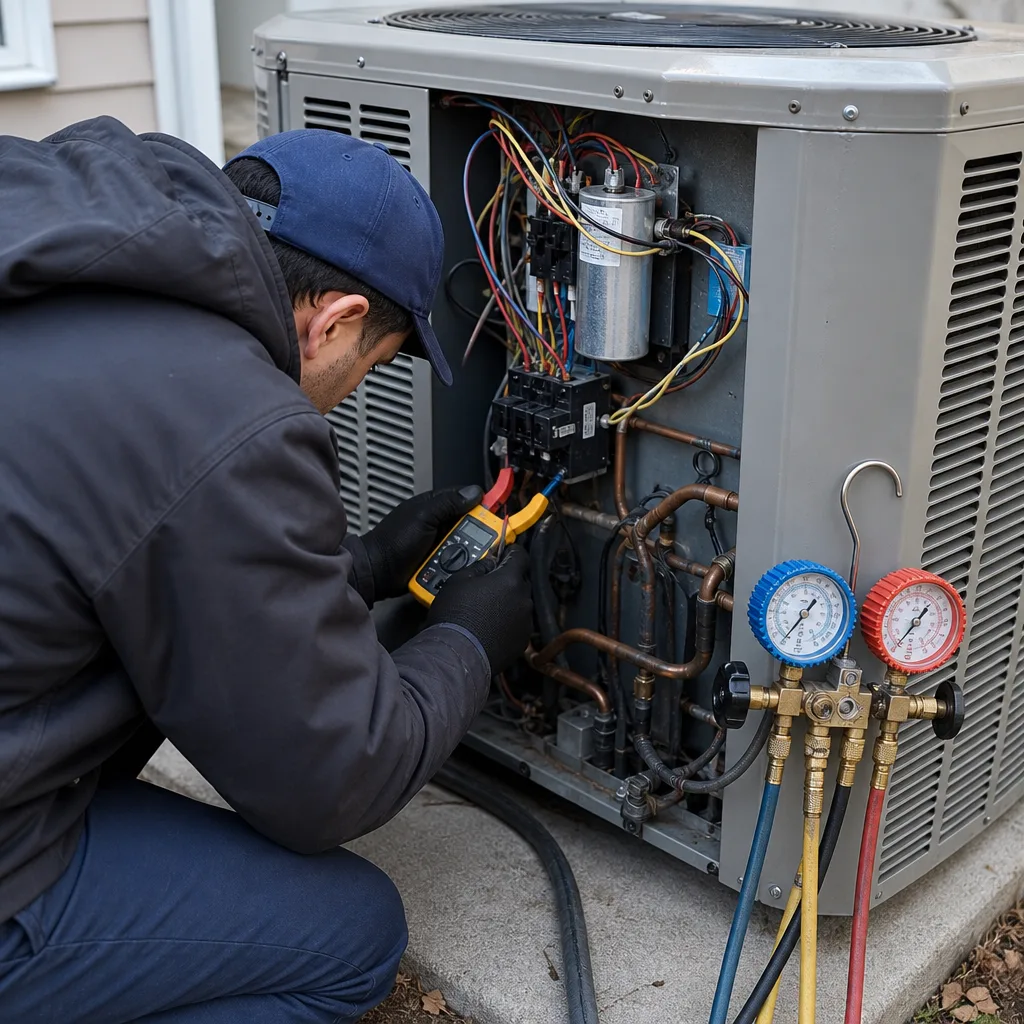 After
AfterWhen to Call a Professional
HVAC work involving refrigerant handling, gas connections, or high-voltage electrical is not a do-it-yourself project. Refrigerant recovery and handling requires EPA certification. Gas furnace work that involves the burner, gas valve, or heat exchanger should only be performed by a trained professional because a mistake can create a carbon monoxide hazard. Electrical work on HVAC systems carries real shock and fire risk. If your system is short-cycling, making unusual sounds, leaking water, or failing to keep temperature, call for a diagnostic visit before a small issue becomes a full replacement. Brandt HVAC Co Queens offers free estimates in Queens. Call (845) 328-4955 and a live person will answer, day or night.
Frequently Asked Questions
A full HVAC system replacement in Queens, meaning both furnace and central AC, runs $7,800 to $14,000 in 2026 depending on efficiency ratings and whether any ductwork or electrical work is needed. The Queens-specific additions like permit filing, hoisting, and disposal typically add $550 to $1,350 on top of equipment and standard labor. Call (845) 328-4955 for a written quote on your specific home.
Queens HVAC pricing reflects three realities: mandatory NYC permit filing and inspection fees, equipment access challenges in attached homes that require hoisting or manual carrying through narrow passages, and the age of Queens housing stock, which often needs electrical upgrades or ductwork modification before new equipment can be installed. Suburban quotes typically exclude all three because they rarely apply to freestanding homes with driveways and modern panels.
A standard central AC or furnace replacement in Queens takes one full day for the mechanical work, with permit inspection scheduled separately, usually within one to two weeks. Ductwork replacement or extensive electrical work can extend the job to two or three days. We schedule a specific date and give you a written completion timeline before work begins.
The general rule: if the repair cost multiplied by the system’s age in years exceeds $5,000, replacement usually makes more sense. A $600 repair on a 12-year-old system is worth doing (600 × 12 = 7,200, which is above the threshold, so replacement deserves a look). A $400 repair on a 6-year-old system is almost always worth doing (400 × 6 = 2,400, well below the line). We’ll give you a straight answer either way, with numbers behind it.
Yes. New York City requires permits for most HVAC installations and replacements, including central AC, mini-splits, and furnaces. We file the permit, post it as required, and coordinate the inspection. Beware any contractor who says permits aren’t necessary for your job.
We service and install all major residential HVAC brands including Carrier, Trane, Lennox, Goodman, Rheem, York, Daikin, Bryant, American Standard, and more. We don’t push a single brand. We recommend equipment that fits your home, your budget, and your efficiency goals, and we give you the written price before any work starts.
The Bottom Line
Queens HVAC costs in 2026 are higher than national averages because Queens jobs carry costs that national guides don’t see: city permits, equipment hoisting through attached-home access points, asbestos testing in older housing stock, and electrical panels that predate modern AC loads. A complete quote with all line items visible will be higher than a quote that omits them, but it’s the only number that means anything. Read quotes line by line, demand written guarantees, and never pay more than one-third down before work begins. The companies that put everything in writing are the ones you can trust with your home.
Written by Devin Marlowe, Owner at Brandt HVAC Co Queens, serving Queens since 2003.