
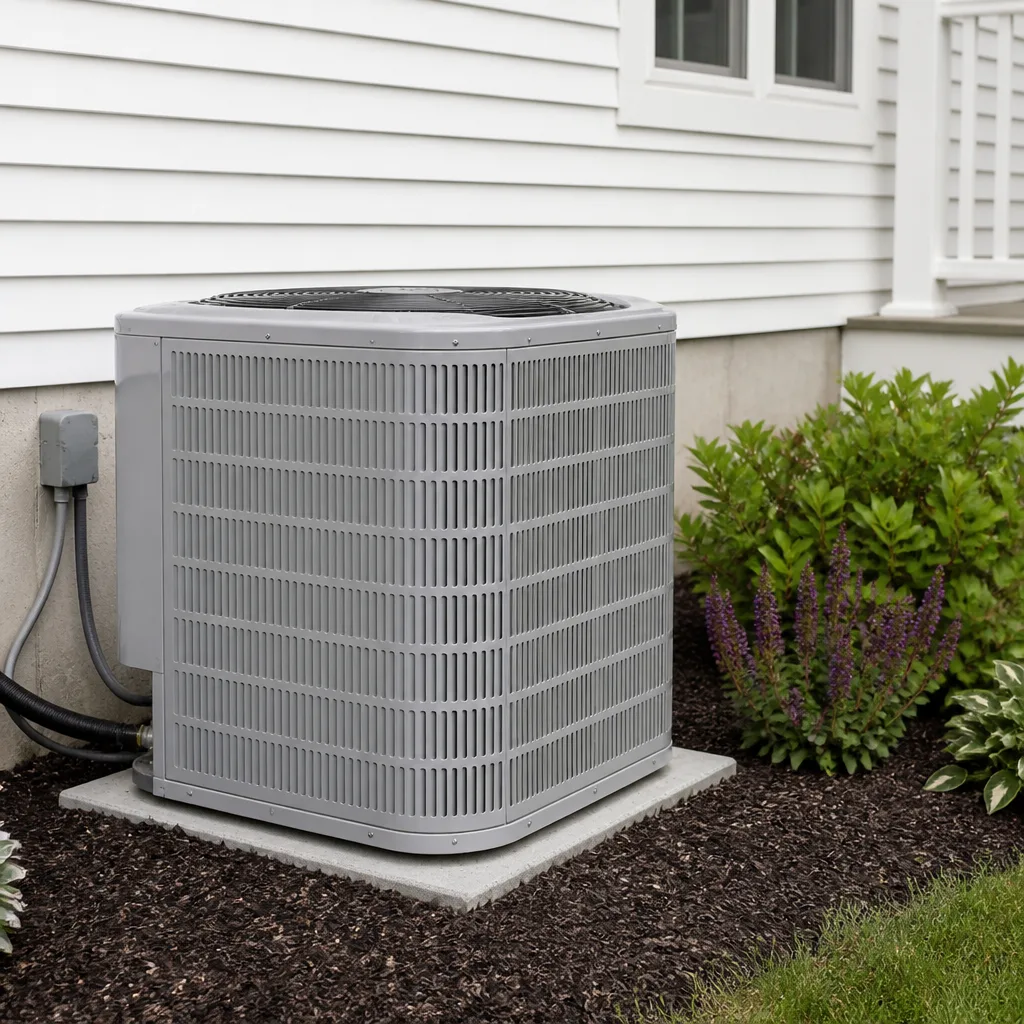
 Carrier
 Furnace & heating
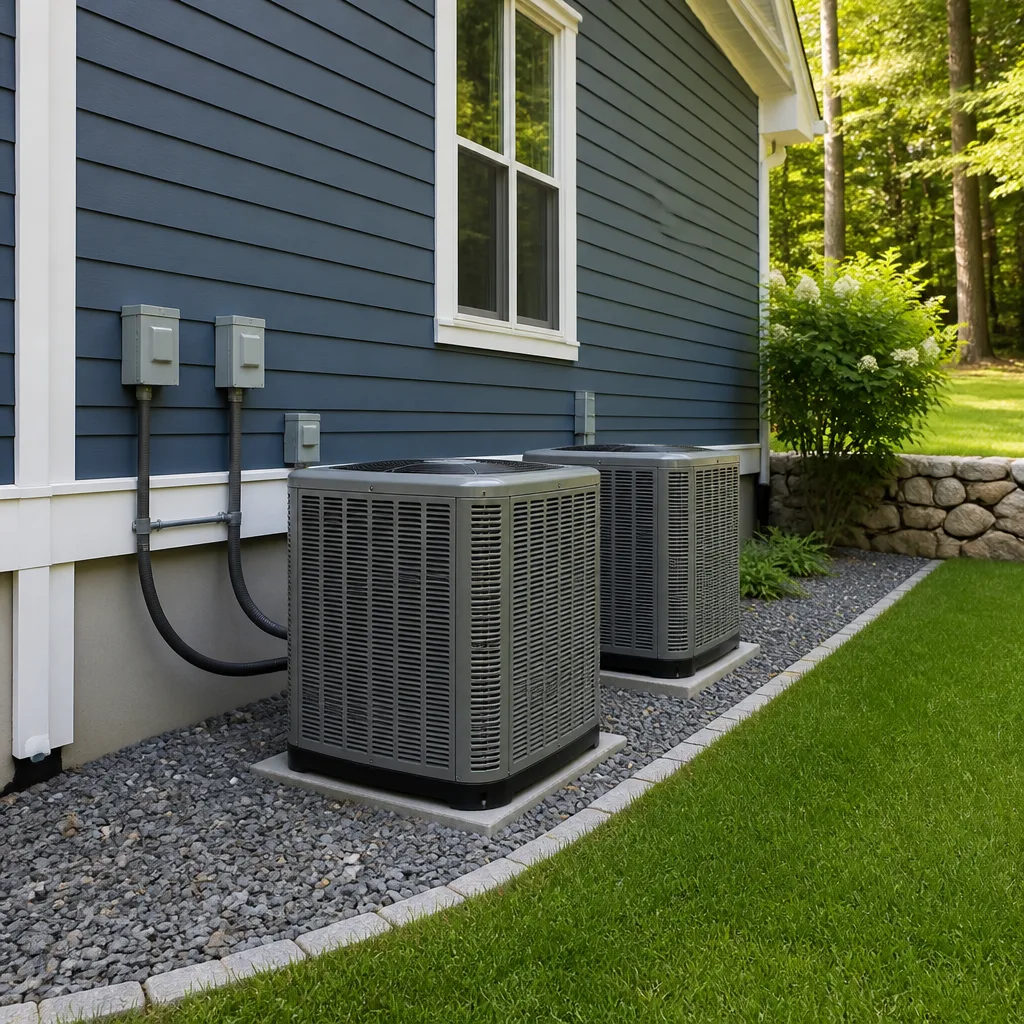 Heat pumps
 Ductless mini splits
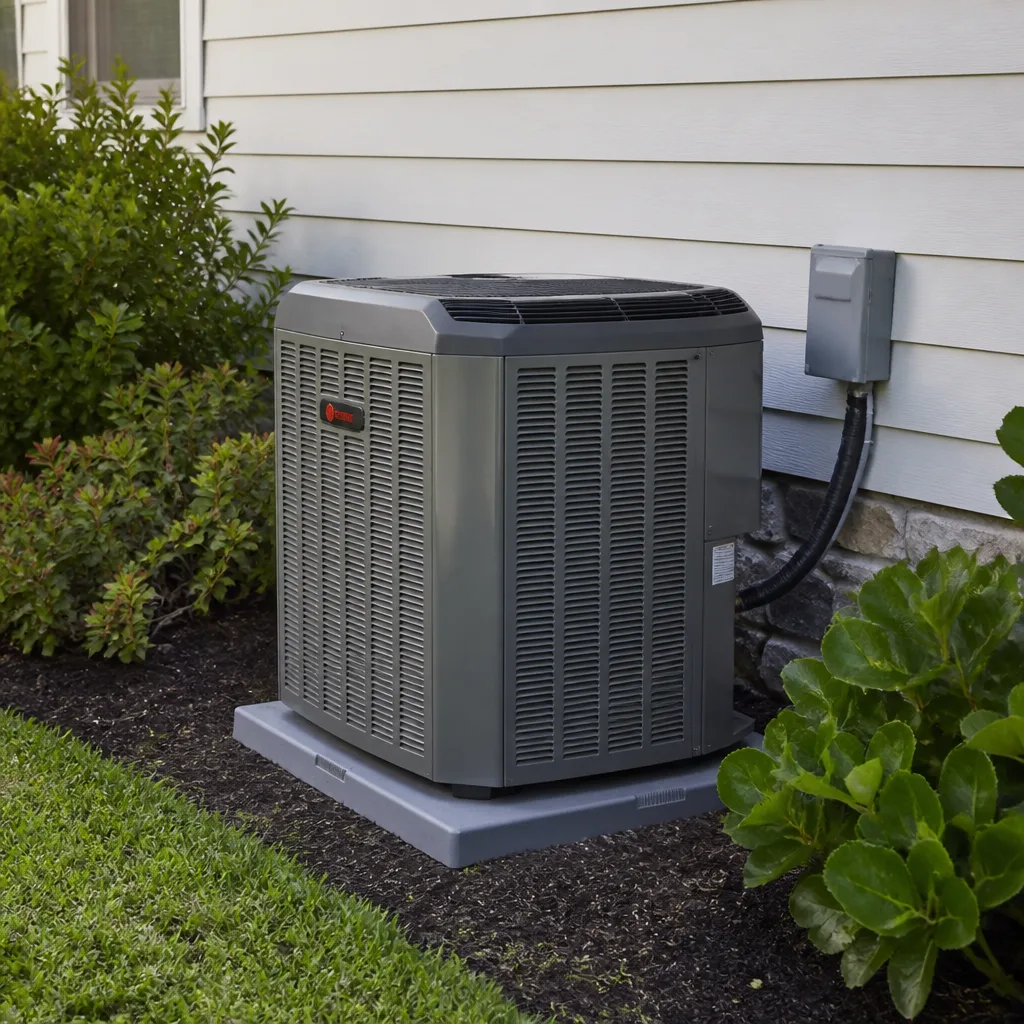 Trane
Trane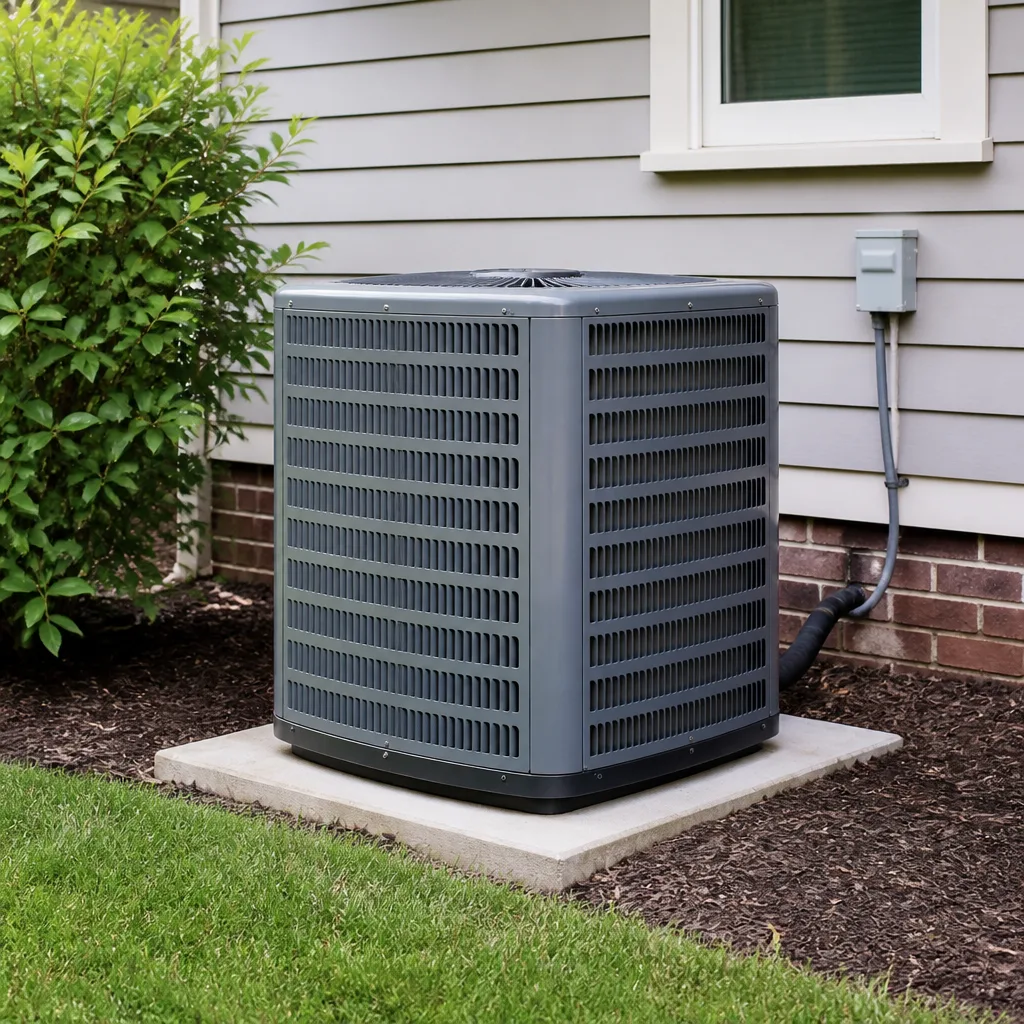 Goodman
Seasonal tune-up and full diagnostic on your Carrier, Trane, or Goodman system - readings shown to you before any repair is proposed
Diagnosis first, numbers second - you approve the repair price before a single part goes in.
Get your free estimateCarrier Capacitor Replacement: The Queens Owner’s Guide
Carrier capacitor replacement in Queens typically runs $150 – $400 installed, parts and labor included, and we stock the common Carrier-compatible capacitors on our trucks for same-day service. Most homeowners discover the problem when their AC unit hums but won’t start, or the compressor kicks on and off rapidly on a hot afternoon. If that’s happening to you, the capacitor is the first thing we check, and it’s usually the culprit. Queens summers are unforgiving on run capacitors, especially in apartment buildings and older homes where the condenser sits in direct sun or gets hit with reflected heat off brick and asphalt.
Devin Marlowe has pulled failed capacitors out of Carrier units all over Queens, including plenty of calls along Jamaica Avenue where old wiring and heat soak keep things interesting. The good news is this is one of the most straightforward AC repairs there is: diagnose it, swap it, test it, and you’re back to cold air the same visit.
Which Carrier Models This Applies To
We replace capacitors on virtually every residential Carrier model line: Comfort, Performance, Infinity, and the older WeatherMaker and Base series that are still running in Queens apartment buildings and single-family homes. The capacitor itself doesn’t care what brand badge is on the unit. What matters is the microfarad (µF) rating, the voltage rating, and whether it’s a dual-run capacitor (one can handles both the compressor and the fan motor) or a single-run (one job only). Most Carrier residential condensers newer than about 1995 use a dual-run, usually 35/5 µF, 40/5 µF, or 45/5 µF at 370 or 440 volts. The label on the side of the old capacitor tells you exactly what you need, and it’s printed on the unit’s wiring diagram too.
The compatibility gotcha: a 440-volt capacitor can always replace a 370-volt one of the same µF rating, but never the other way around. We carry both, and our technicians check the old part’s label before anything gets installed. As for OEM versus aftermarket: Carrier’s factory capacitors are made by the same handful of manufacturers that supply the aftermarket brands we stock (AmRad, Titan, Genteq). You’re paying for the same internals either way. We’ll show you the failed part and the replacement before it goes in.
One more note: Brandt HVAC Co Queens is an independent service provider, not affiliated with Carrier. We stock capacitors that meet or exceed Carrier’s original specifications for these units.
Styles & brands we work with
Signs Your Carrier Capacitor Replacement Is Failing
- The outdoor unit hums but the fan doesn’t spin. The capacitor gives the motors their starting jolt. When it’s weak, the compressor tries to start, can’t, and you get that low electrical hum. This is the most common capacitor failure we see in Queens, and the part is usually dead by the time you hear it.
- The compressor short-cycles, starting and stopping every few minutes. A failing capacitor can still start the compressor, but it can’t hold the charge. The unit runs briefly, overheats, trips its internal overload, and tries again. This is rough on the compressor and costs more in electricity every time it happens.
- The fan spins slowly or starts only with a push. The fan side of a dual-run capacitor degrades independently of the compressor side. A slow or struggling condenser fan is often a capacitor losing its rating, not a motor going bad. Catching it early saves you a motor.
- The AC blows warm air despite the compressor running. It takes the whole capacitor to keep the compressor running at full capacity. A weak one can run the compressor inefficiently, so the refrigerant doesn’t move at the pressure it should. You feel lukewarm air and wonder why the house won’t cool down.
- The capacitor case is bulging, leaking oil, or smells acrid. Capacitors are sealed cans filled with dielectric oil. When they overheat or age out, the can swells, splits, or weeps. We find bulged caps all the time in Queens, especially after a few heat waves back-to-back. If you can see it, it’s done.
See the difference
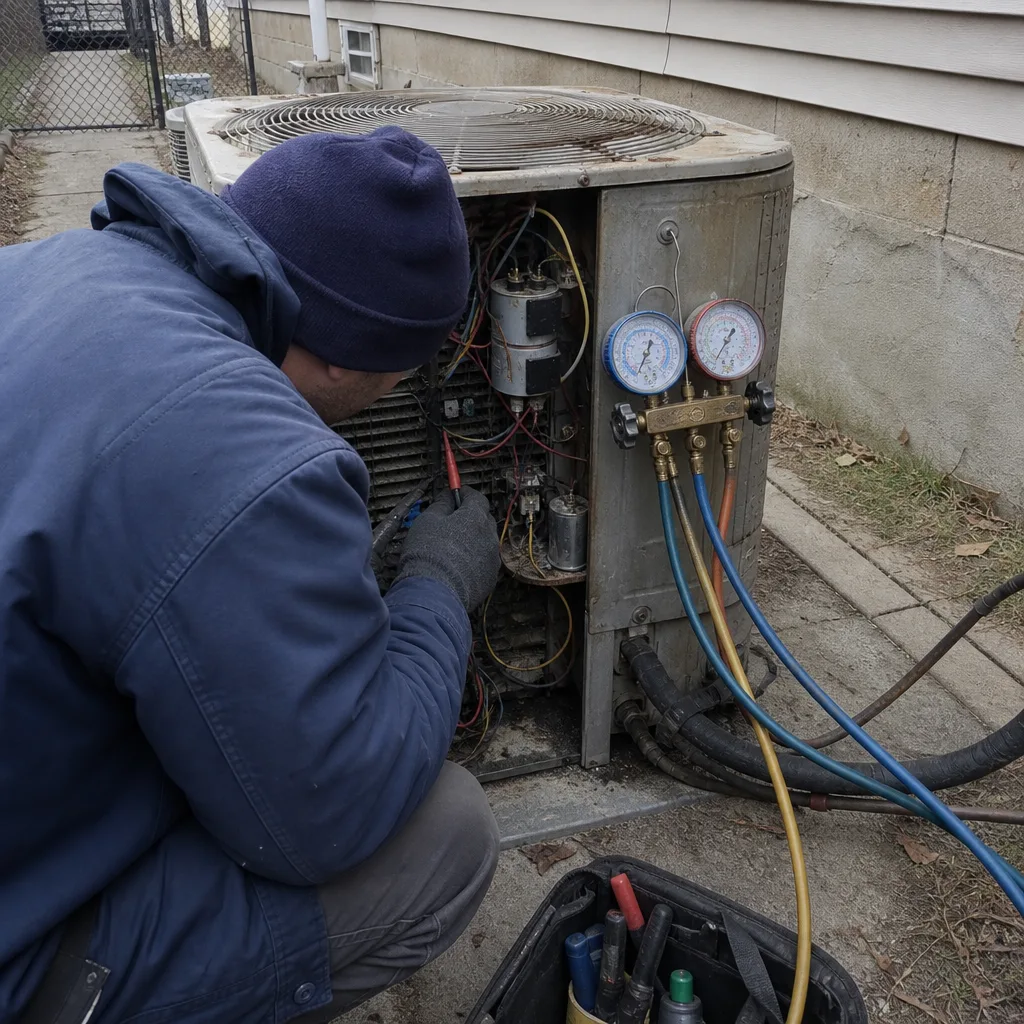 Before
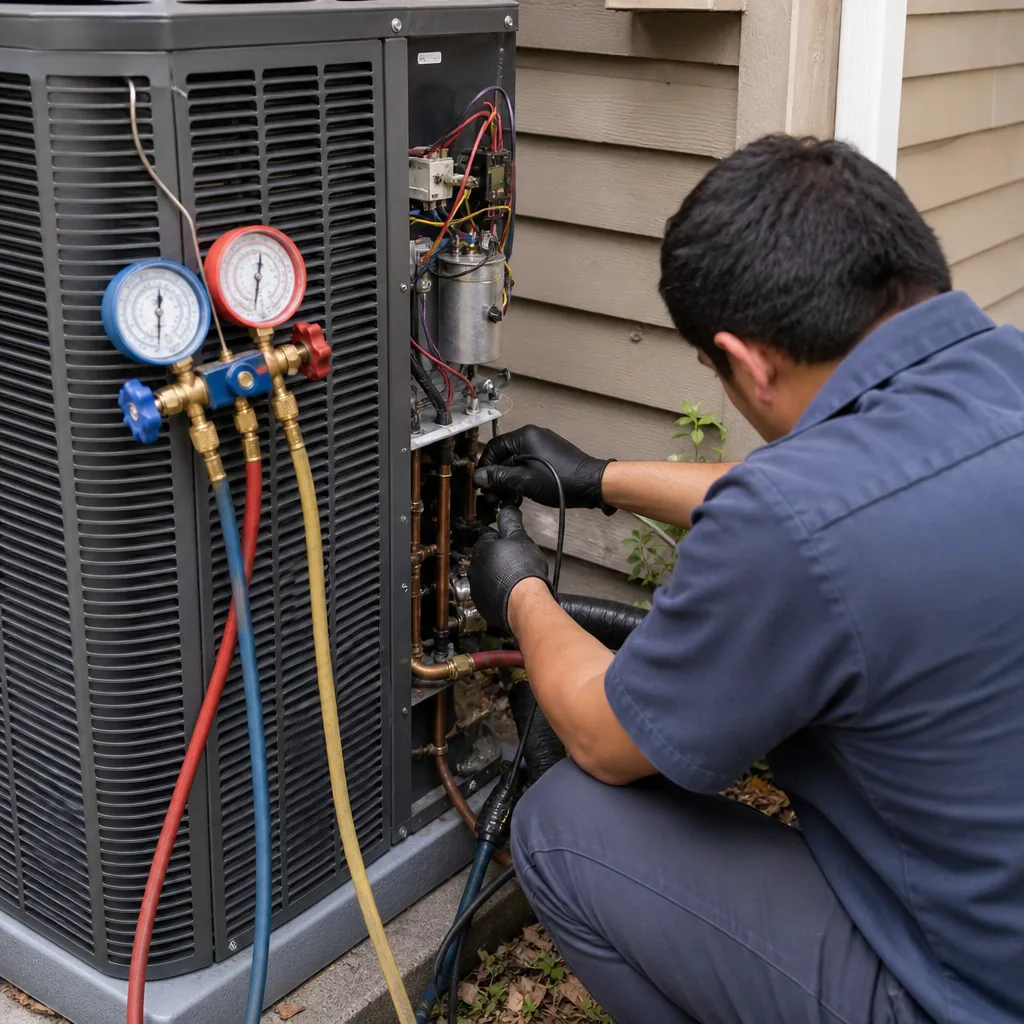 After
After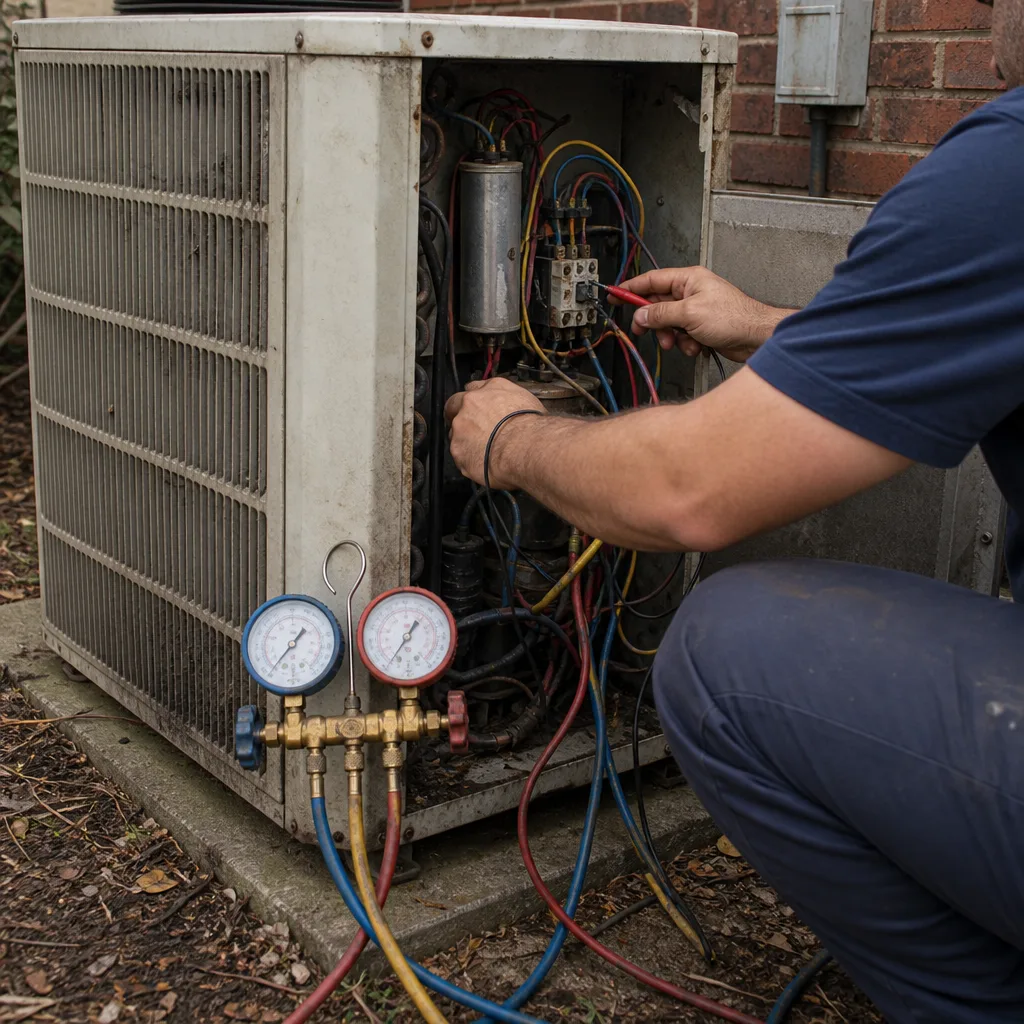 Before
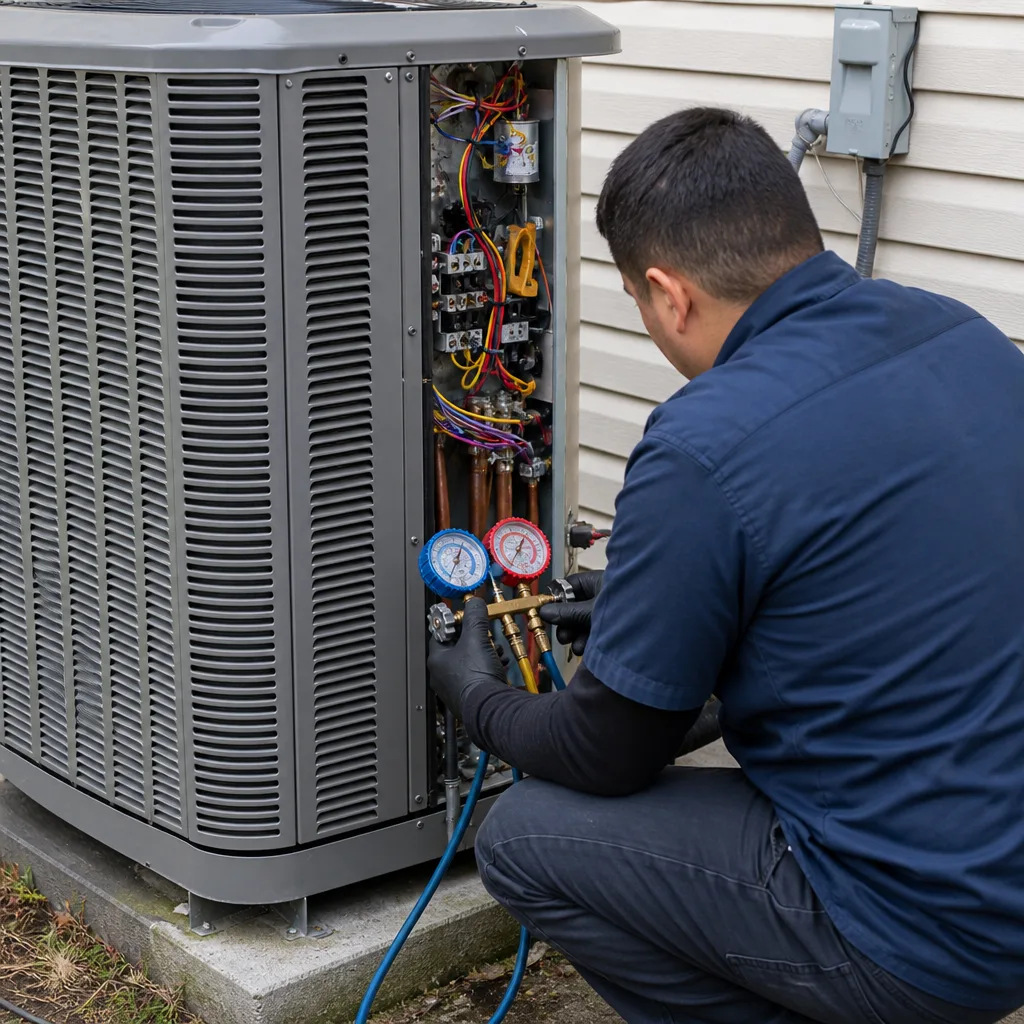 After
After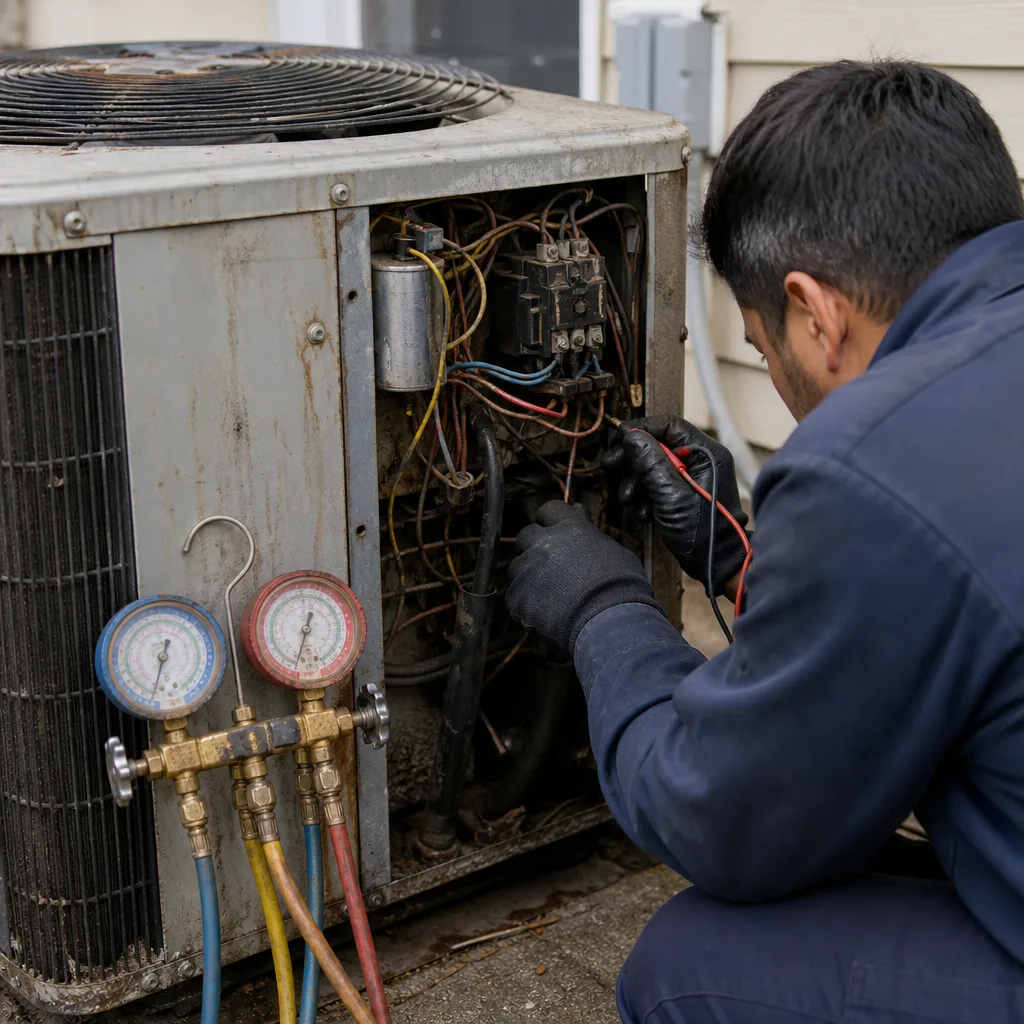 Before
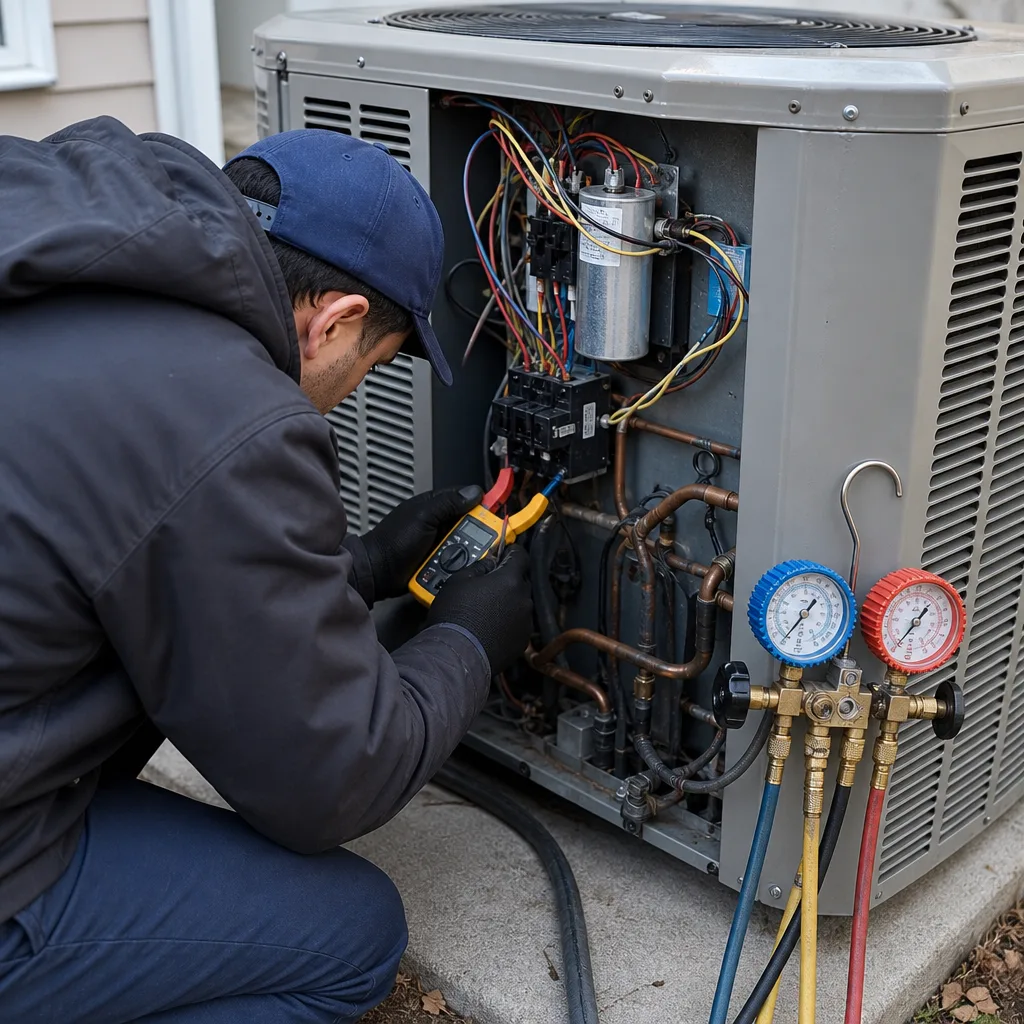 After
AfterReplacement Cost & What’s Included
Most Carrier capacitor replacements in Queens land between $150 and $400 installed. The part itself is usually $20 – $80 depending on whether it’s a single or dual-run and the µF/voltage rating. The rest is the service call, the diagnostic time, the swap itself, and the testing afterward to make sure the compressor and fan start cleanly with the new part in place. We give you a written price before any work starts, so you’ll know the exact number before the first tool comes off the truck.
| Replacement Component | Typical Installed Cost in Queens |
|---|---|
| Single-run capacitor (fan or compressor only) | $150 – $250 |
| Dual-run capacitor (compressor + fan, most common) | $180 – $320 |
| Dual-run + replacement of damaged wiring/terminals | $250 – $400 |
Every capacitor replacement we do includes a written guarantee. If the new capacitor fails within 365 days, we return and replace it at no charge under the 365-Day Done Right Promise. No argument, no trip charge, no second diagnostic fee.
DIY or Call Us?
Here’s the honest version. A capacitor can hold a lethal electrical charge even when the power to the unit is off. The shock risk is real. We’ve also seen terminals shorted out by homeowners who tried to swap a cap without disconnecting the fan and compressor properly. If you’re comfortable with a multimeter and you know how to safely discharge a capacitor, this is a job some people do themselves. The part is cheap, and the swap takes ten minutes if everything goes smoothly.
But here’s where DIY goes wrong in Queens: mismatched µF ratings, installing a 370-volt cap where a 440-volt belongs, reversing the fan and compressor terminals on a dual-run, or leaving a loose spade connector that arcs later. Any of those can kill the new capacitor within weeks or damage the compressor, which is a $2,000 problem that started as a $200 fix. If you’d rather not gamble on that, call (845) 328-4955 and we’ll have a tested, matched capacitor installed the same day.
FAQs
Expect 5 to 10 years in Queens conditions, but heat accelerates aging. A capacitor in a unit that bakes in direct sun or sits near a hot wall can weaken in as little as 3 or 4 years. We see more capacitors fail in July and August than the rest of the year combined.
No. Capacitors are sealed, oil-filled components. Once they bulge, leak, or lose their rating, the only fix is replacement. There’s no rebuilding a capacitor, and no tech worth their license would try.
Most swaps take 30 to 45 minutes from arrival to cold air. We test the new capacitor before we leave, verify the fan and compressor start cleanly, and show you the old part with your replacement’s specs on the label. You’re not waiting hours.
We stock common Carrier-compatible dual-run capacitors on our trucks (35/5, 40/5, 45/5 µF in both 370 and 440 volts) plus the common single-run sizes. Occasionally an unusual unit calls for a special rating we have to source, but that’s rare. Most Carrier calls in Queens are same-visit fixes. We also keep parts for Trane and Lennox systems on hand.
Written by Devin Marlowe, Owner, Brandt HVAC Co Queens at Brandt HVAC Co Queens, serving Queens and nearby areas.