
 Carrier
 Furnace & heating
 Heat pumps
 Ductless mini splits
 Trane
Trane Goodman
Seasonal tune-up and full diagnostic on your Carrier, Trane, or Goodman system - readings shown to you before any repair is proposed
Diagnosis first, numbers second - you approve the repair price before a single part goes in.
Get your free estimateCarrier Ductwork Repair: The Queens Owner’s Guide
Carrier ductwork repair in Queens typically runs $150 – $650 installed, depending on whether we’re sealing a leaking joint, replacing a crushed section, or re-hanging sagging trunk lines. We carry Carrier-compatible duct fittings, mastic, foil tape, and replacement flex sections on our trucks, so most repairs are completed same-day in a single visit.
Most homeowners figure out they have a ductwork problem the same way: one room stays stubbornly hot in August or freezing in January, while the rest of the apartment feels fine. Or the AC runs constantly and the Con Edison bill climbs month after month. That’s not the Carrier unit failing. That’s conditioned air bleeding into a wall cavity, a crawl space, or a drop ceiling before it ever reaches the room. Ductwork is the delivery system, and when it leaks, you’re paying to heat and cool air you never feel.
Which Carrier Models This Applies To
Ductwork itself is not model-specific the way a control board or blower motor is. The ducts connected to a Carrier Infinity, Performance, or Comfort series system are sized to the air handler’s static pressure and CFM output, not to a part number stamped on the unit. That said, we see the most duct-related trouble on Carrier systems paired with older sheet metal trunk lines in prewar Queens buildings, especially along Jamaica Avenue and in the brick six-story walkups where duct runs were retrofit decades ago and never properly sealed.
The real compatibility question is about the air handler connection. Carrier air handlers use specific plenum dimensions and collar sizes, and the flex or sheet metal transition between the unit and the trunk line needs to match those measurements. We check the model tag on the air handler, measure the plenum opening, and match the duct fitting to the Carrier spec rather than forcing a generic collar onto it. For replacement flex duct, we stock R-6 and R-8 insulated flex in 6-, 8-, and 10-inch diameters, which covers the majority of residential Carrier installs in Queens.
One gotcha worth knowing: Carrier Infinity systems with variable-speed blowers are more sensitive to duct leaks than single-stage units. The blower ramps up to meet static pressure demand, and a leaking duct throws off the system’s airflow calculations, which can trigger error codes on the Infinity control. That is not a reason to panic, but it is a reason to fix leaks rather than ignore them.
On the OEM-versus-aftermarket question for ducts specifically: Carrier does not manufacture flex duct or sheet metal. The “OEM” label matters on circuit boards and motors. On ductwork, what matters is the insulation R-value, the UL listing, and the mastic and tape meeting code. We use UL 181-rated materials whether the duct carries a Carrier label or not, because that is what Queens building inspectors look for and what actually holds up over time.
Styles & brands we work with
Signs Your Carrier Ductwork Repair Is Failing
- One room never reaches temperature. A disconnected or crushed duct branch means that room gets whatever leaks through the walls, not what the Carrier unit is producing. The fix is usually reconnecting and sealing the branch collar or replacing a collapsed flex section.
- Dust collects fast on surfaces near vents. Leaks on the return side pull in dust, insulation fibers, and crawl space air, then blow it through the supply registers. Sealing the return duct and plenum stops the dust at the source.
- Whistling or rushing air noise from the vents. That sound is air being forced through gaps, seams, or a partially disconnected joint. The leak is usually at a fitting or seam, and sealing it quiets the system and improves airflow.
- Musty or damp smell when the AC runs. A leaking supply duct in a humid crawl space pulls moisture into the airstream, and that damp air goes right into the living space. Sealing and insulating the duct run resolves the odor and prevents mold growth on the duct interior.
- Higher electric bills with no change in thermostat settings. The Carrier system is running longer to compensate for air lost through duct leaks. A blower test and visual inspection of accessible duct runs confirms the leak points and gives us a sealing plan.
See the difference
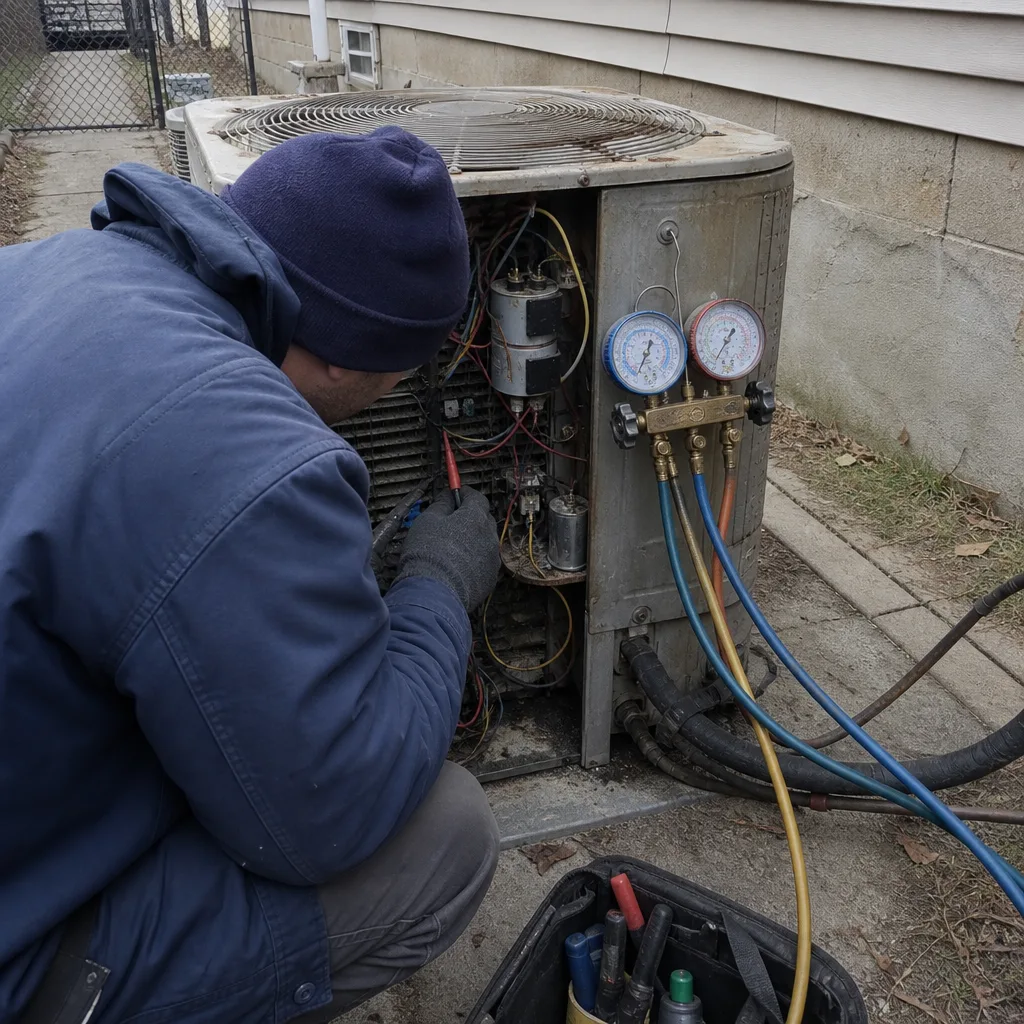 Before
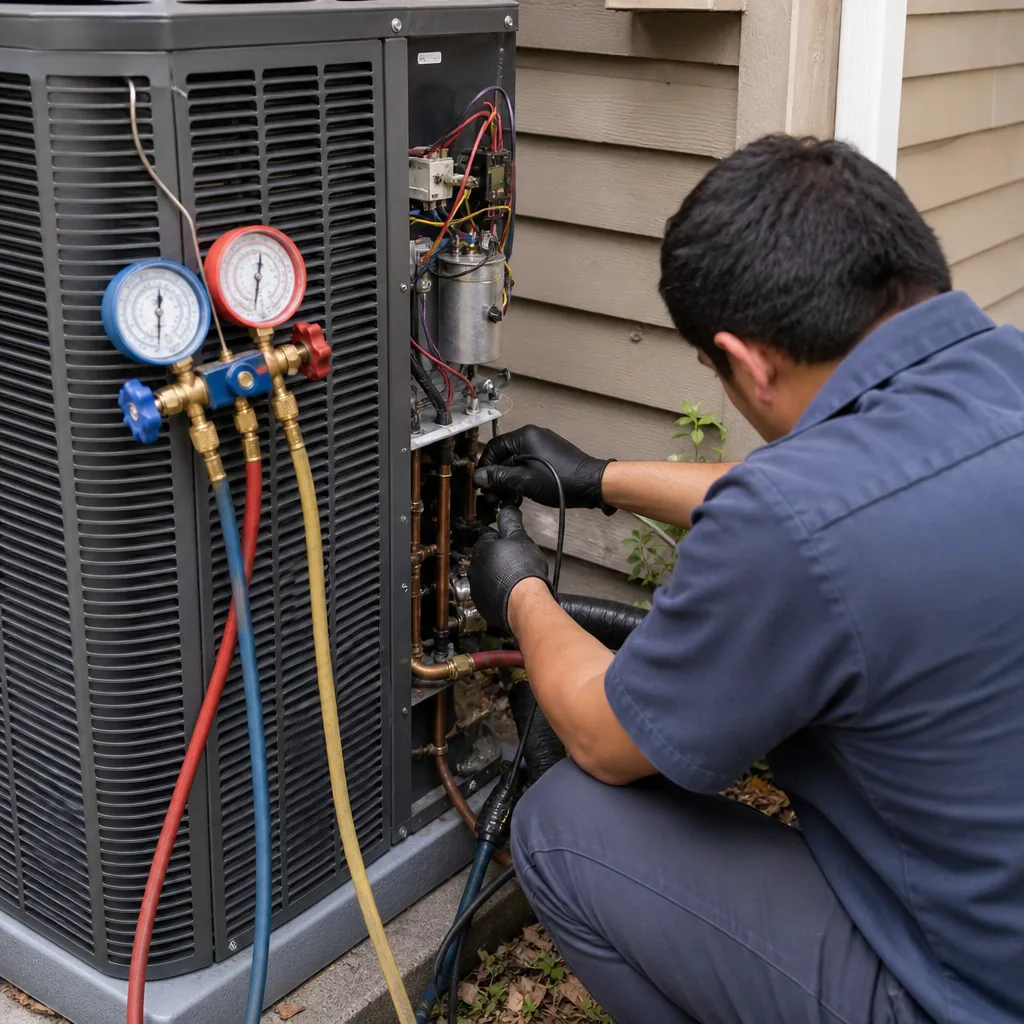 After
After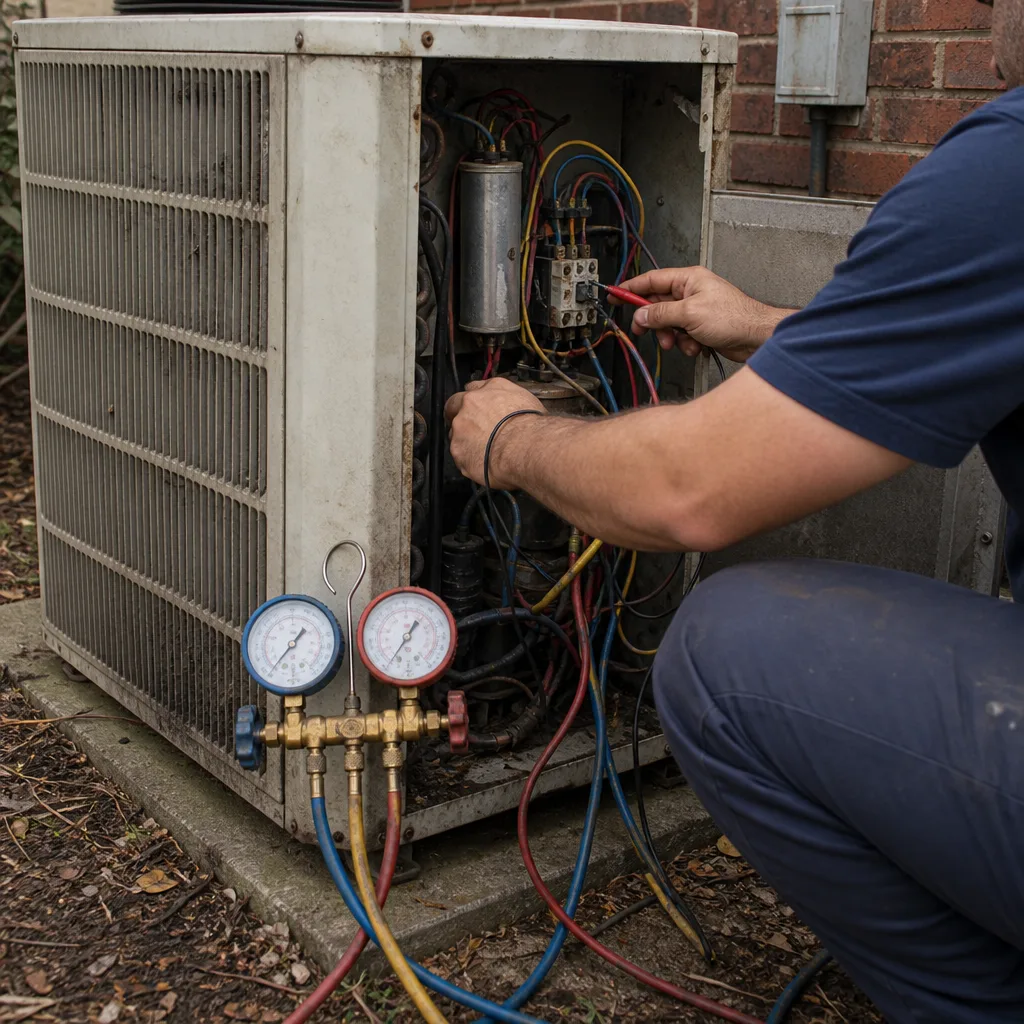 Before
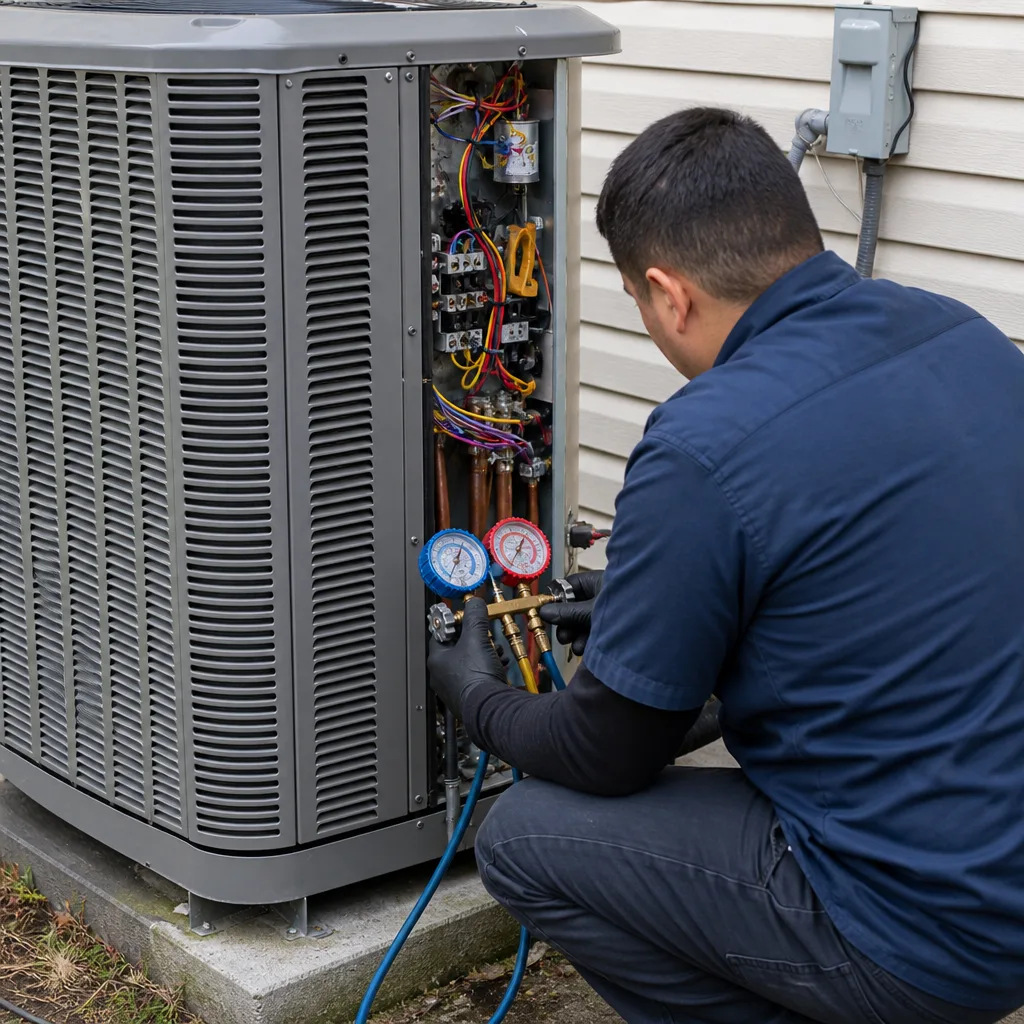 After
After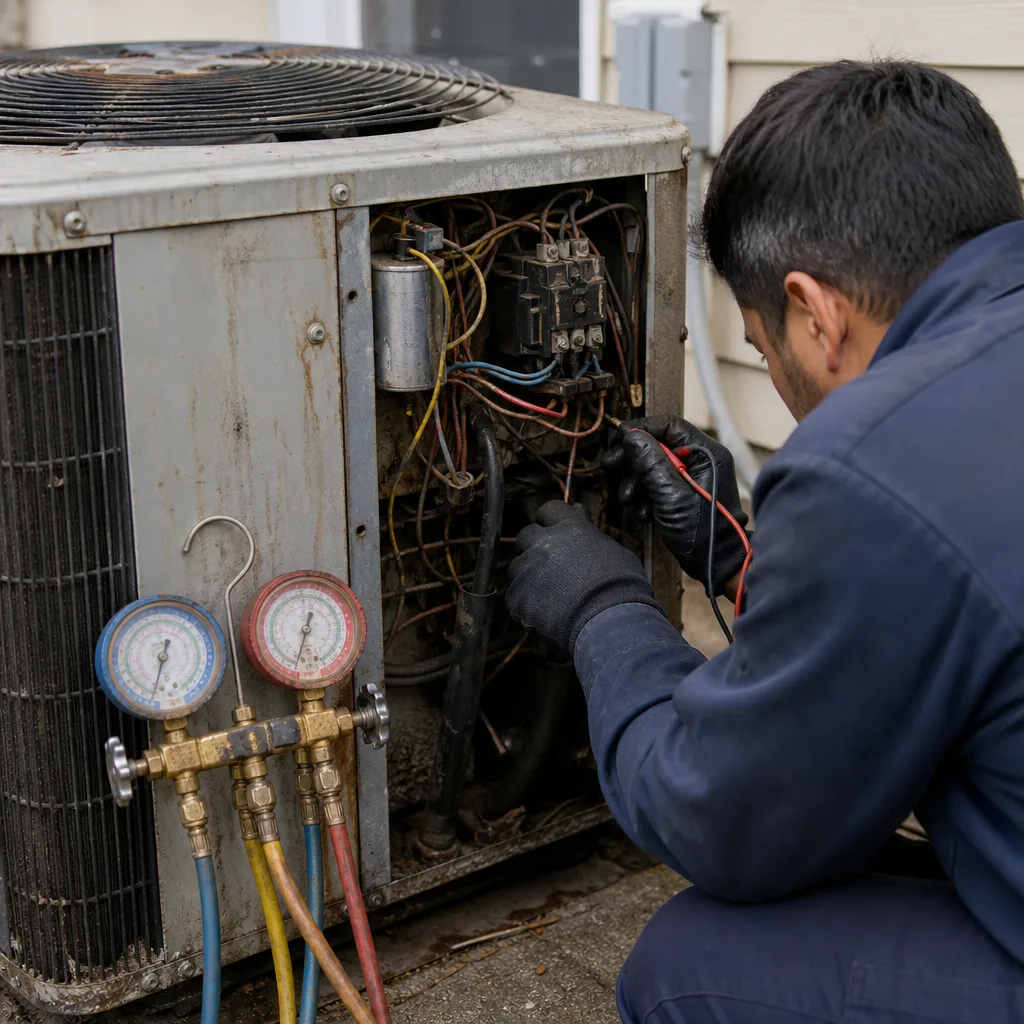 Before
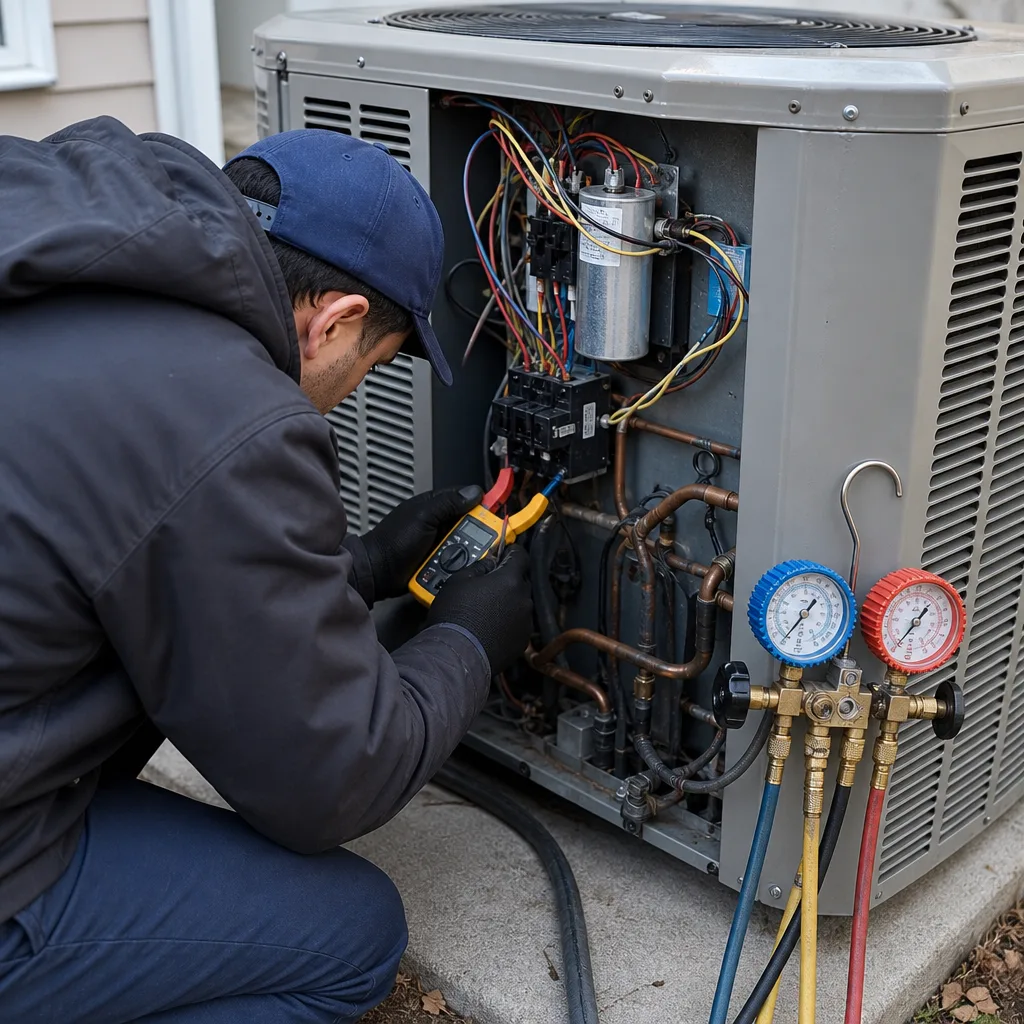 After
AfterReplacement Cost & What’s Included
In Queens, duct sealing work runs $150 – $450 depending on how many leaks we find and whether we’re working in an accessible basement ceiling or a tight attic. Replacing a crushed or torn flex duct section lands between $200 – $500. Re-hanging sagging sheet metal trunk lines with proper support straps runs $300 – $650 when we’re also sealing seams and reconnecting branches. Every job gets a written price before we touch anything, and that price includes parts, labor, mastic, tape, and cleanup.
The range comes down to access, because access drives labor time. A duct run in an open basement ceiling is a quick fix. A duct run behind a finished wall in a co-op or over a dropped ceiling on the top floor takes longer to reach, and that time is what moves the price through the range. What you get at any price on that list: the leak sealed or the section replaced, the air handler airflow checked after the repair, and a written guarantee covering the work for 365 days. If a sealed seam fails within that year, we come back and re-seal it at no charge under the Done Right Promise.
DIY or Call Us?
What you can safely do yourself: check visible duct joints for gaps or loose foil tape (an easy visual inspection, not a repair project), replace a dirty air filter so the system is not fighting a restriction, and make sure no furniture or boxes are blocking return grilles. Those checks are safe and they help us diagnose faster.
What we would not recommend doing yourself: sealing duct seams with the wrong mastic (water-based duct mastic is the right product; regular caulk fails and falls off), cutting into a trunk line to add a takeoff, or re-hanging sheet metal duct above your head in a cramped space. Ductwork in Queens buildings often runs through areas with questionable clearance and old wiring, and a section of sheet metal is heavier than it looks. One honest warning from Devin Marlowe, our owner: he has seen more than one homeowner end up with a gash on the arm from a dropped duct section and a bigger repair bill than the original fix would have cost. If the leak is behind a wall or ceiling, call us. Finding and fixing hidden ductwork requires access cuts, an inspection scope, and repair work on the wall afterward. That is not a weekend project.
Call (845) 328-4955 and we will send a technician who arrives with a name, a photo, and a written quote before any work starts.
FAQs
Properly installed sheet metal ducts can last 40 to 60 years, but the flex duct sections and the tape and mastic sealing the joints typically fail in 15 to 25 years in Queens, because summer humidity and winter cold cycling break down adhesives and stretch flex insulation. The ductwork in a 1960s Queens co-op is not the original problem; the failing seals and collapsed flex add-ons are.
Yes. Most leaks are repaired, not replaced, because the majority of failures are at seams, joints, and collars rather than along the entire run. At (845) 328-4955, a technician can inspect accessible runs and tell you honestly what is worth repairing. If a flex section is crushed or saturated with moisture, we will tell you plainly that replacement is the smarter money.
Most duct sealing and flex section replacements are completed in 2 to 4 hours, from arrival to cleanup. Larger jobs involving re-hanging multiple trunk line sections or opening walls for access take a full day. We can tell you the expected labor time in writing before we start, and we hold to it.
We stock UL 181-rated mastic, foil tape, R-6 and R-8 insulated flex in 6-, 8-, and 10-inch diameters, collars, takeoffs, and sheet metal fittings on our service trucks, so most Queens ductwork repairs are completed same-day. For Trane and Lennox systems with non-standard collar sizes, we order the matching fitting and usually have it within one business day.
Written by Devin Marlowe, Owner, Brandt HVAC Co Queens at Brandt HVAC Co Queens, serving Queens and nearby areas.