
Last updated October 16, 2026
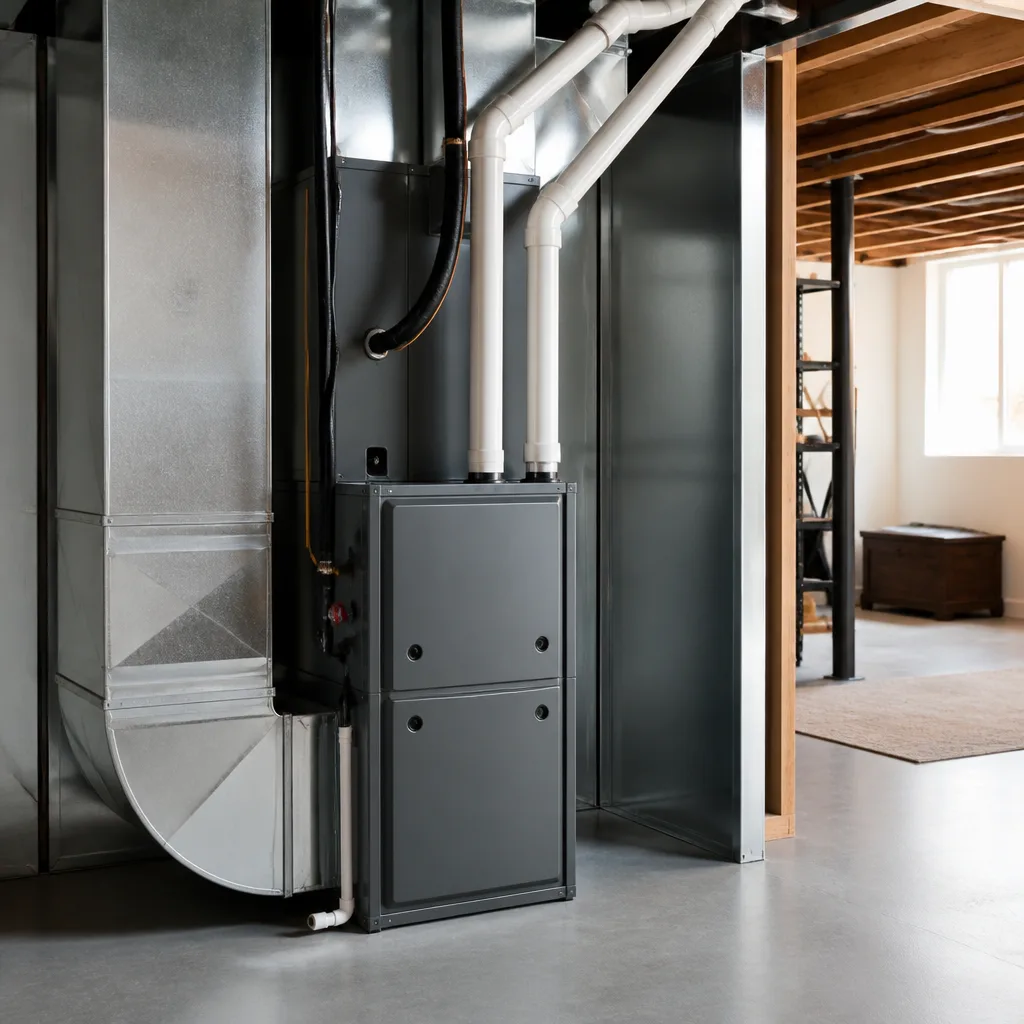 Furnace & heating
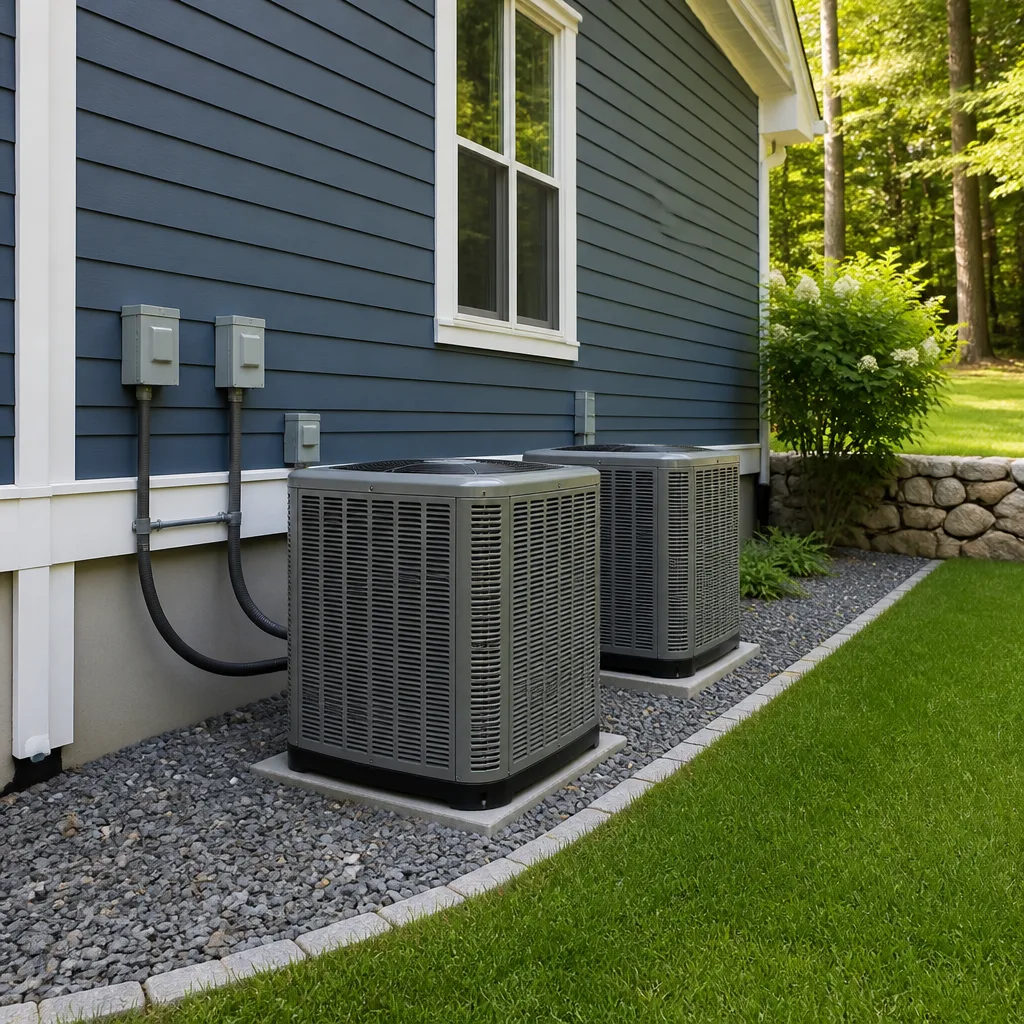 Heat pumps
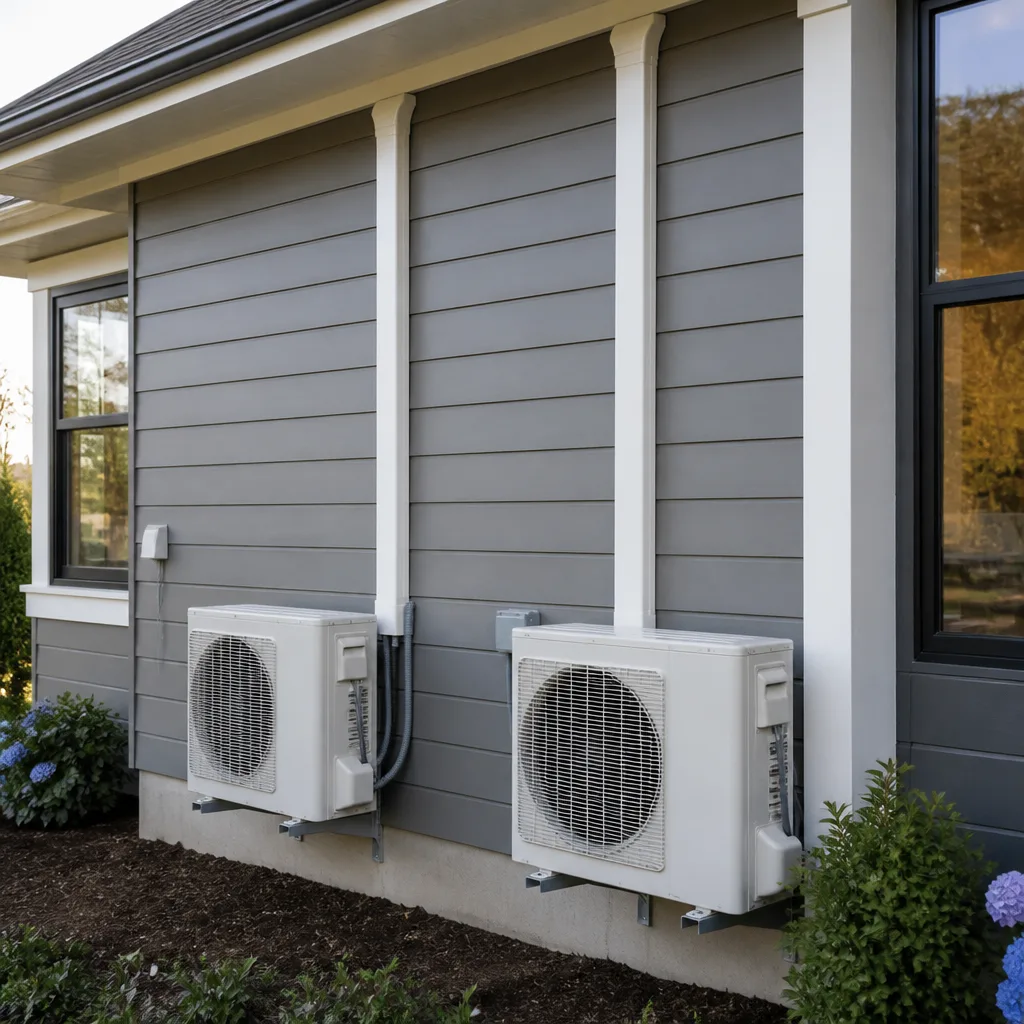 Ductless mini splits
 Carrier
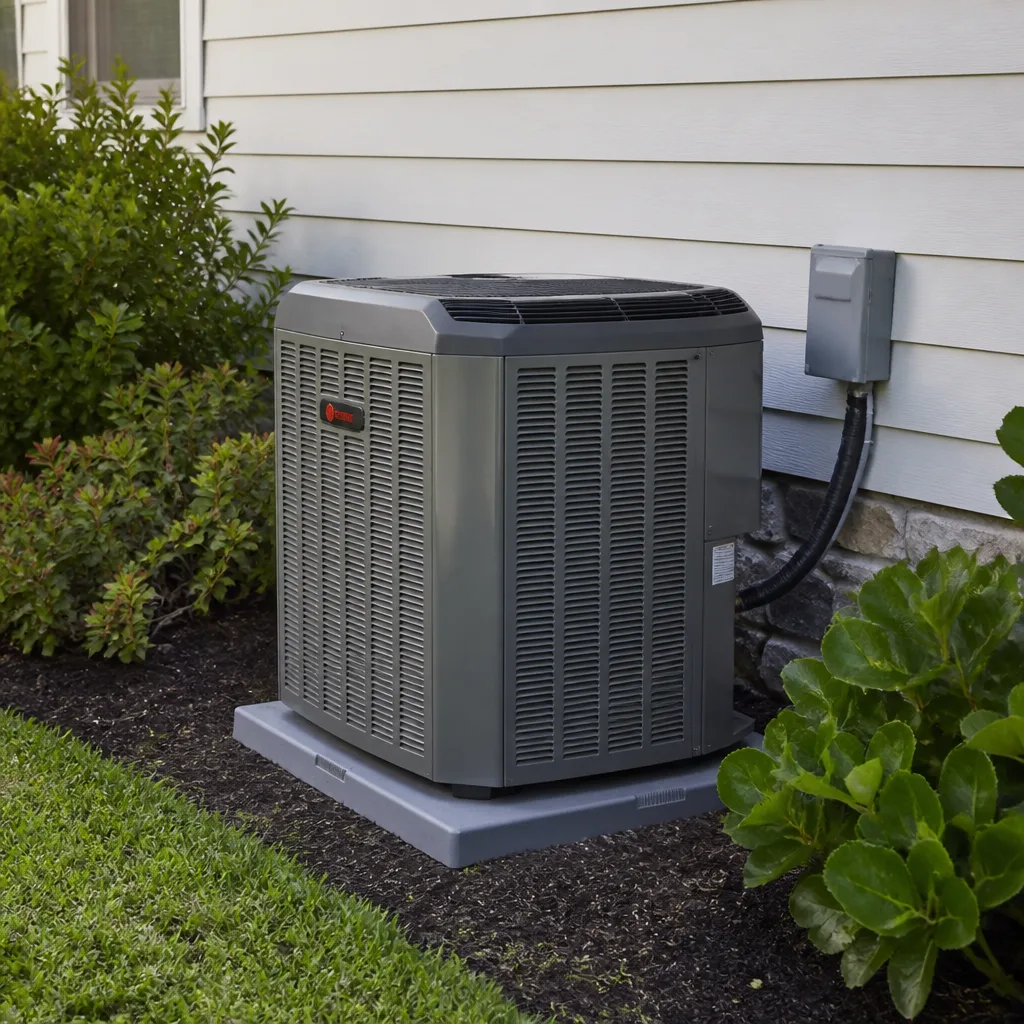 Trane
Trane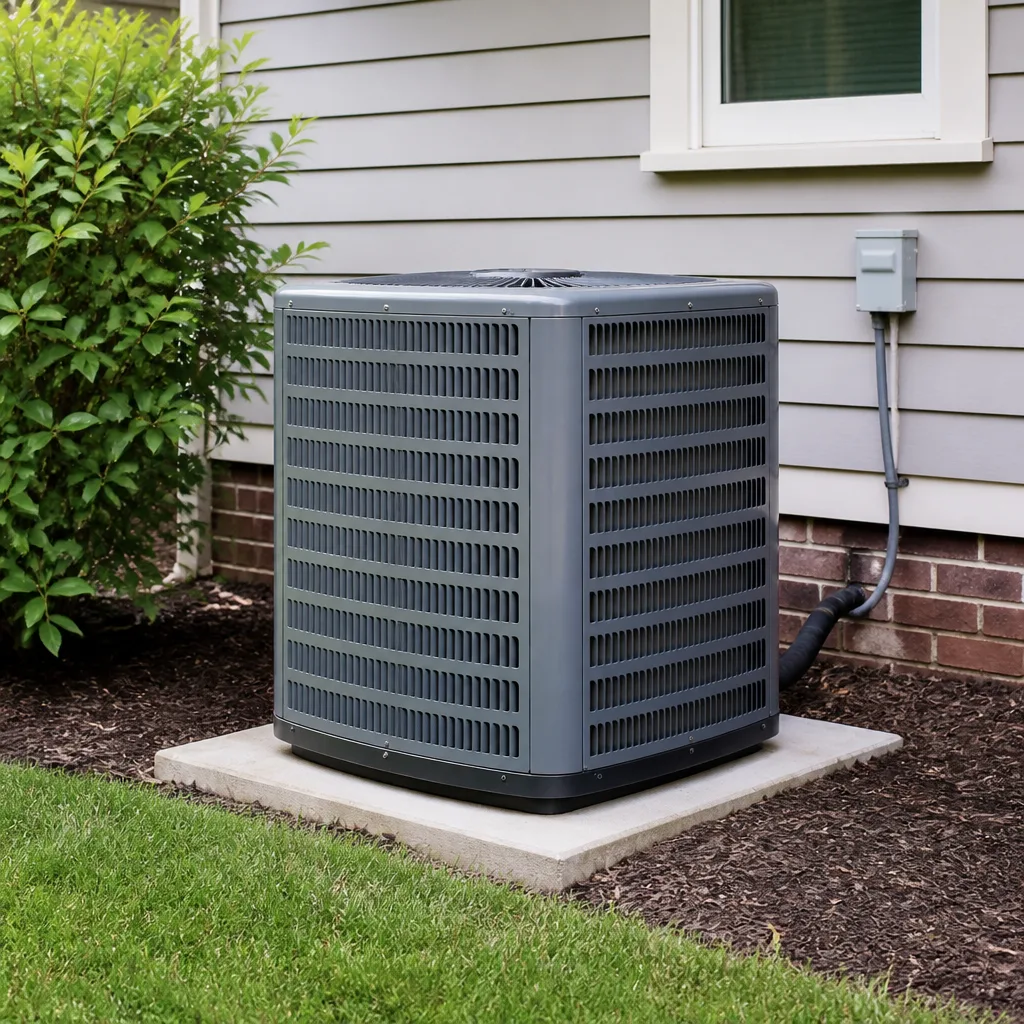 Goodman
Seasonal tune-up and full diagnostic on your Carrier, Trane, or Goodman system - readings shown to you before any repair is proposed
Diagnosis first, numbers second - you approve the repair price before a single part goes in.
Get your free estimateHow to Hire a HVAC Contractor in Queens: A Step-by-Step Guide
Here’s the uncomfortable truth most Queens homeowners don’t discover until something goes wrong: a contractor can hand you a state license, an insurance certificate, and a folder full of five-star printouts, and still send an unlicensed helper to do the actual work in your basement or on your roof. It happens in Queens more often than anyone likes to admit, because most people only check credentials before the appointment, never at the door. The paper stops mattering the moment a stranger walks in. This guide walks you through the full hire, step by step, so you know exactly what to check, what to ask, and what to demand in writing before anyone touches your system.
Quick Answer
To hire an HVAC contractor in Queens, look up the company’s NYC Home Improvement Contractor license on the DCA database, confirm the license belongs to the same company name on the estimate, ask three permit questions before booking, demand a written itemized estimate that matches New York State requirements, and verify by name and photo the technician who actually shows up at your door. A legitimate contractor will do all of this without hesitation. If they balk at any step, move on.
Styles & brands we work with
Table of Contents
- Step 1: Look Up the NYC Home Improvement Contractor License (In Under Two Minutes)
- Step 2: Close the Gap Between the Person Who Answers the Phone and the Person at Your Door
- Step 3: The Three Permit Questions That Reveal Everything
- Step 4: What a Legitimate Written Estimate Must Contain Under New York State Law
- Step 5: How to Document the Hire So You Have Legal Footing
- Step 6: Real Queens Pricing So You Arrive Informed, Not Surprised
- Step 7: What a Real Work Guarantee Should Say
- Step 8: The 60-Second Verification Script for the Day of the Job
Step 1: Look Up the NYC Home Improvement Contractor License (In Under Two Minutes)
New York City requires any contractor doing home improvement work valued above $200 to hold a Home Improvement Contractor license issued by the Department of Consumer Affairs, now called the Department of Consumer and Worker Protection. That covers virtually every HVAC repair, replacement, and maintenance visit in Queens. The license exists so you can check a company’s legal standing before you hand over money. Here’s how to use it.
Go to the DCA’s license search page. On the DCA website, look for “Check a License” or “License Search.” Type in the company name exactly as it appears on the estimate, or use the license number if they provided one. The result will show whether the license is active, the license number, the business address to which the license is registered, and whether there are any disciplinary actions on record. This takes about two minutes.
Now here’s the part most guides skip. You aren’t just checking that a license exists. You’re checking three specific things:
- The company name on the license must match the name on the estimate and invoice. If the estimate says “Queens Heating Pros” but the license is registered to “QP Heating LLC” with no reference to the trade name, you need to ask why. A DBA (Doing Business As) registration is a real thing and can explain the difference, but you should see it in writing.
- The license must say “Active,” not “Expired,” “Suspended,” or “Surrendered.” A suspended license means the DCA took action against this contractor. That’s a hard no.
- Any disciplinary history should be read, not ignored. DCA publishes enforcement actions. One consumer complaint from six years ago may not be a dealbreaker. Multiple open complaints, or any pattern of “work not performed as contracted,” is exactly the information you want before you sign anything.
In our experience, the license lookup is the single highest-value check a Queens homeowner can do before hiring. It’s free, it’s fast, and it filters out the worst actors immediately. A contractor who gets vague when you ask for their DCA license number has already told you everything you need to know.
After you’ve confirmed the license, the next step is the one nearly everyone misses. The license is attached to the paper. The work is attached to a person. And those two things are not automatically the same.
Step 2: Close the Gap Between the Person Who Answers the Phone and the Person at Your Door
Here’s a scenario we’ve seen play out in Queens more times than we can count. A homeowner calls a company with a great reputation. The person on the phone is polite, knowledgeable, and schedules the visit. On the day of the appointment, a van pulls up with no company markings. A person gets out wearing no uniform, no badge, and no identification. They say they’re “with the company.”
Most homeowners let them in, because the phone call felt legitimate and the appointment was confirmed. What they’ve actually done is open their door to a person whose identity they cannot verify, whose connection to the licensed company they have not confirmed, and whose qualifications they know nothing about. The license you looked up in Step 1 belongs to a company. It does not follow an anonymous person through your front door.
This is not a hypothetical. New York’s home improvement industry runs in part on subcontracting and day labor. A licensed contractor can sell a job, then sell or hand the work to someone else. Sometimes that someone else is a legitimate employee. Sometimes it isn’t. According to DCA enforcement patterns, unlicensed subcontracting is one of the most common violations reported in Queens home improvement complaints.
So how do you close this gap? You make identity part of the contract, not just an assumption. Before you book, ask these questions in plain language:
- “Will the person who does the work be a direct employee of your company, or a subcontractor?”
- “If it’s a subcontractor, what is their name and license number?”
- “Will you send me the technician’s name and photo before the appointment?”
- “Will the technician show identification when they arrive?”
A contractor who answers these questions clearly, in writing, is signaling something real about how they operate. A contractor who gets defensive, vague, or says “don’t worry about it” is telling you the same thing, just less pleasantly.
This is also where the Brandt HVAC Co Queens home standard applies. Every technician we send is background-checked and identity-verified under the Threshold Verified standard. You get the technician’s name and photo before the visit, and they show a photo ID badge at the door. If anyone arrives who you were not told to expect, that visit is on us. These are not marketing phrases. They are the mechanics of how a contractor closes the gap between paper credentials and the person at your door.
Now that you know who’s coming, you need to know what they plan to do. That starts with permits.
Step 3: The Three Permit Questions That Reveal Everything
Permits are the least discussed, most revealing part of an HVAC hire. In New York City, the Department of Buildings requires permits for most HVAC work beyond basic maintenance. Furnace replacements, new AC installations, ductwork changes, electrical connections, and any gas line work all typically require a permit. A contractor who routinely skips permits is not saving you money. They’re transferring legal and safety risk onto your property.
Here’s what most Queens homeowners don’t realize: an unpermitted HVAC install can surface years later. It comes up when you sell the house and the buyer’s inspector flags equipment that doesn’t match the DOB records. It comes up when an insurance claim is denied because the work was never inspected. It comes up when a furnace fails because a gas line was connected by someone without the required certification.
Before you book, ask these three questions. The answers will tell you almost everything you need to know about how this contractor operates.
- “Will this job require a permit from the NYC Department of Buildings?” If they say no, ask them to explain why, specifically. A furnace replacement in Queens absolutely requires a permit. A simple filter change does not. The contractor should be able to explain the distinction clearly and correctly for your specific job.
- “Who pulls the permit – you or me?” A legitimate contractor pulls the permit under their license. If they ask you to pull it as the homeowner, that’s a red flag. It often means their license has an issue, or they’re trying to push liability onto you.
- “Will there be an inspection, and who schedules it?” A permitted job ends with an inspection by the DOB or the relevant authority. The contractor should schedule it and be present. If they say inspections “aren’t needed” for a job that clearly needs one, walk away.
In our experience, the permit conversation is the fastest filter in Queens. It takes ninety seconds. A contractor who answers with specifics, who knows what requires a permit and what doesn’t, who has a clear process for pulling and closing permits, is a professional. A contractor who waves it off with “we don’t really do permits” or “it’ll be fine” has just disqualified themselves.
Step 4: What a Legitimate Written Estimate Must Contain Under New York State Law
New York State law sets real requirements for home improvement contracts. Specifically, under New York General Business Law and NYC DCA regulations, any home improvement contract over $500 must be written. That’s not a suggestion. That’s the legal floor. An estimate is a quote. A contract is the agreement before work starts. You want both.
Here’s what a legitimate written estimate or contract must include. If any of these are missing, ask for them before you sign anything.
Required Elements of a Valid Written Estimate
- Contractor name, address, and DCA license number. The exact name that matches the license you looked up in Step 1. Not a nickname. Not a first name. The legal business entity name.
- Itemized scope of work. Not “repair furnace.” It should say, for example, “Replace igniter on Carrier furnace, model 59SC5B, serial number XXXX, including removal of old igniter, installation of new OEM igniter, and function test.” Specificity protects you.
- Total price, in writing, with a breakdown of labor and materials. If there are allowances or contingencies, they must be stated as a range and explained.
- Payment schedule tied to milestones. Be wary of any contractor who wants more than 50% upfront. New York law doesn’t cap deposits, but standard practice for most Queens HVAC work is a reasonable deposit, or zero deposit for smaller jobs like AC Repair in Queens, with the balance due on completion.
- Start date and substantial completion date. In writing. Not “soon,” not “next week depending on weather.” A date or a date range.
- Warranty or guarantee terms. What’s covered, what’s excluded, and for how long. In writing.
- Signature and date from both parties. No signature, no contract.
Now, the specific line items that signal a low-ball quote. In our experience, these are the patterns where a cheap estimate becomes an expensive surprise.
“Labor plus materials at cost.” This is not a price. This is an open checkbook. It gives the contractor permission to set the bill after the work is done. Never sign this.
Vague line items like “miscellaneous” or “additional work as needed.” “As needed” means “when we decide.” Everything should be specific. If a contractor can’t tell you exactly what they’ll do, they can’t tell you exactly what it will cost.
“Permit fees – to be determined.” Permit fees are knowable. The city publishes them. A contractor who won’t list the permit fee is either skipping the permit or planning to inflate it on the back end.
“Refrigerant recharge” with no quantity or type. If they can’t tell you how many pounds of what refrigerant, ask why. The price difference between one pound and six pounds, or between R-410A and R-22, is hundreds of dollars.
Every job we do at Brandt HVAC Co Queens begins with a written price before any work starts, on every single job, no exceptions. If you’re comparing estimates and one company won’t put the full price in writing, that’s not a quote. That’s a guess with a solvent.
Step 5: How to Document the Hire So You Have Legal Footing
If something goes wrong, the quality of your documentation determines whether you have a remedy or a headache. New York consumer law is actually quite protective of homeowners, but it can only work with evidence. Here’s how to build a file that gives you legal footing from day one.
- Keep every text message. New York courts have consistently treated text messages as binding evidence. A text that says “yes, we’ll include the permit” is as useful as a contract line, sometimes more useful because it’s the contractor’s own spontaneous words.
- Confirm scope changes in writing before they happen. If the contractor discovers something unexpected during the job, the right move is “please send me that as a written change order with a price before you proceed.” A change order is a mini-contract. Every legitimate contractor uses them. Every problematic contractor avoids them.
- Photograph everything. Before photos. After photos. Photos of the equipment model and serial number. Photos of the work area. Photos of any damage or debris. If a dispute goes to DCA mediation or small claims, before-and-after photos decide cases.
- Do not pay in cash with no receipt. A cash payment with no written receipt is not provable in a legal dispute. A check, a credit card, or a payment app with a clear memo line creates a paper trail. The memo line should say what the payment was for: “Deposit for furnace replacement, 123 Main St, Queens.”
- Keep the contract, the estimate, the warranty, the permit, and the invoice together. Digitally or in a folder. Do not lose the paper. It is your legal foundation.
This step costs you ten minutes on the front end and can save you thousands of dollars and a year of frustration on the back end. The contractors worth hiring will not be annoyed by this. They’ll appreciate it, because it means they’re working with a clear-eyed customer. The contractors worth avoiding will find it exhausting. That’s the point.
Step 6: Real Queens Pricing So You Arrive Informed, Not Surprised
Queens pricing for HVAC work runs higher than upstate New York and roughly in line with the rest of New York City. But within Queens, you’ll see real variation by season and by urgency. A repair in August, when every AC in the borough is running flat out, will price differently than the same repair in March. That’s not gouging. That’s demand. Here are realistic ranges for common jobs in Queens, parts and labor included.
- AC diagnostic visit: $89 – $149. Many companies will credit the diagnostic fee toward the repair if you approve the work on the same visit.
- Furnace igniter replacement: $180 – $320. The igniter itself is not expensive. You’re paying for the diagnosis, the part, and the labor. Anything under $150 on a full-service visit is suspiciously low.
- Capacitor replacement for a central AC: $175 – $350. This is one of the most common Queens AC failures in July.
- Refrigerant recharge (R-410A): $250 – $600 depending on how many pounds are needed. If your system is low, the leak needs to be found and repaired. A recharge without a leak search is a temporary fix.
- Condensate pump replacement: $200 – $400.
- Thermostat replacement (standard digital): $150 – $300 installed. Smart thermostat installation runs $250 – $500 depending on wiring.
- Central AC replacement (full system, 2 – 3 ton): $6,500 – $12,000 in Queens depending on efficiency rating, brand, and ductwork condition. Brands like Daikin, Carrier, and Bryant tend to price at different points in this range. This always requires a permit.
- Furnace replacement (standard efficiency gas): $4,800 – $9,500. High-efficiency models run toward the top of that range. This also requires a permit.
- Annual AC maintenance: $120 – $250. This is a AC Maintenance in Queens visit that includes coil cleaning, refrigerant check, electrical inspection, and a written report.
These are not quotes. They’re planning ranges so you can tell whether an estimate you receive is reasonable or wildly off. If a price comes in 40% below these ranges, that’s not a bargain. That’s a warning sign that the written estimate you read in Step 4 is incomplete, the parts are not factory-made (aftermarket parts are cheaper and often inferior), or the permit is not included. In our experience, Queens homeowners fare better knowing the range before the first call.
Step 7: What a Real Work Guarantee Should Say
A guarantee is only as good as its words. Here’s what we tell every homeowner to look for. This applies whether you’re hiring for Furnace Repair in Queens or any other HVAC work.
The length must be specific. “Workmanship guaranteed” means nothing without a number. A real guarantee says “this repair is guaranteed for 90 days” or “for one year.” At Brandt HVAC Co Queens, every repair includes a written guarantee that states exactly what it covers and for how long.
The coverage must be specific. Does the guarantee cover labor only, or labor and parts? If the part is under manufacturer warranty but the labor isn’t, you want that stated clearly. Does the guarantee cover a return visit, or just a refund? “We’ll come back and fix it at no charge” is far better than “we’ll refund the part.”
The exclusions must be stated. Every honest guarantee has exclusions. Things like damage from misuse, power surges, or subsequent unrelated failures. If a contractor says “everything is covered forever,” that’s marketing, not a guarantee.
Here’s the test we suggest. Take the written guarantee and ask one question: “If this exact repair fails in exactly the same way on day 80, what happens, in writing?” A real contractor answers immediately, because they’ve already put it in writing. The Brandt 365-Day Done Right Promise answers it this way: if the repair fails within the guarantee period, we return at no charge and make it right. No argument. No additional fee. That’s what a guarantee is supposed to do.
Step 8: The 60-Second Verification Script for the Day of the Job
The appointment is booked. The estimate is signed. The tech is scheduled. Now the most important moment in the entire process happens at your front door. Here’s a simple script. Use every bit of it. It takes under a minute.
- “Hi. Can I see your photo ID and your company badge, please?” Say it pleasantly, like you’re asking for a glass of water. A legitimate technician expects this. They hand it over. You check that the name on the ID matches the name you were told to expect, and that the photo matches the face.
- “What company are you with today?” This sounds obvious, but you’d be surprised. If the answer is different from the company you hired, the answer you’re looking for is “then I need you to wait while I call the office.”
- “Can you confirm what work you’re here to do?” The answer should match the written scope from Step 4. Not a different diagnosis. Not “I’m just here to take a look.” The work on the contract is the work you discuss at the door.
- “Will you be doing the work, or is someone else coming?” If the answer is “I’m the supervisor, the tech is parking the van,” you still verify the tech the same way before they enter.
If the person at your door refuses to show ID, or the name doesn’t match, or the company is different, close the door. Not aggressively. Just close it. Call the company you hired. If you can’t reach anyone, that’s a company failing you in real time. The correct response to a failed identity check is not politeness. It’s the door.
The Threshold Verified standard exists for exactly this reason. Every Brandt HVAC Co Queens technician is background-checked, identity-verified, uniformed, and sent to you by name and photo before the visit. They arrive with a photo ID badge. You check it at the door. If anything is off, that visit is on us. You never have to wonder whether the person in your hallway is the person we said we’d send. That’s not a premium feature. That’s the bare minimum of what “hiring a contractor” should mean.
Common Mistakes to Avoid
- Checking the license once and never again. A license can be suspended after you check it. The DCA lookup takes two minutes. Do it close to the booking date, not just during initial research.
- Hiring the first company that answers the phone on a hot July day. Urgency is real, but an unvetted contractor in a heat wave is how Queens homeowners end up overcharged and under-repaired. The emergency is not a reason to skip the license check.
- Believing the license on the website without verifying it. Websites can display any license number they want. The DCA database is the only source that matters. A company that prints a license number but isn’t in the database has a problem.
- Paying in full before the work is complete and inspected. A deposit is normal. A final payment should follow completed work, a walkthrough, and the permit inspection if one was required. Full payment upfront changes the power dynamic entirely.
- Not checking whether the technician is an employee or a subcontractor. If a sub does the work and the sub disappears, your written contract was with the company, not the sub. You want to know who answers when something fails later.
- Accepting a verbal warranty. “Don’t worry, we stand behind our work” is not a warranty. A warranty is written, dated, and specifies duration and coverage. If it’s not on paper, it doesn’t exist.
- Skipping the door check because it feels awkward. The awkwardness lasts five seconds. The alternative, letting an unknown person into your home, can last much longer. Every legitimate contractor in 2026 expects the door check.
See the difference
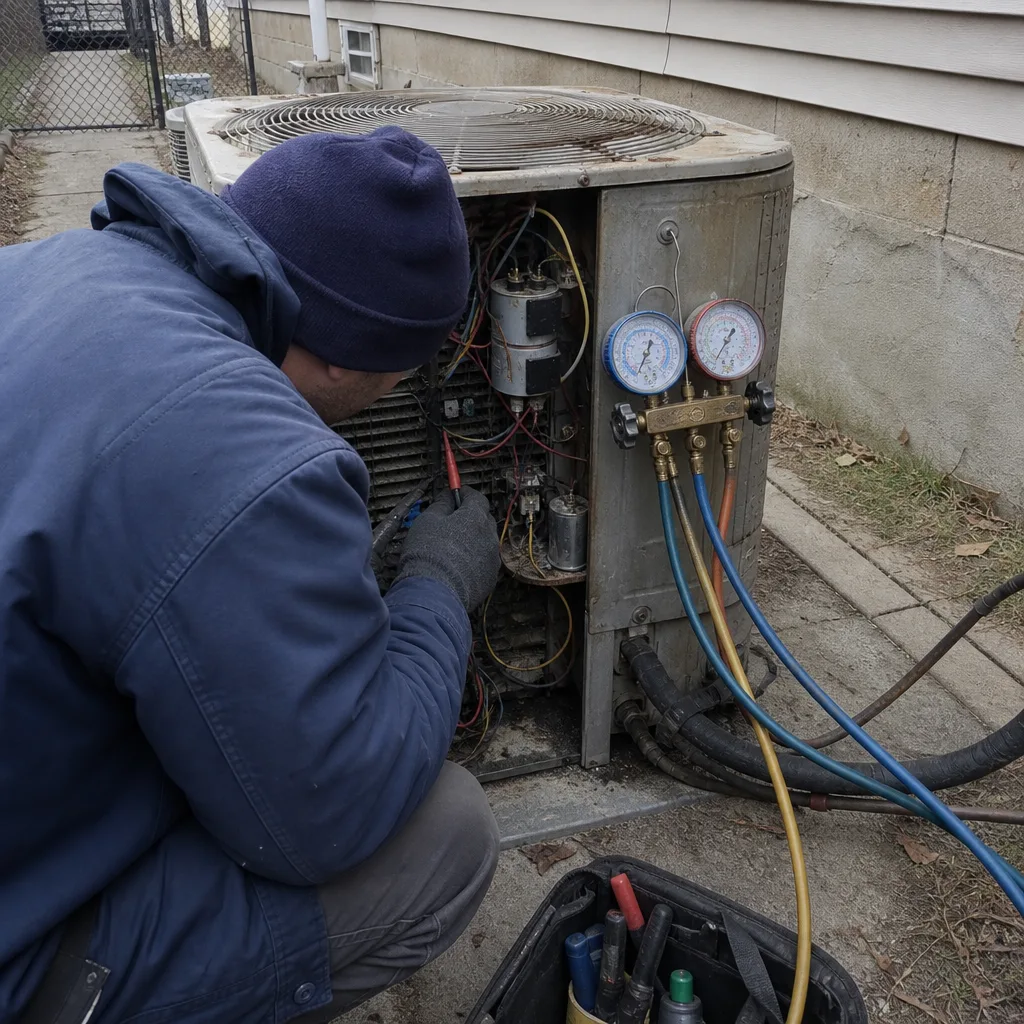 Before
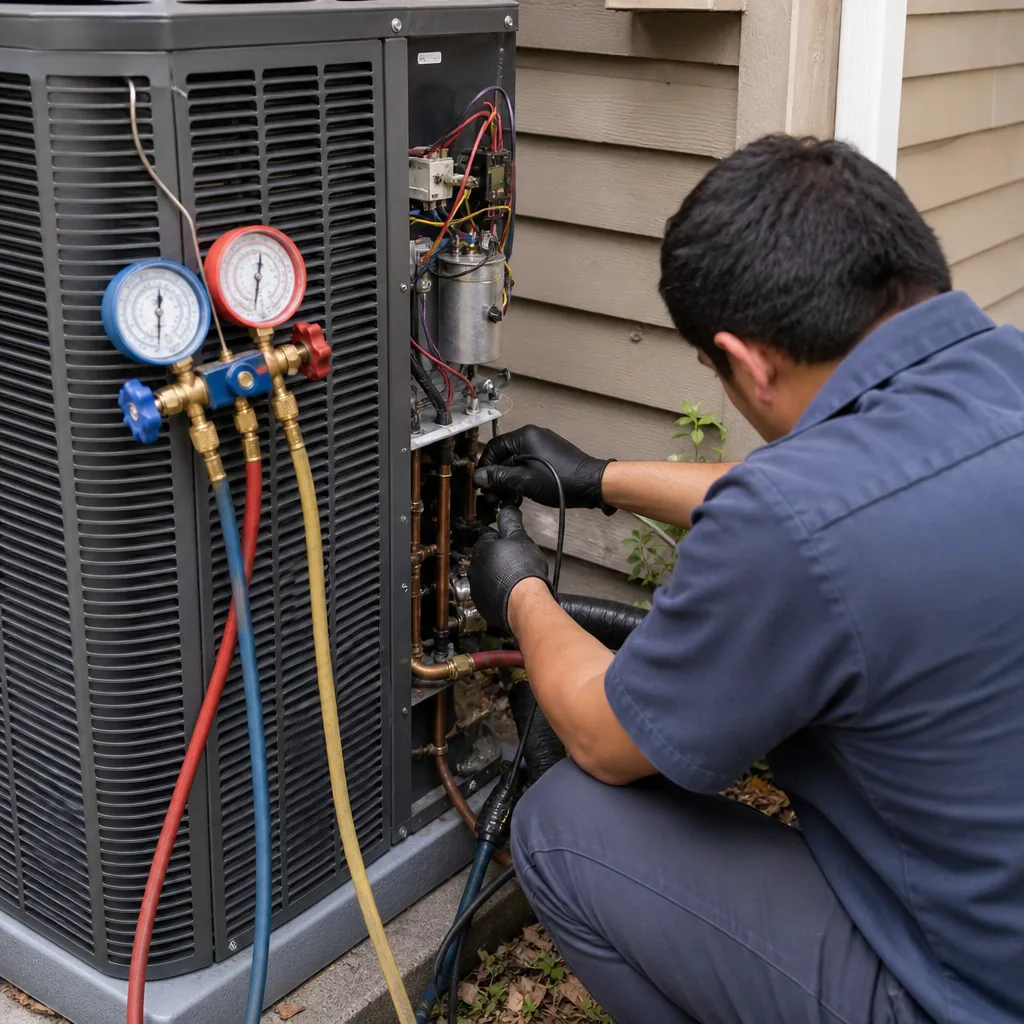 After
After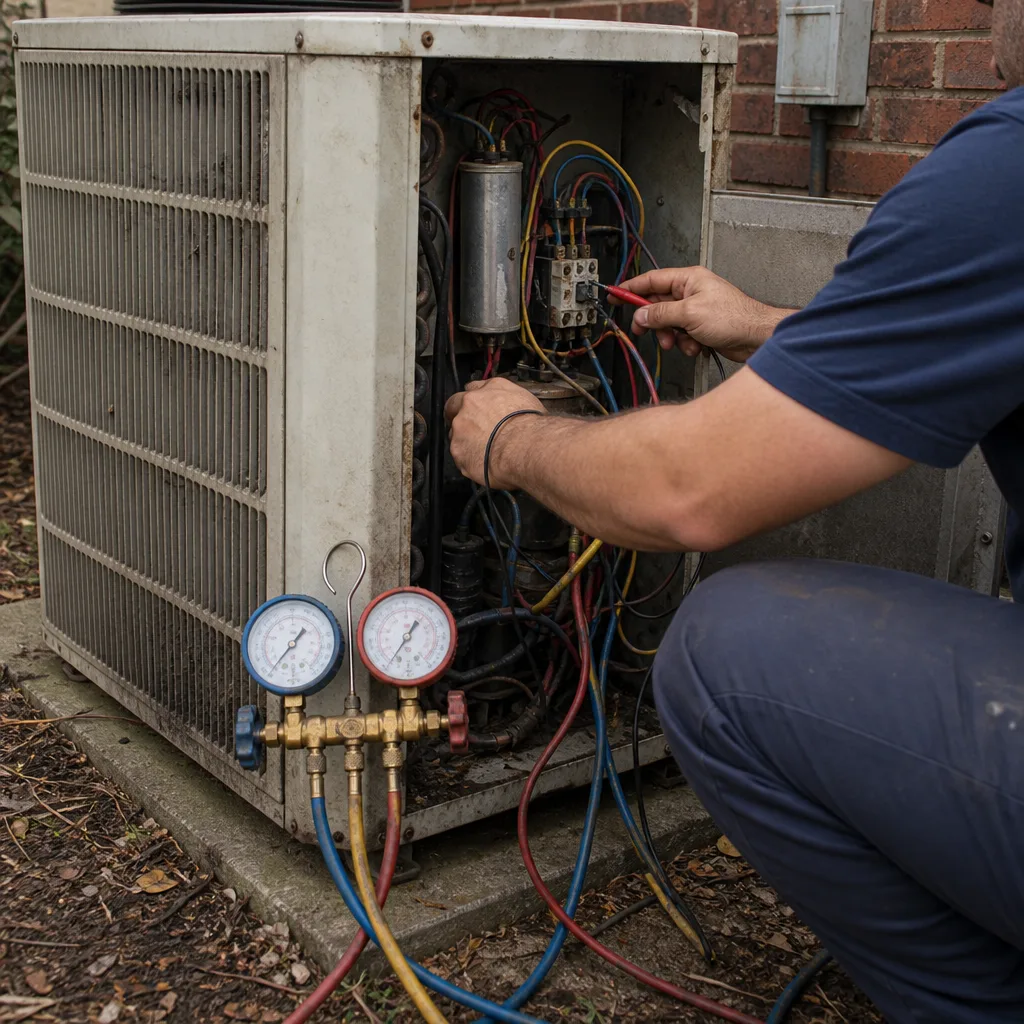 Before
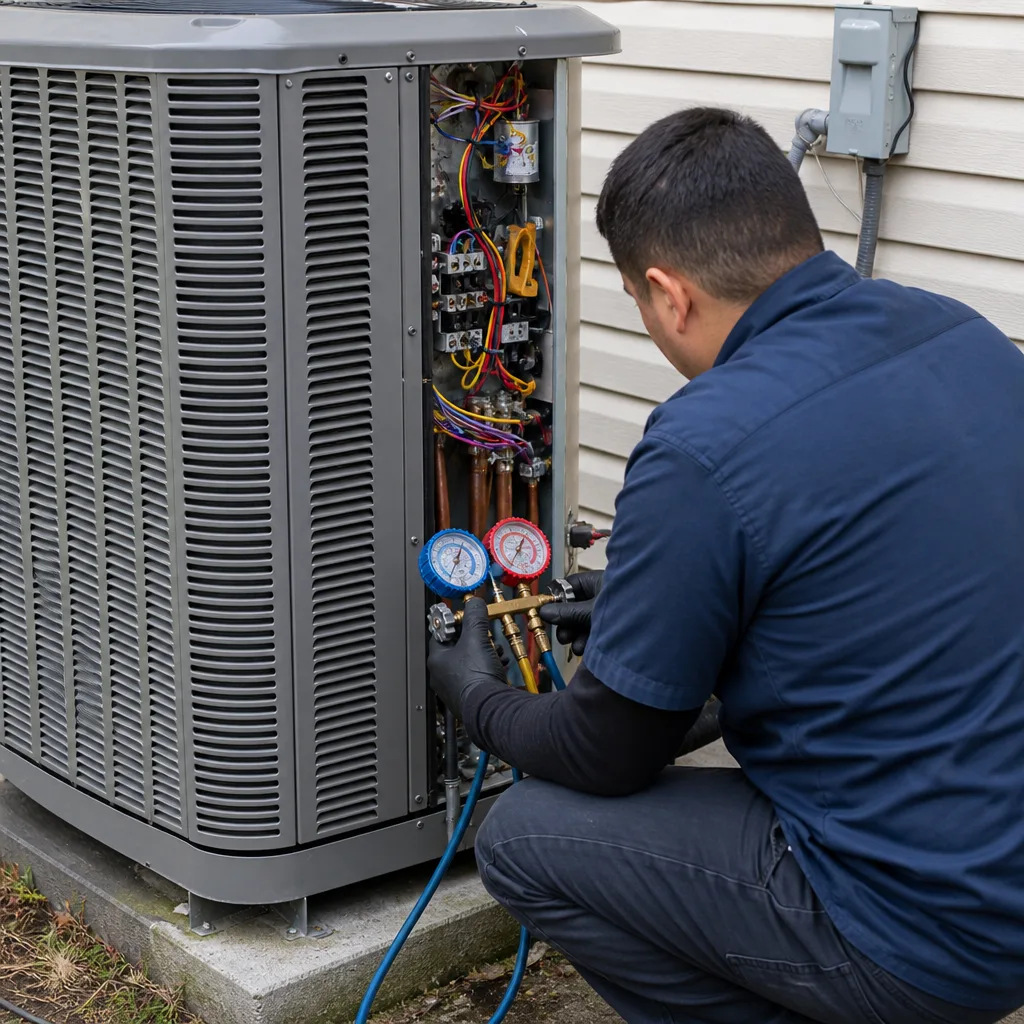 After
After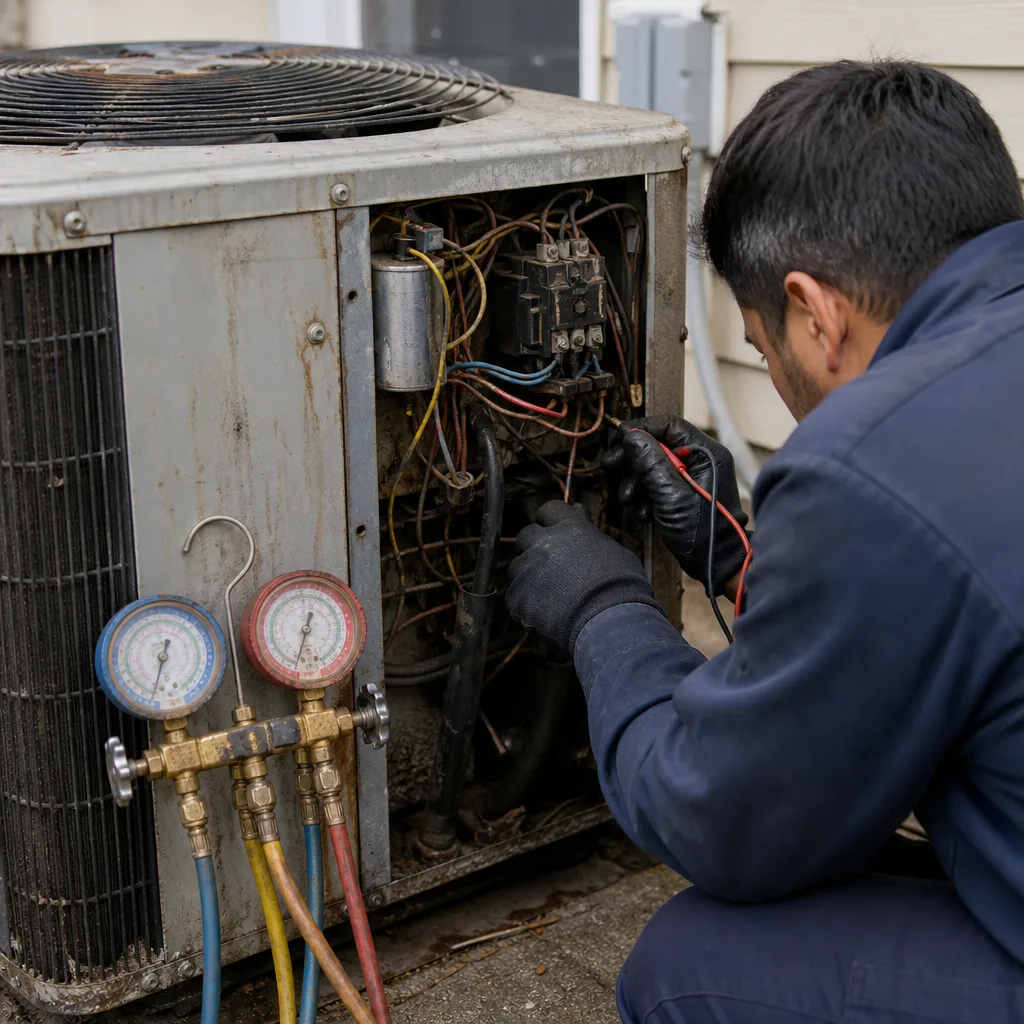 Before
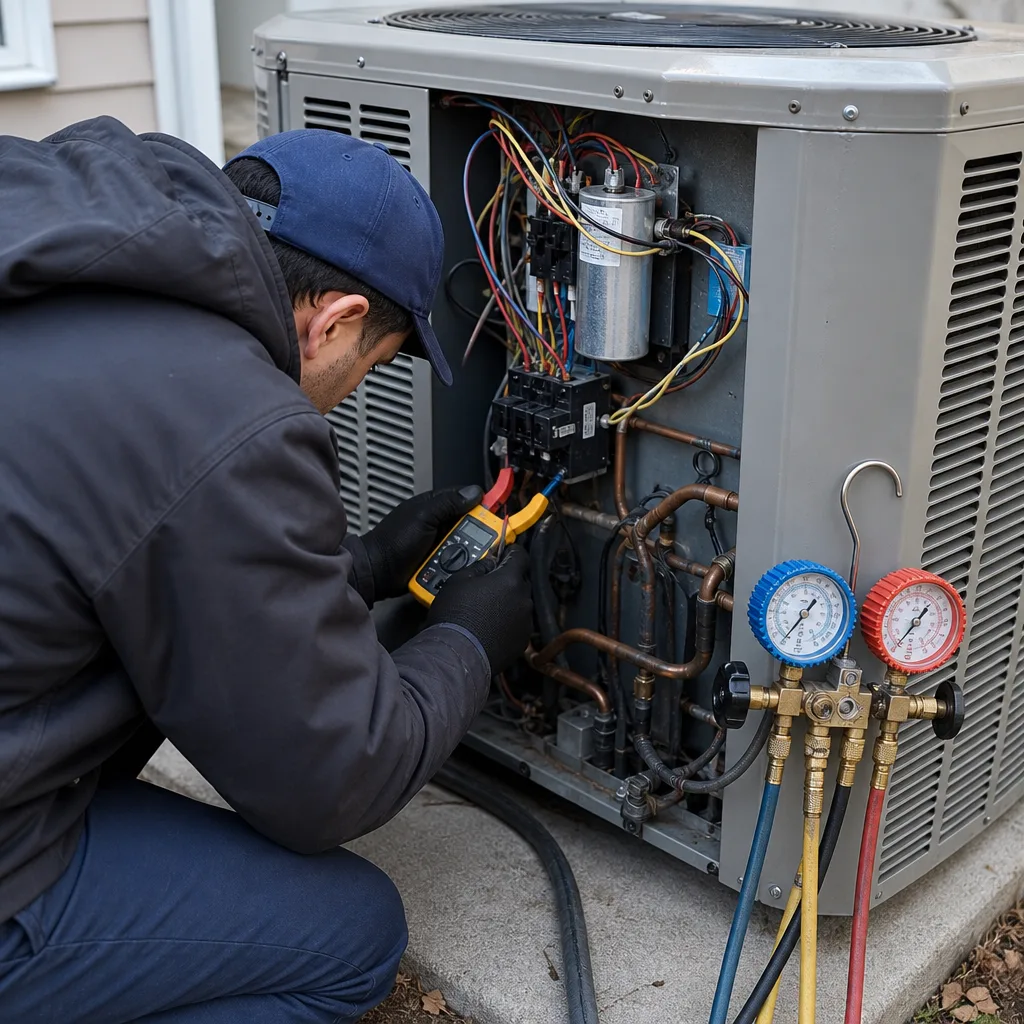 After
AfterWhen to Call a Professional
Some jobs are genuinely DIY-adjacent. Replacing an air filter, resetting a tripped breaker, cleaning a thermostat sensor. But beyond that, HVAC work in Queens justifies a professional every time. Call a pro if your system involves refrigerant, natural gas, electrical connections, or anything inside the sealed cabinet. Call a pro if the furnace is making a banging sound on startup, if the AC is blowing warm air, if there’s water pooling under the unit, or if you smell anything like gas. For a full list of what to watch for, see our HVAC Warning Signs: A Queens Homeowner’s Reference Guide. These are not learning opportunities. A refrigerant leak can cause a compressor failure that turns a $300 repair into a $7,000 replacement. A furnace heat exchanger crack is a carbon monoxide risk. A gas odor is a call you make from outside the house, not from the basement.
Brandt HVAC Co Queens offers free estimates in Queens for AC repair, furnace repair, and AC maintenance. Call (845) 328-4955 and a live person answers, 24 hours a day, every day. No voicemail, no callback queue. You’ll speak to a person, not a phone tree.
Frequently Asked Questions
Go to the NYC DCA license search page, enter the company’s name or license number, and confirm the license is active, registered to the same business name on the estimate, and free of unresolved disciplinary actions. This takes under two minutes and should be done before booking, not after.
No. Most HVAC replacement and installation work in Queens requires a DOB permit. A contractor who routinely skips permits is transferring legal and safety liability onto you, and the unpermitted work can surface later during a home sale or insurance claim.
Ask for a photo ID and company badge at the door before the person enters. The name on the ID should match the name the company sent you in writing before the appointment. If it doesn’t match, or if they won’t show ID, close the door and call the company.
A valid written estimate includes the contractor’s legal business name and DCA license number, an itemized scope of work, labor and materials broken out separately, total price, payment schedule, start and completion dates, warranty terms, and both signatures. Anything less is incomplete.
Typical Queens ranges are $180 – $320 for a furnace igniter replacement, $175 – $350 for an AC capacitor, $6,500 – $12,000 for a full central AC replacement, and $4,800 – $9,500 for a furnace replacement. These include parts and labor but exclude permit fees, which vary by job.
Yes. Brandt HVAC Co Queens offers free estimates across Queens for AC repair, furnace repair, and AC maintenance. Call (845) 328-4955 and a live person answers around the clock, without a voicemail queue or phone tree.
The Bottom Line
Hiring an HVAC contractor in Queens comes down to two moments. The first is the paper trail: looking up the DCA license, asking the permit questions, reading the written estimate line by line, and documenting every promise. The second is the front door: checking the badge, matching the face to the photo, and verifying the name you were told to expect. Most people only do the first half, which is why the second half matters so much. A company that writes a transparent price, pulls permits, guarantees the work in writing, and sends a verified, named technician to your door is the company you hire. The rest of it is just noise.
If you’re in Queens and looking at HVAC work, start with a phone call. (845) 328-4955. A live person answers. You’ll get a free estimate and a written price before any work begins.
Written by Devin Marlowe, Owner at Brandt HVAC Co Queens, serving Queens since 2003.