
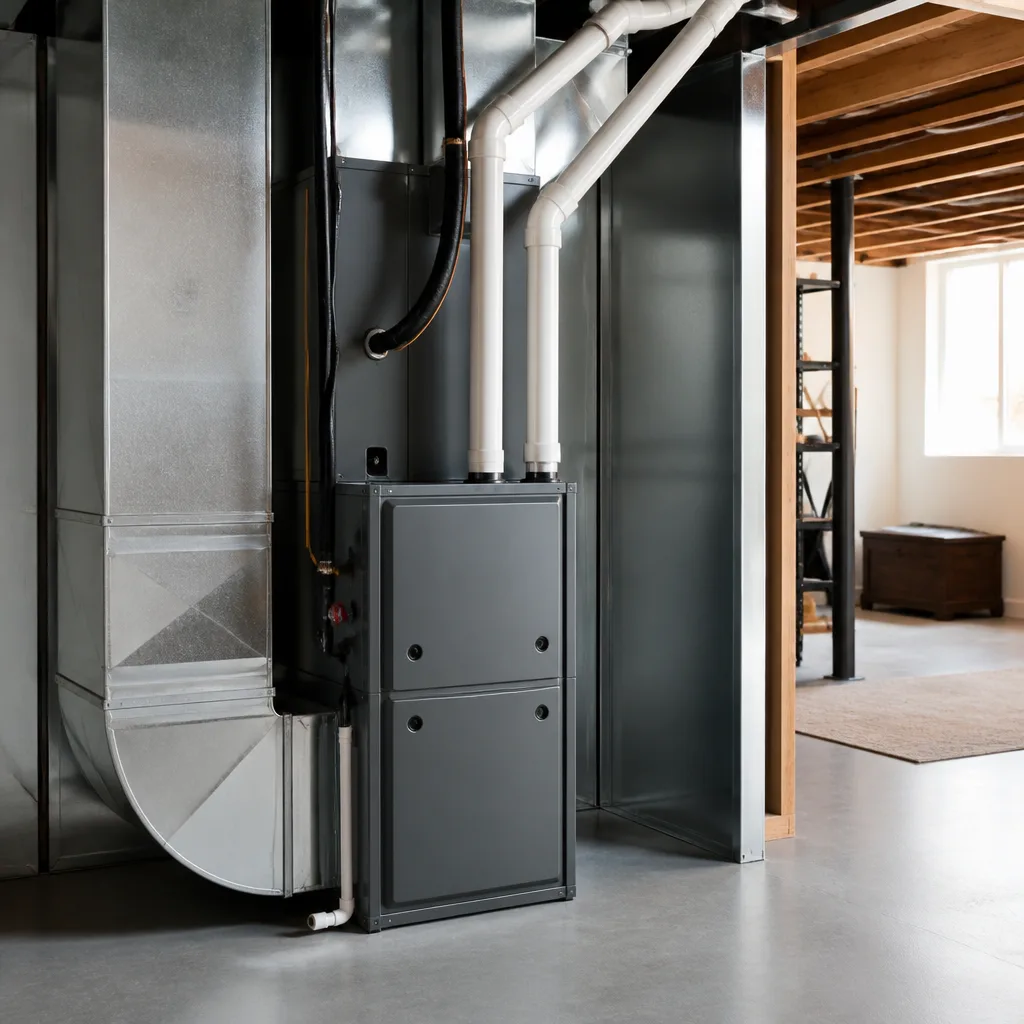
 Furnace & heating
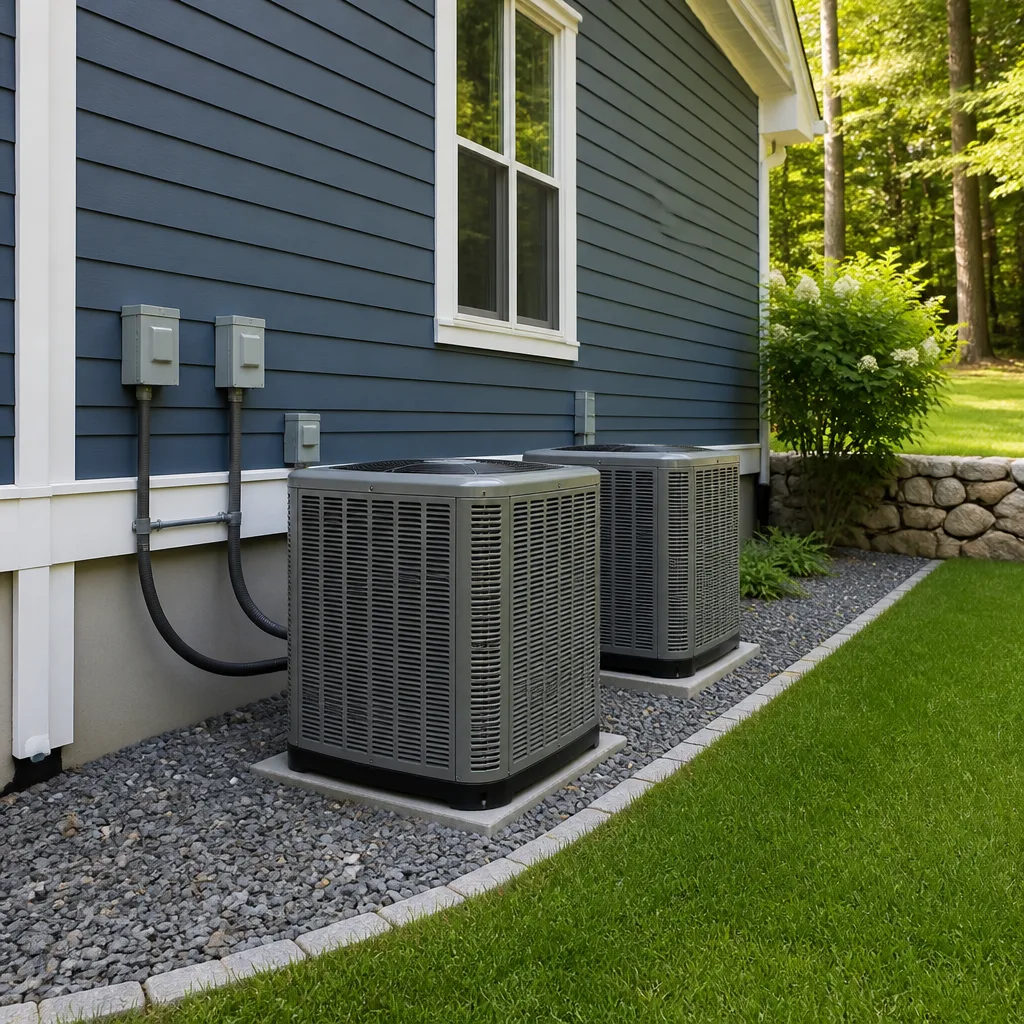 Heat pumps
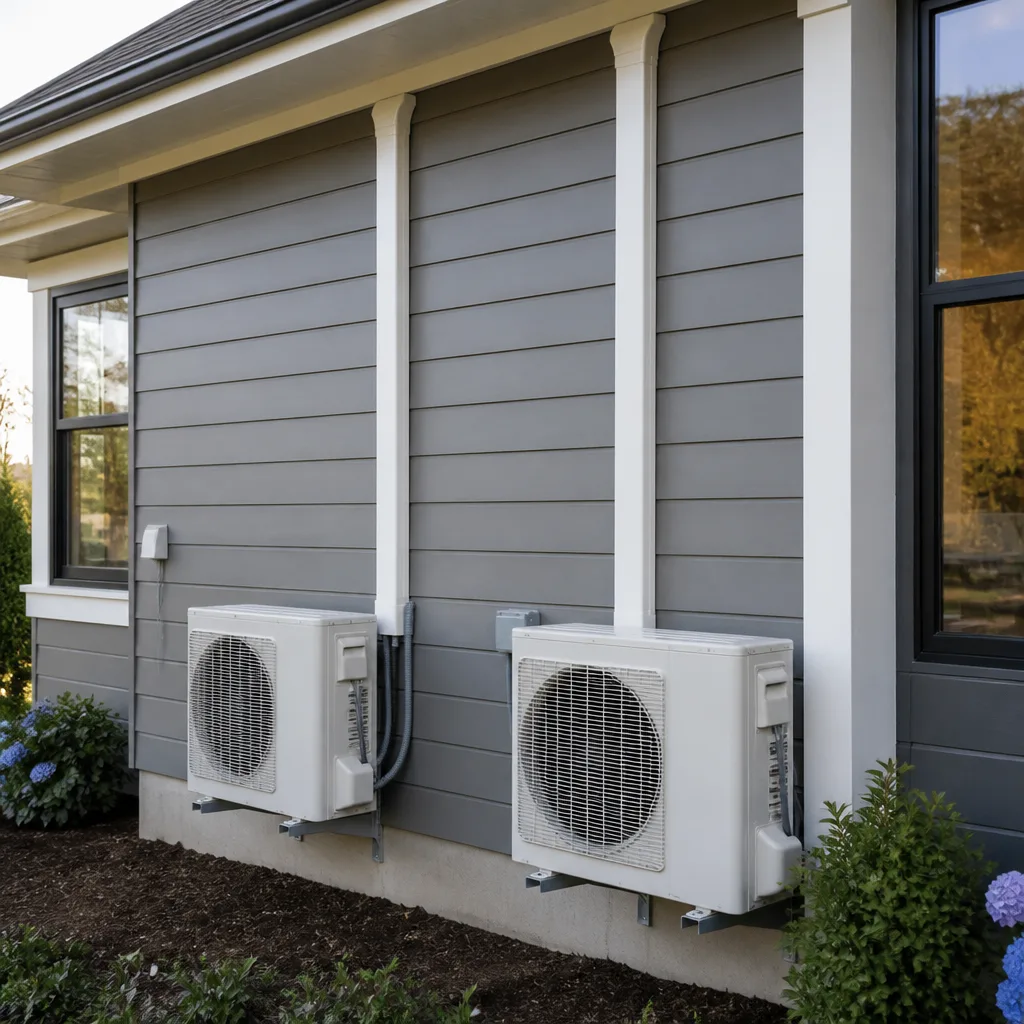 Ductless mini splits
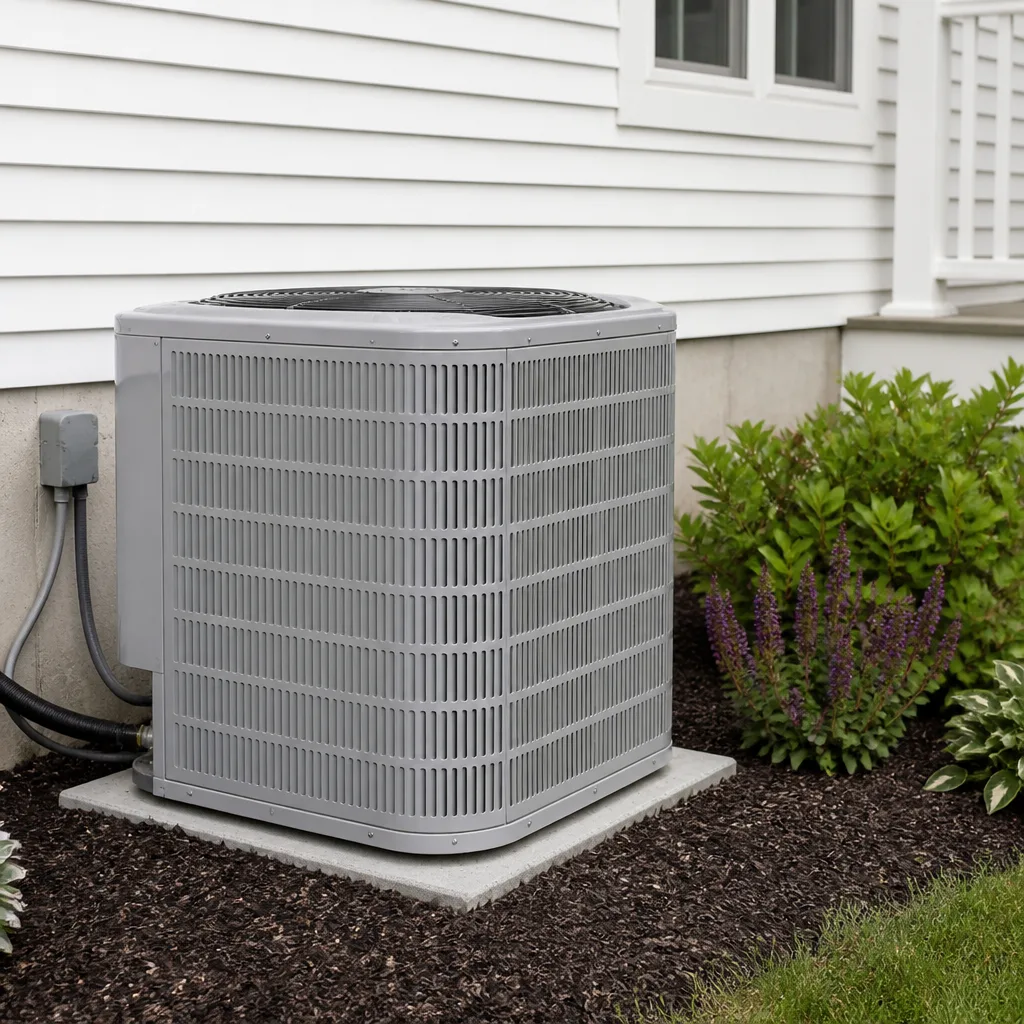 Carrier
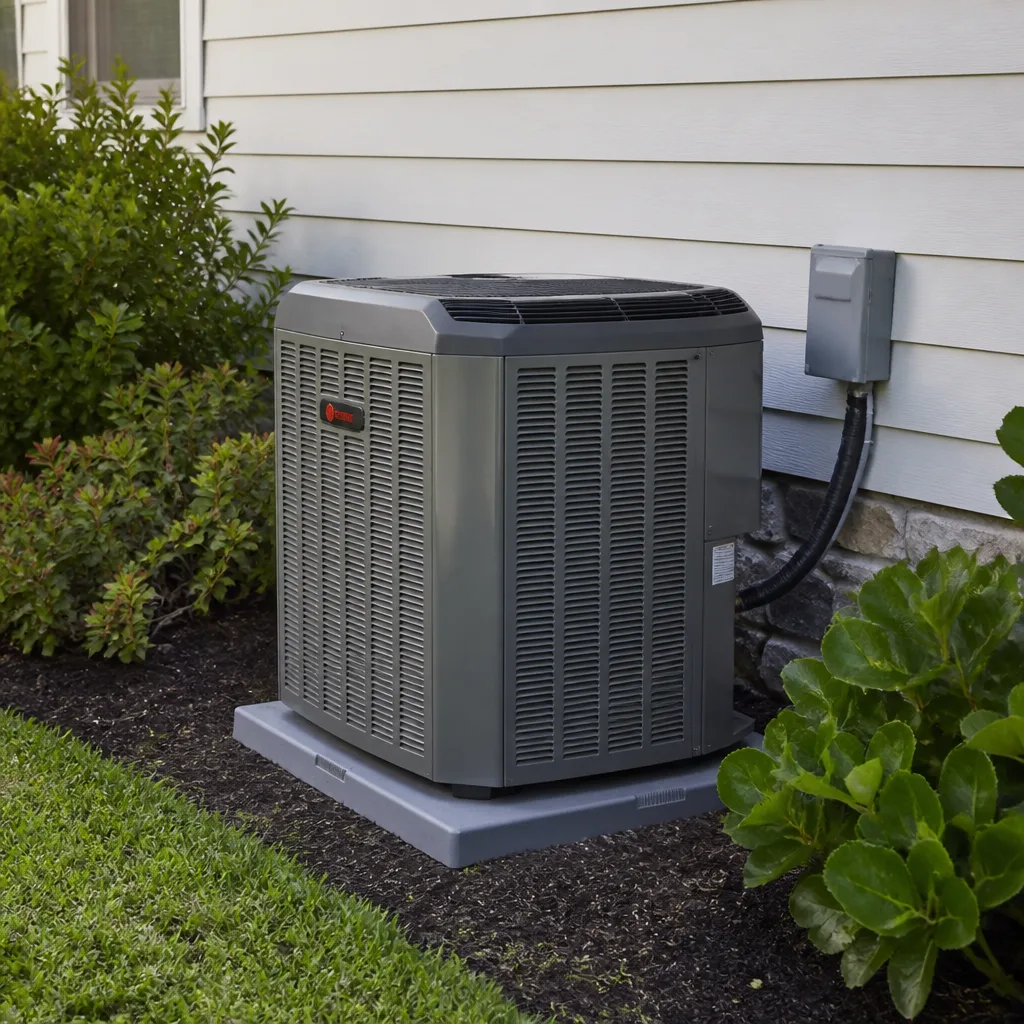 Trane
Trane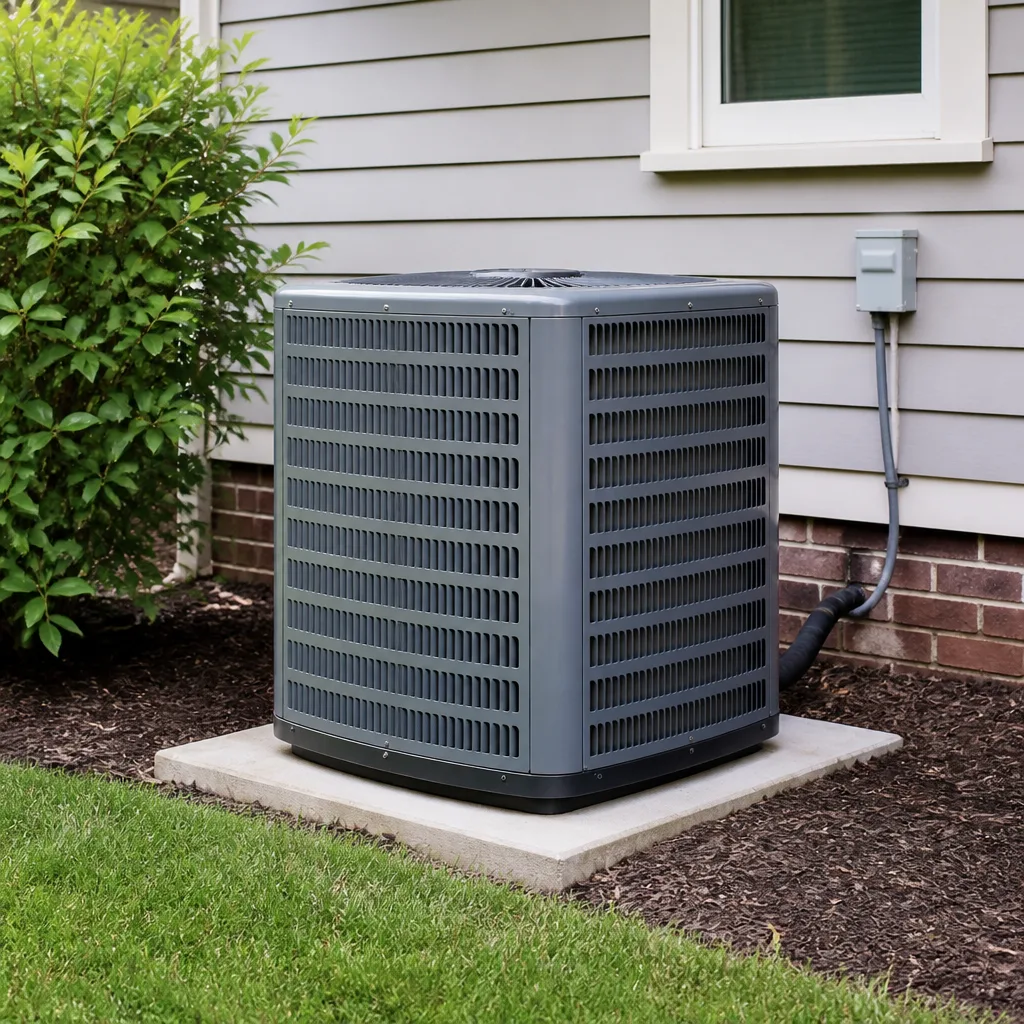 Goodman
Seasonal tune-up and full diagnostic on your Carrier, Trane, or Goodman system - readings shown to you before any repair is proposed
Diagnosis first, numbers second - you approve the repair price before a single part goes in.
Get your free estimateLennox Capacitor Replacement: The Queens Owner’s Guide
If your Lennox AC or heat pump won’t start or hums without kicking on, you likely need a capacitor replacement. In Queens, we typically install a Lennox-compatible capacitor for between $150 and $350, parts and labor included, and we carry the most common specs on our trucks so the job is often done the same day we arrive. Capacitors fail more often in Queens than in milder climates because our summers push condensers hard through July and August, and winter heating season adds a second stress cycle on heat pump units. Most owners discover the problem when the outdoor unit sits silent on a hot afternoon, or the blower inside won’t spin up even though the thermostat is calling for cool air.
Here’s the short version: a capacitor is a small cylinder that stores and releases the electrical charge needed to start your compressor and fan motors. When it weakens or dies, the motor either won’t start, starts slowly, or runs hot until something bigger fails. The fix is usually quick. What matters is matching the right microfarad rating to your specific Lennox unit, and not every replacement part on a supply-house shelf is the right call. We’ll get into that below.
Which Lennox Models This Applies To
Lennox builds capacitors into nearly every residential condensing unit and air handler they’ve made over the last 25 years. That means if you have an XC, XP, EL, ML, or Merit Series system, or anything from the older HS and 10ACC lines still running in Queens apartment buildings and single-family homes, you have at least one capacitor, and usually two: a dual-run capacitor for the compressor and condenser fan in the outdoor unit, and a smaller start or run capacitor in the indoor blower.
The gotcha with Lennox is that the label wears off. After five or six summers on a Queens rooftop or a concrete pad behind a brick rowhouse, the printed microfarad rating (the number that tells you what replacement to buy) fades and becomes unreadable. When that happens, a technician can’t just guess. The replacement has to match the original spec, usually within plus or minus five or six percent, or the motor will run hot and fail early. That spec might be 35/5 µF, 45/5 µF, 50/7.5 µF, or another combination depending on the tonnage and the type of compressor. We carry a range of these on the truck and we verify the rating against the motor data plate before we install anything.
On the OEM versus aftermarket question: a genuine Lennox-branded replacement sometimes exists for a given model, but it will cost more and take longer to get than a quality aftermarket capacitor built to the same or better specification. Brands like AmRad and Titan HD are what we use most often in Queens. They hold up to our heat and humidity as well as or better than the factory part, and they’re what we’d put in our own units. Brandt HVAC Co Queens is an independent service provider, not affiliated with Lennox, so our recommendation is based on what fails least in this climate, not on a brand relationship.
Styles & brands we work with
Signs Your Lennox Capacitor Replacement Is Failing
- The outdoor unit hums but the fan isn’t spinning. The compressor or fan motor is trying to start but can’t get the kick it needs. A dead or weak capacitor will often make the unit draw high current for a few seconds before a safety switch trips it off.
- The AC starts sometimes and not others. A capacitor that’s losing capacity can work in the morning when it’s cooler and fail in the afternoon heat. That’s a classic pattern in Queens, where afternoon rooftop temperatures push components past their limit.
- The fan turns slowly, or you can start it by hand with a stick. If a condenser fan only spins after you give the blades a nudge, the capacitor is no longer providing the starting torque. The motor is running on borrowed time and overheating each cycle.
- You hear a clicking sound from the outdoor unit. That’s often the contactor pulling in, followed by the compressor failing to start. The click happens over and over, which means the control board is fine and the capacitor is the likely culprit.
- The top of the capacitor itself is bulging, or you see oily residue around it. A swollen or split casing, or liquid weeping from the terminals, is a failed part. Don’t touch it with power connected. If you can see this from the panel safely, that’s enough to know a replacement is needed.
None of these signs are something to wait on. A failed capacitor stresses the compressor and fan motors every time the system tries to start, and those are far more expensive to replace. In Queens, where an August heat wave can hit 95 degrees with humidity that makes it feel like 105, a marginal capacitor often dies completely at the worst possible time.
See the difference
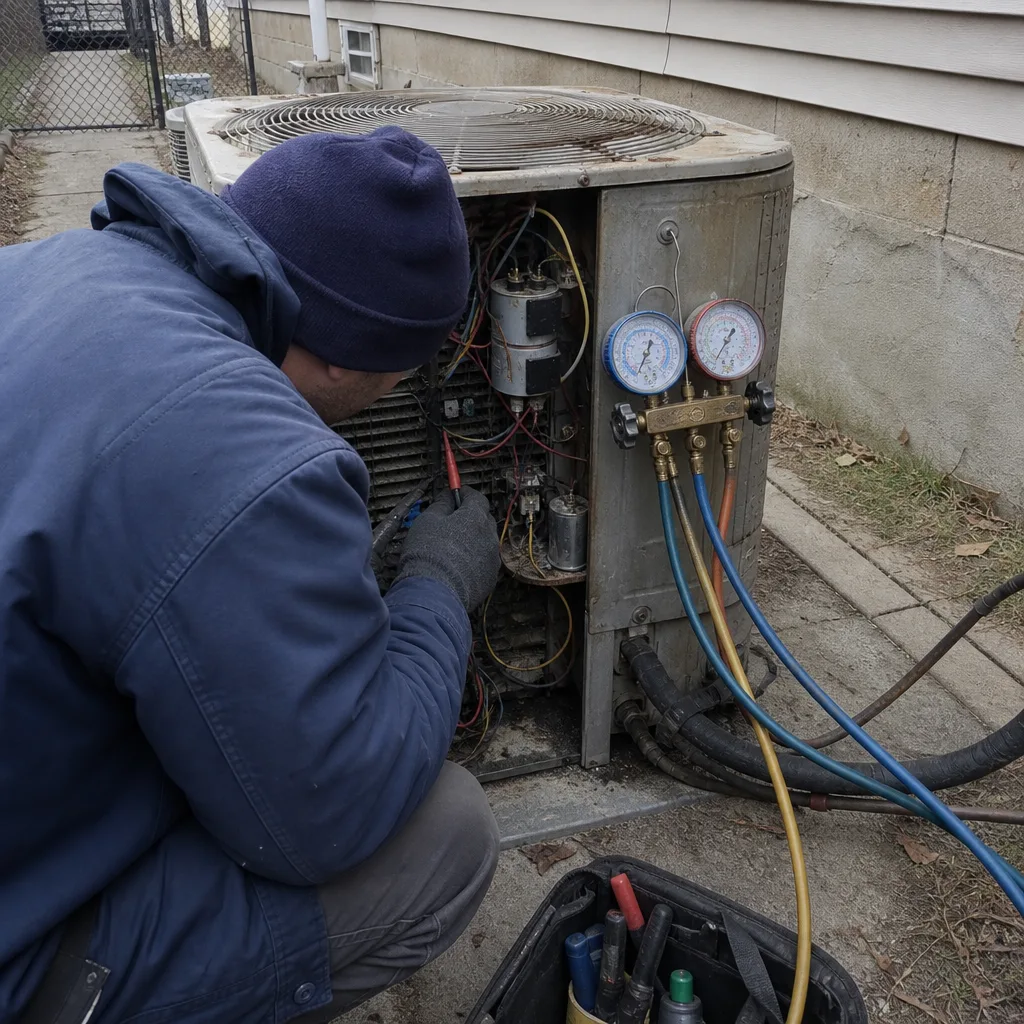 Before
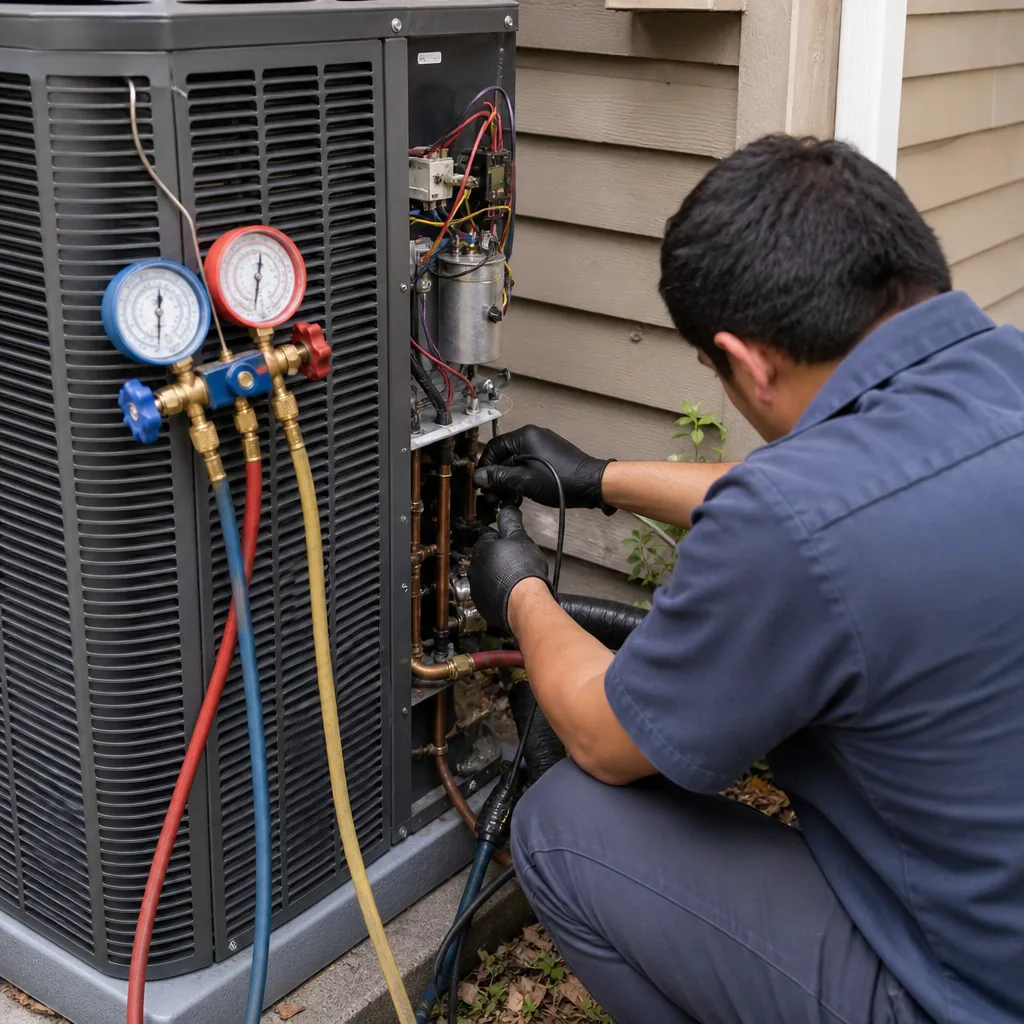 After
After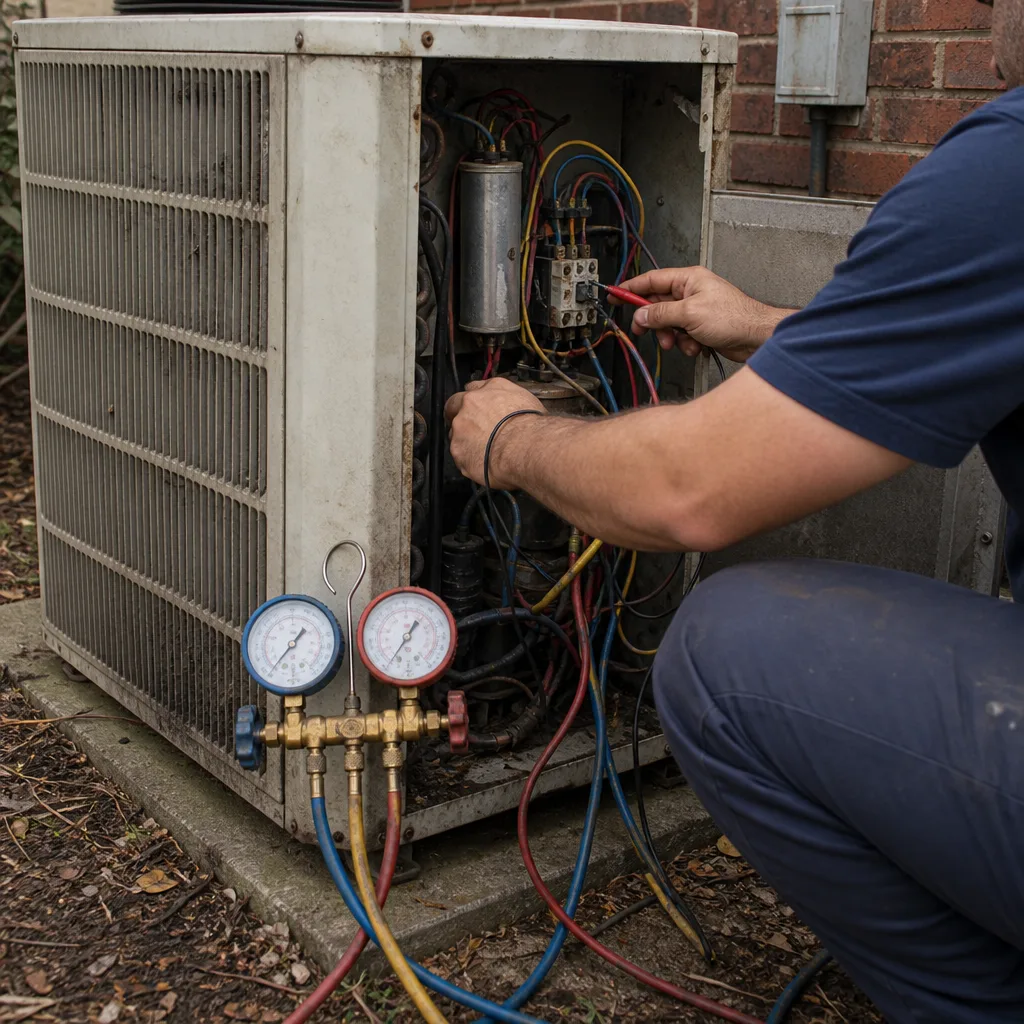 Before
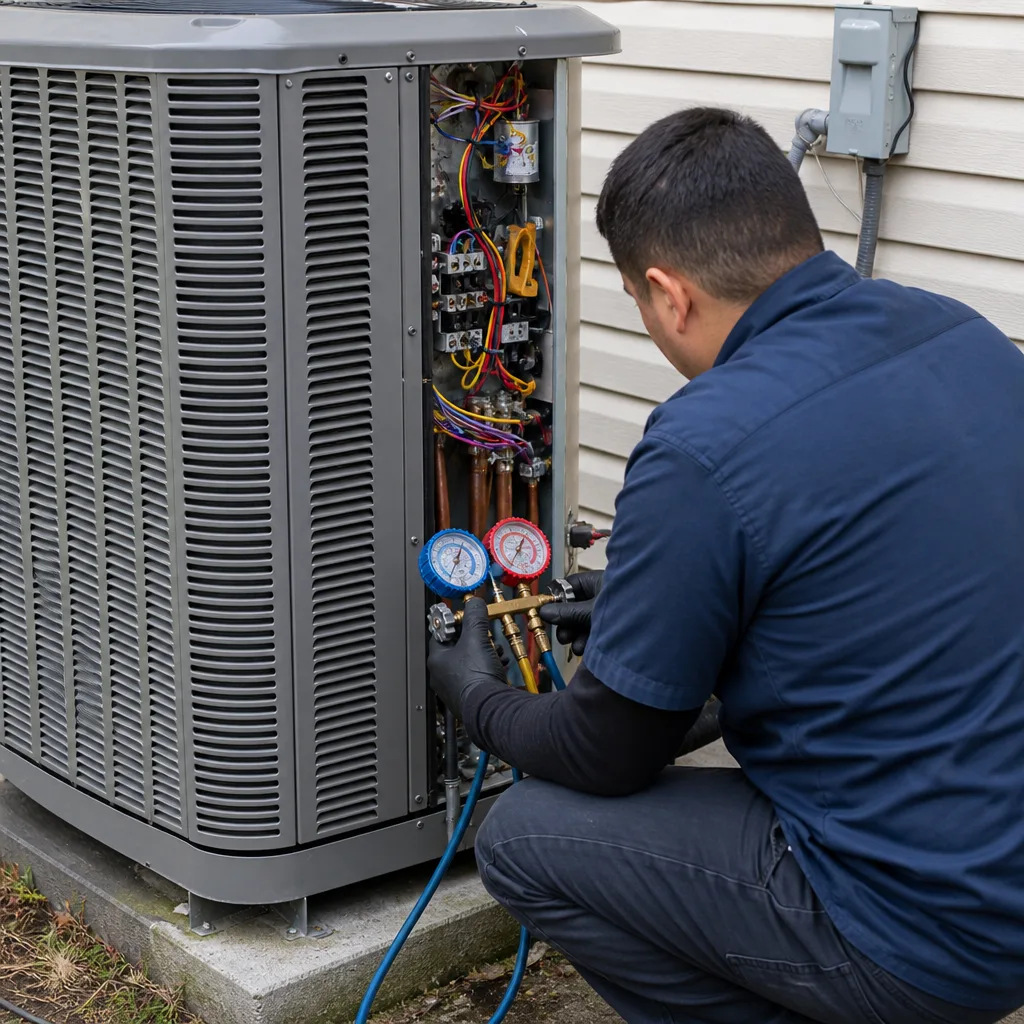 After
After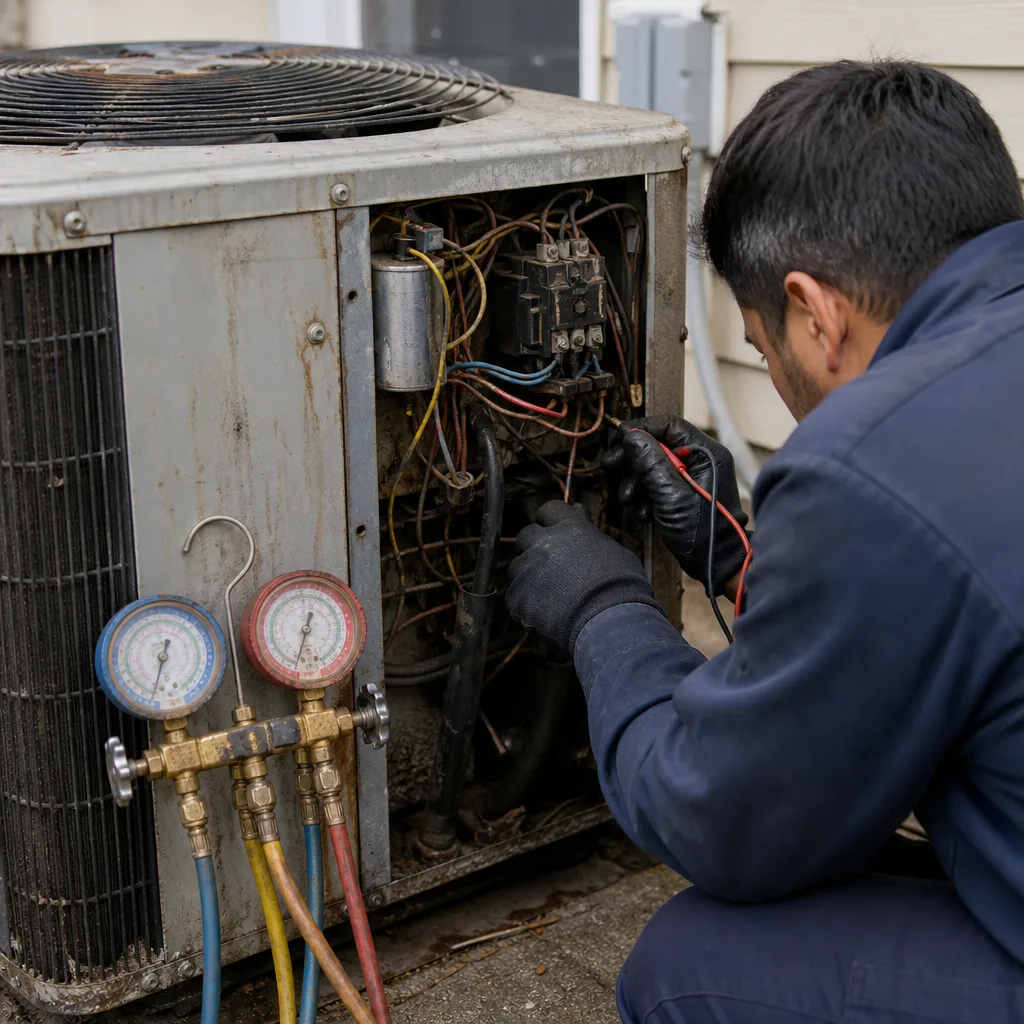 Before
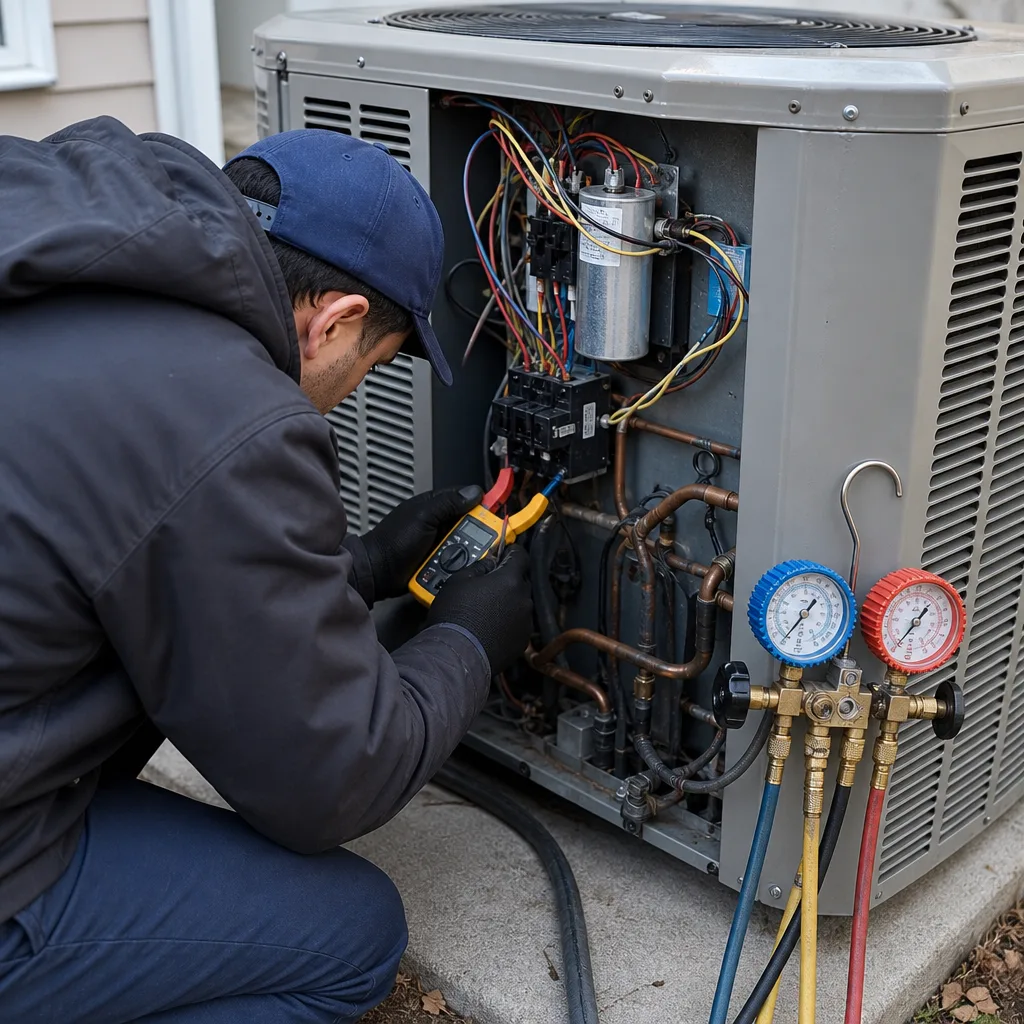 After
AfterReplacement Cost & What’s Included
Most Lennox capacitor replacements in Queens run between $150 and $350, installed. The lower end covers a single run capacitor on a smaller unit; the higher end covers a dual-run capacitor on a larger system, or a start capacitor plus potential relay where the design calls for one. Parts themselves are typically in the $30 to $80 range. The rest is labor, diagnostic time, and the warranty.
Every replacement we do includes a written price before we touch anything. You’ll see the part cost, the labor, and the total before work starts, and that number doesn’t change unless you approve a change in writing. The repair itself is guaranteed for 365 days under our Done Right Promise. If the capacitor fails in that window, we return at no charge, no argument. We also check the contactor and the wiring connections while we’re in there, because a worn contactor often contributes to capacitor failure and replacing one without checking the other is half a job.
DIY or Call Us?
A capacitor stores electrical charge even after the power is off, and it can discharge that charge into you if you handle it wrong. That’s the plain truth. You can safely check whether the breaker for the AC is on, whether the thermostat is calling for cooling, and whether the outdoor unit’s fan spins freely by hand with the power off. What you shouldn’t do is open the electrical panel and pull the capacitor with the system energized, or attempt to drain one with a screwdriver. We’ve had calls from Queens homeowners who tried exactly that and got lucky, and we’ve had calls from ones who didn’t.
If you want to try it yourself, the right approach is to read the microfarad rating, buy a matching capacitor, discharge the old one properly, and reconnect the wires exactly as they came off. If any of that sentence gives you pause, call (845) 328-4955 and we’ll send a technician who does this work every day. Devin Marlowe has been diagnosing and replacing capacitors for years, and he’d rather spend thirty minutes doing it right than watch a homeowner risk a shock or wire the fan and compressor terminals backward. A backwards installation can kill a compressor in minutes, and that’s a $2,000-plus mistake instead of a $150 fix.
FAQs
In Queens, most capacitors last between five and ten years depending on how hard the system runs, how clean the power is, and how hot the installation site gets. Rooftop units in the sun die sooner; shaded ground-level units last longer. If yours made it past seven summers, it has lived a full life.
No. A capacitor is a sealed, consumable component. Once it swells, leaks, or loses its capacitance rating, no one rebuilds it. The only correct fix is a replacement with the same or slightly better specification.
Most capacitor replacements take under an hour from arrival to a running, tested system. If the original label is unreadable, we may need additional time to match the spec from the motor plate, but that’s still typically a same-visit job in Queens.
Yes. We carry the most common Lennox-compatible dual-run and start capacitor specs in our Queens service vehicles, along with replacements for Carrier and Trane systems. If a unit needs an uncommon spec, we can usually source it the same day. Call (845) 328-4955 for an exact quote, and we’ll tell you what we expect before anyone drives out.
If your Lennox unit is humming, clicking, or barely starting, call us at (845) 328-4955. We’ll send a technician who will diagnose the capacitor and anything else on the circuit, put the price in writing first, and have you back to cool air as quickly as the job allows. Tell me what it is, tell me what it costs, tell me it holds, that is the whole job.
Written by Devin Marlowe, Owner, Brandt HVAC Co Queens at Brandt HVAC Co Queens, serving Queens and nearby areas.