
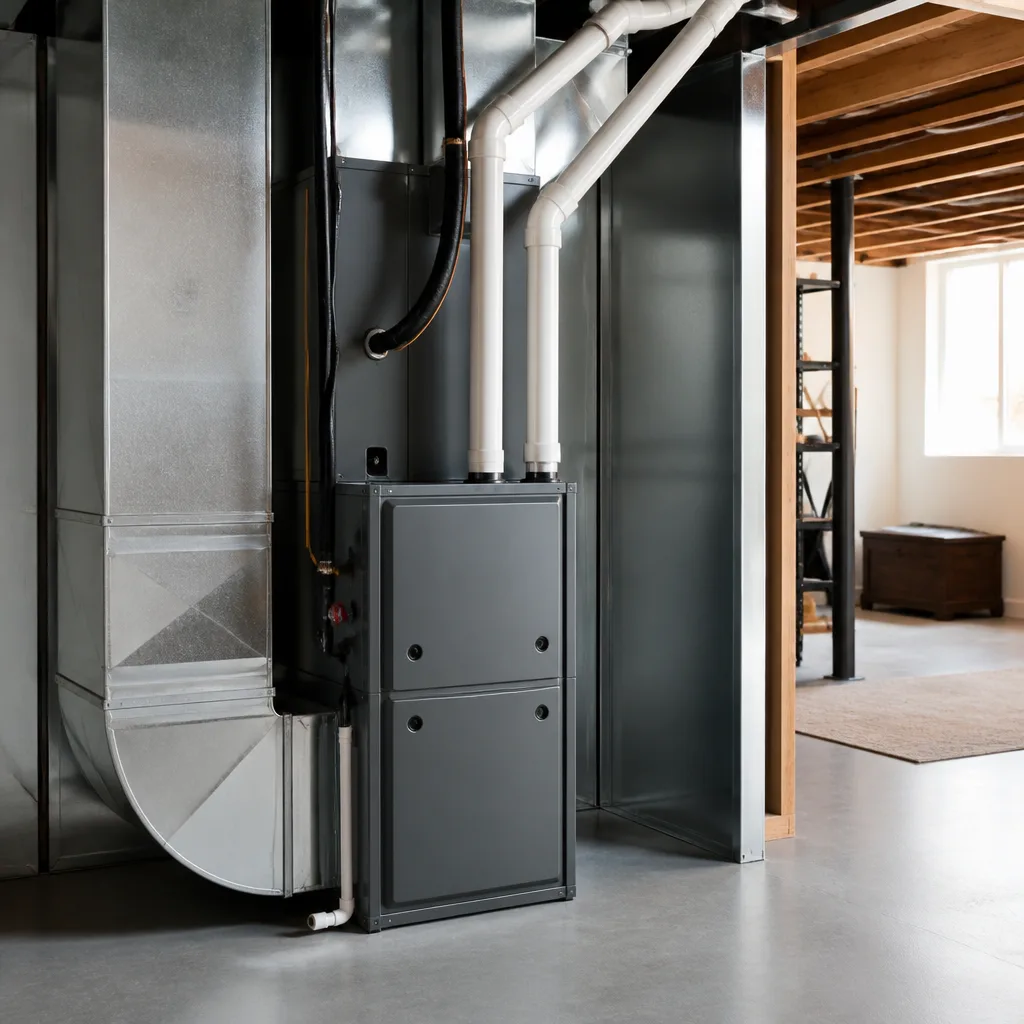
 Furnace & heating
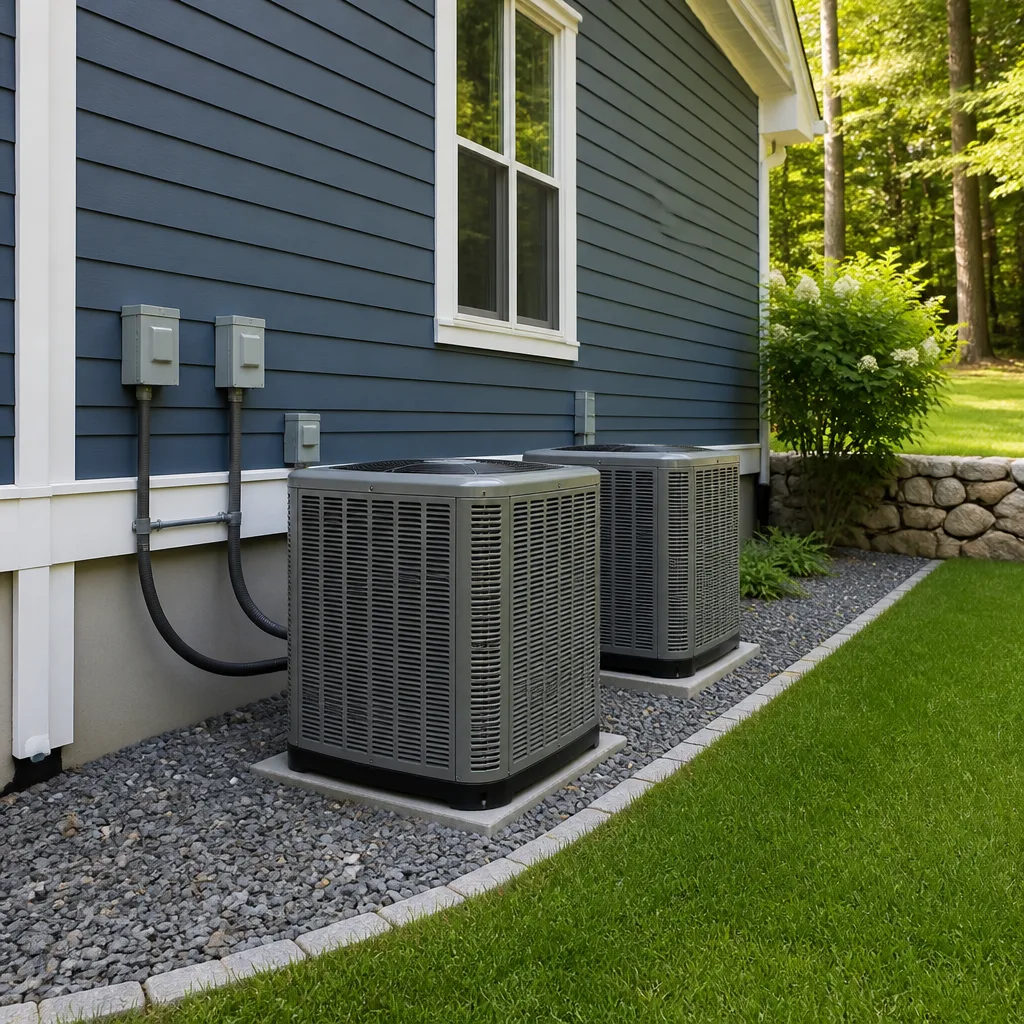 Heat pumps
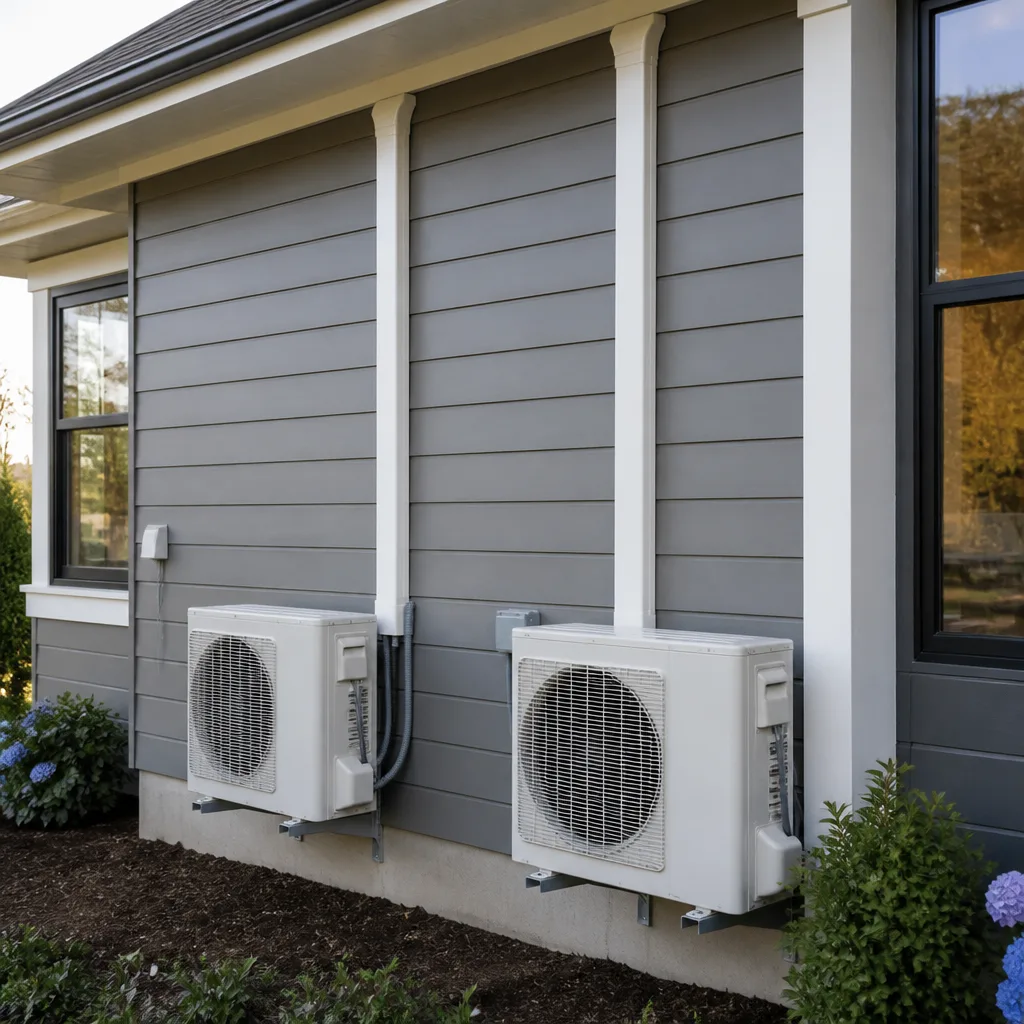 Ductless mini splits
 Carrier
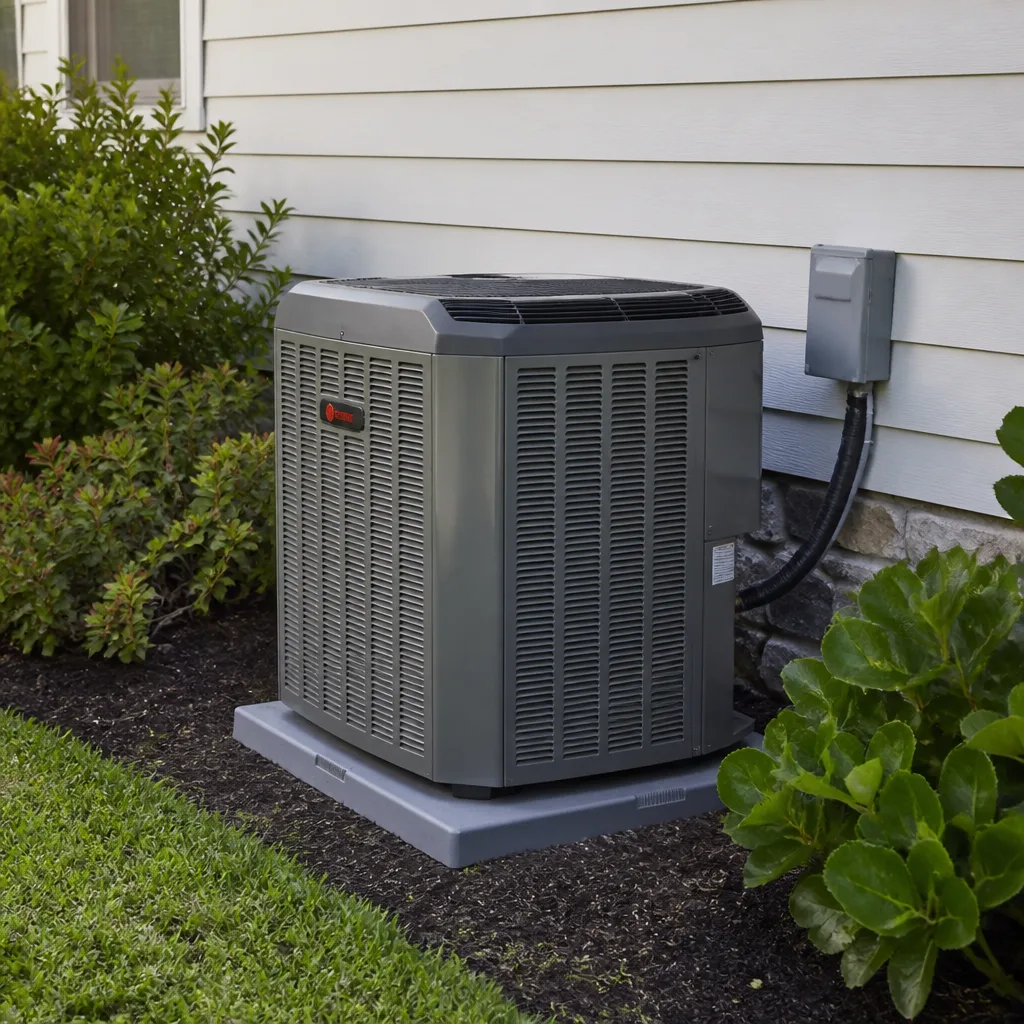 Trane
Trane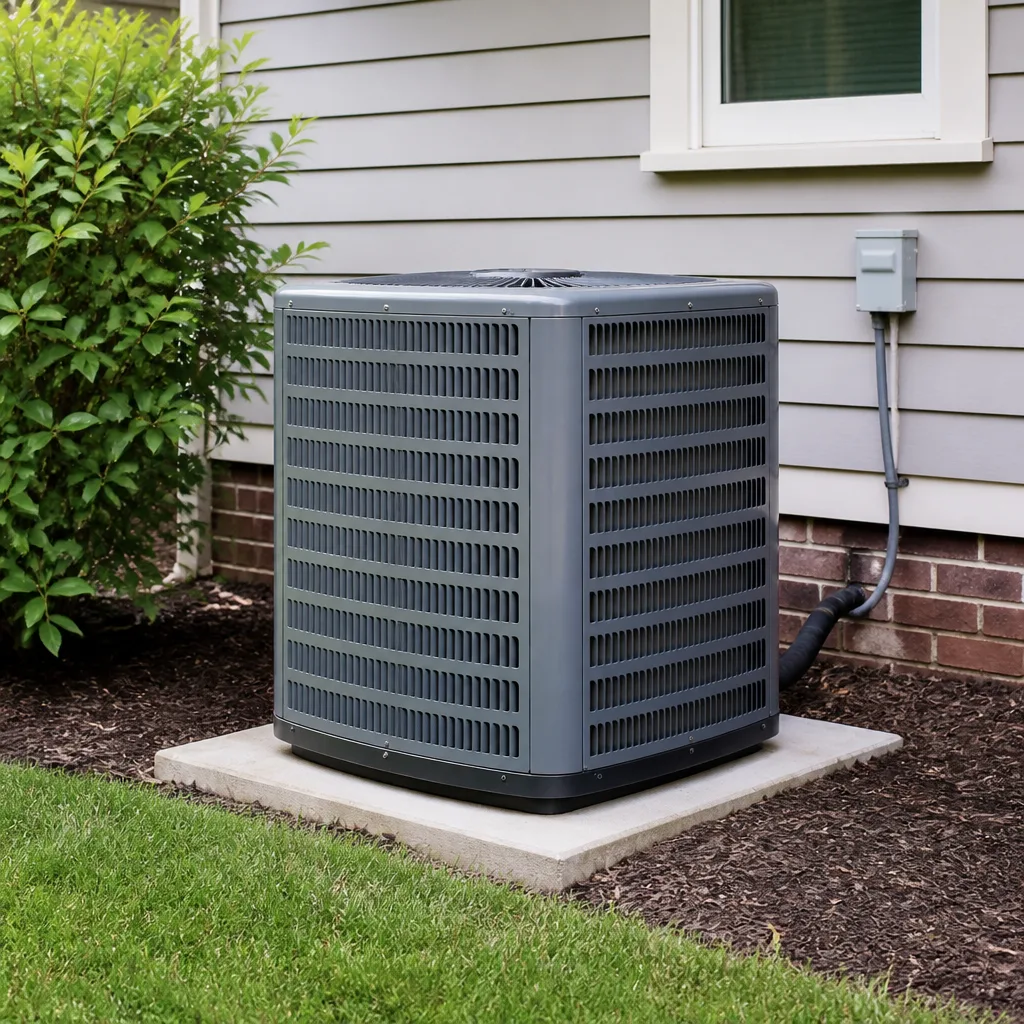 Goodman
Seasonal tune-up and full diagnostic on your Carrier, Trane, or Goodman system - readings shown to you before any repair is proposed
Diagnosis first, numbers second - you approve the repair price before a single part goes in.
Get your free estimateRheem Capacitor Replacement: The Queens Owner’s Guide
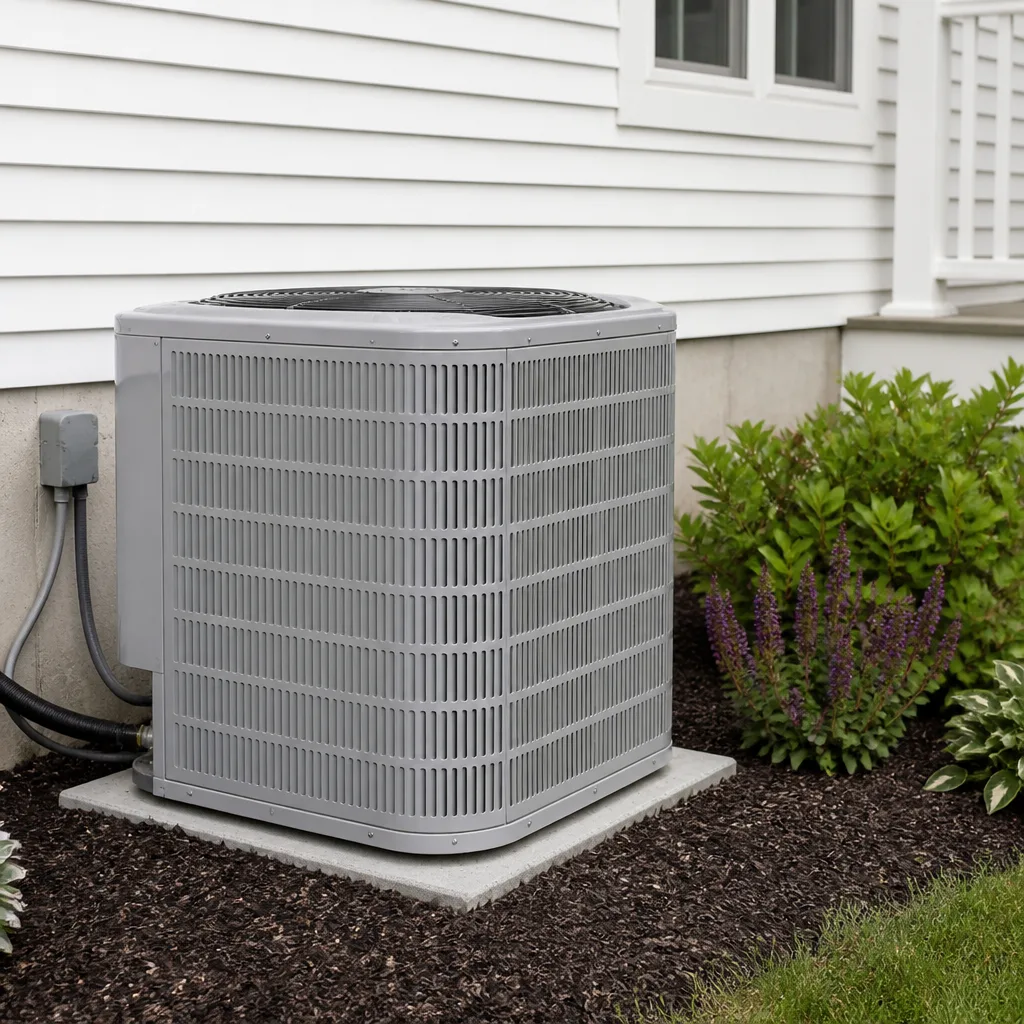
A Rheem capacitor replacement in Queens typically runs $180 – $340 installed, parts and labor included, and our techs carry the common Rheem-compatible ratings on the truck so most swaps happen the same day you call. The capacitor is the small metal cylinder inside your condenser or air handler that gives the fan motor and compressor the starting jolt they need, and when it fails, your AC usually won’t cool at all. Most Queens homeowners discover the problem on the first hot afternoon of the season: the outside unit hums, the fan doesn’t spin, or the system trips its breaker within seconds of starting. It’s a common failure, a straightforward fix, and one we handle regularly from Astoria to Far Rockaway.
Which Rheem Models This Applies To
This applies to nearly every Rheem residential split system and packaged unit sold in the last 25 years. The capacitor isn’t model-specific the way a control board is. What matters is the rating printed on the side of your existing capacitor, measured in microfarads (µF) and voltage. Common Rheem ratings we stock include 35/5 µF, 40/5 µF, 45/5 µF, and 50/5 µF, all at 370 or 440 volts. The dual-run design powers both the compressor and the fan motor from one canister, which is why the part has two numbers separated by a slash.
Here’s the Rheem-specific gotcha: Rheem and Ruud units (same parent manufacturer) frequently use a round capacitor with a slightly different physical footprint than the oval style common on Carrier or Goodman. Swapping in a generic oval usually works electrically, but the mounting strap won’t hold it properly against condenser vibration. We match the shape, the rating, and the terminal configuration. OEM Rheem capacitors (branded Rheem on the shell) run about $20 – $45 for the part alone. Quality aftermarket equivalents from AmRad, Titan HD, or Genteq often cost the same or slightly more, and honestly, many of us in the trade consider the aftermarket Turbo-style capacitors the better long-term choice because of their higher temperature tolerance. Queens rooftop condensers bake in July. We’ll quote you both options and tell you which we’d put in our own unit.
We’re an independent service provider, not affiliated with Rheem, but we service Rheem equipment daily and stock what these systems actually need.
Styles & brands we work with
Signs Your Rheem Capacitor Replacement Is Failing
- The outside unit hums but the fan doesn’t spin. The capacitor has lost enough charge to stop delivering the starting torque. You’re hearing the compressor trying, not running. This will overheat the compressor if left like that, so shut the system off at the thermostat and the breaker until we arrive.
- The fan spins only if you push it with a stick. This is the classic weak-capacitor signature. Enough charge exists to keep a spinning fan going, but not enough to start it from rest. Don’t do the stick trick regularly. Every moment the fan runs underpowered, the motor pulls excess amperage and cooks itself.
- The capacitor shell is bulging, domed, or leaking a waxy fluid. Inside every capacitor, dielectric fluid separates the conductive layers. When the part overheats, that fluid expands. A bulging top or oil residue at the terminals means the capacitor is dead or dying, no testing needed.
- The AC blows warm air or short-cycles constantly. A failing capacitor can’t hold a stable charge, so the compressor may start, drop out, restart, drop out. Each failed start dumps heat into the compressor windings. This is the failure mode that turns a $250 capacitor job into a $2,000 compressor replacement if ignored.
- The breaker trips on startup. A seized or failing capacitor changes the current draw profile. If the breaker trips immediately when the AC tries to start, the capacitor is a prime suspect, though a grounded compressor shows the same symptom. Either way, stop resetting the breaker and call us.
See the difference
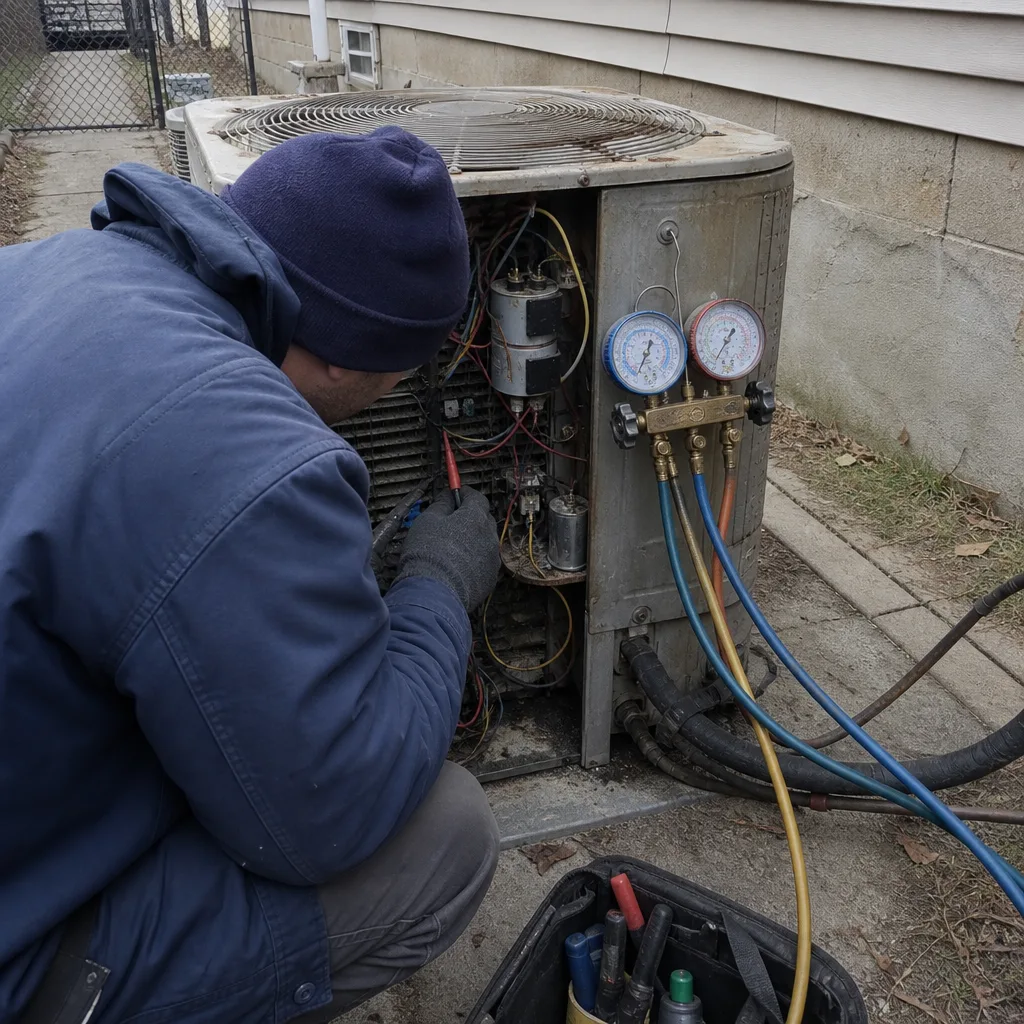 Before
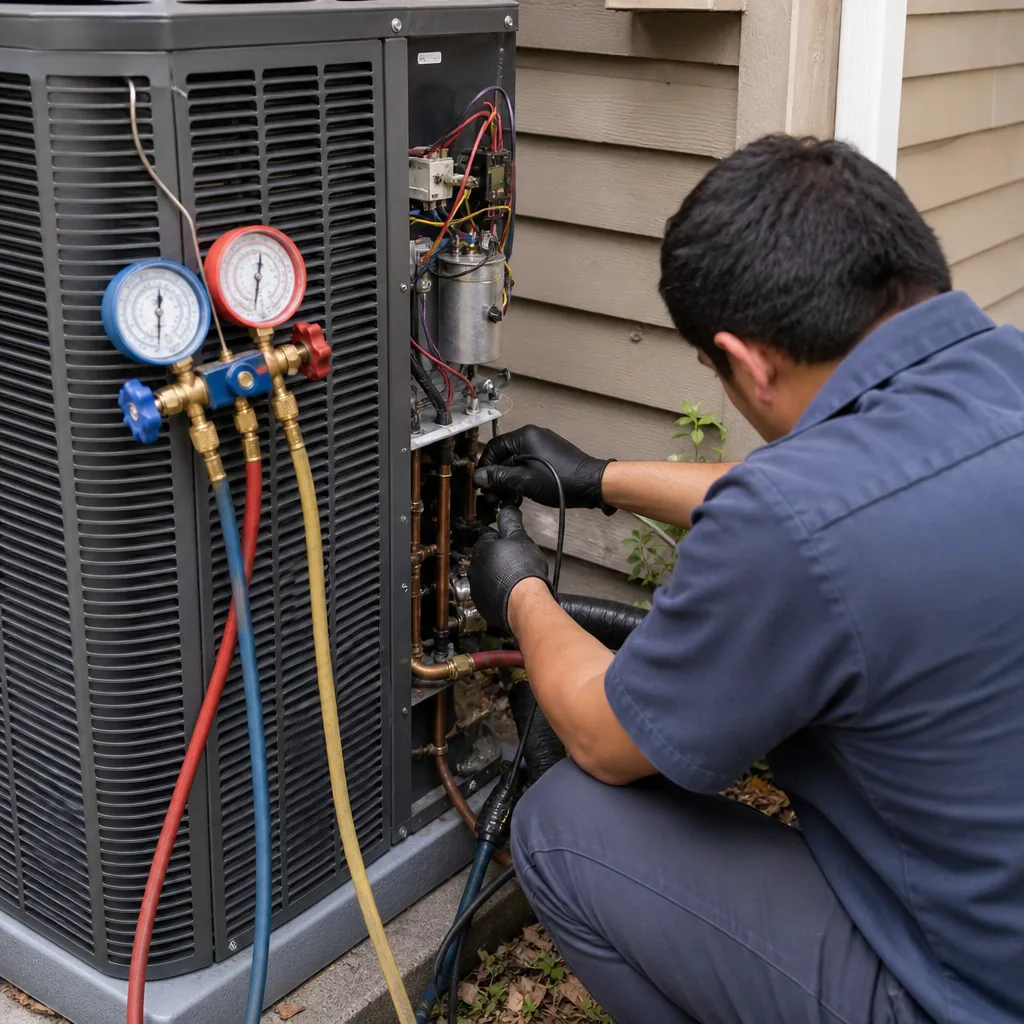 After
After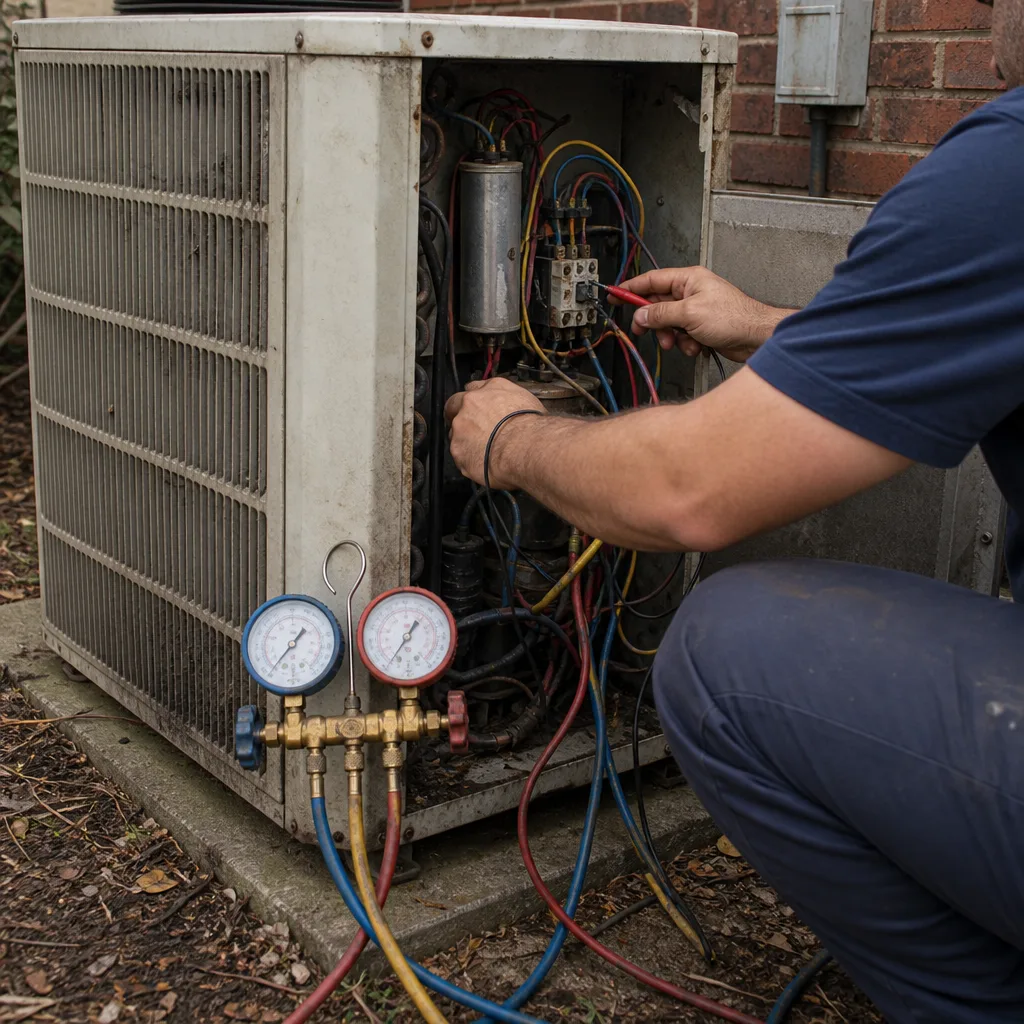 Before
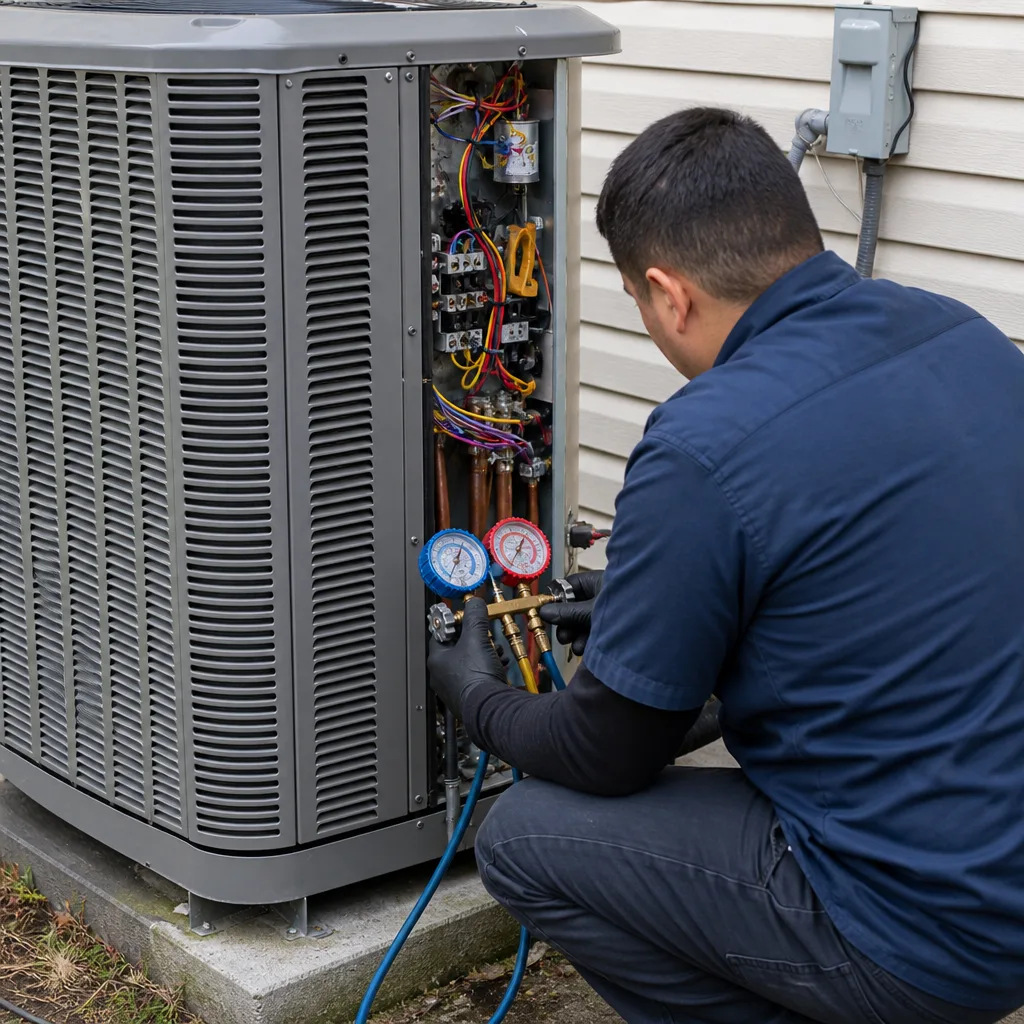 After
After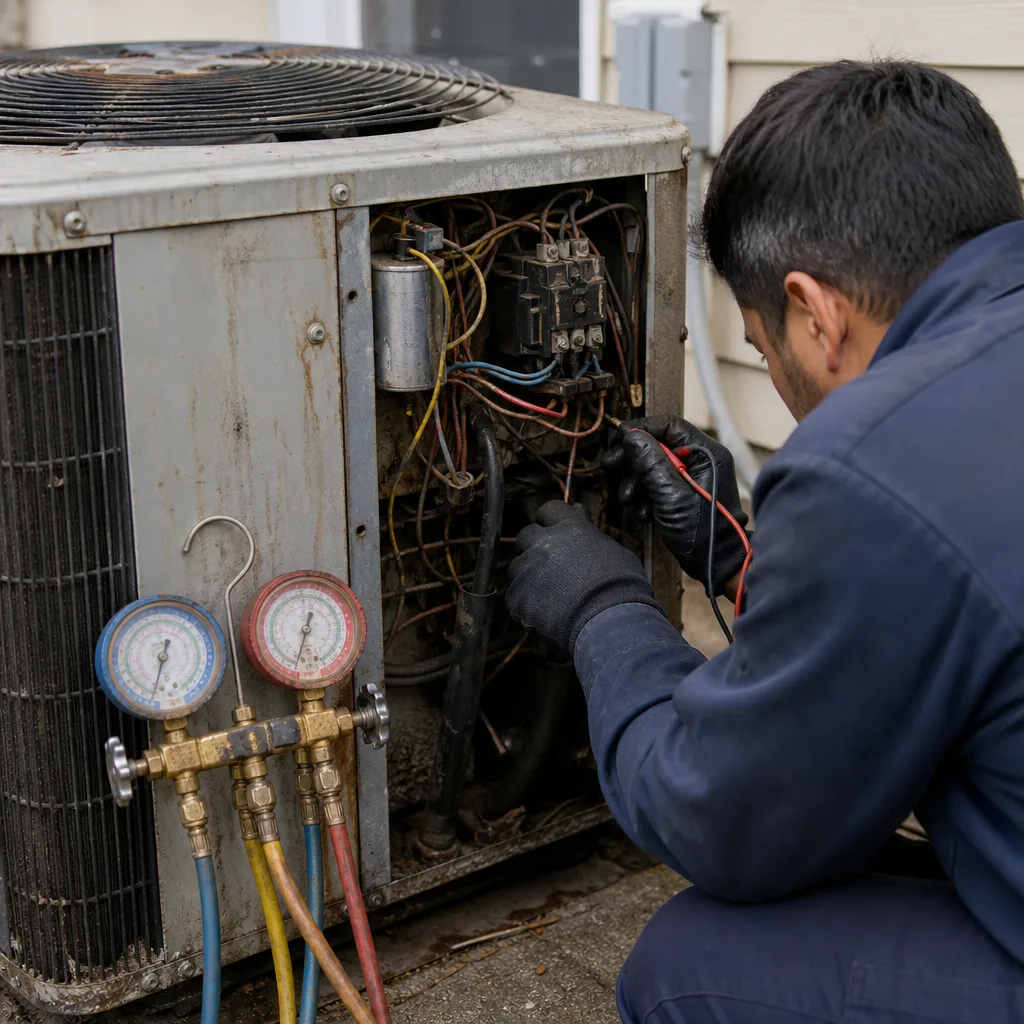 Before
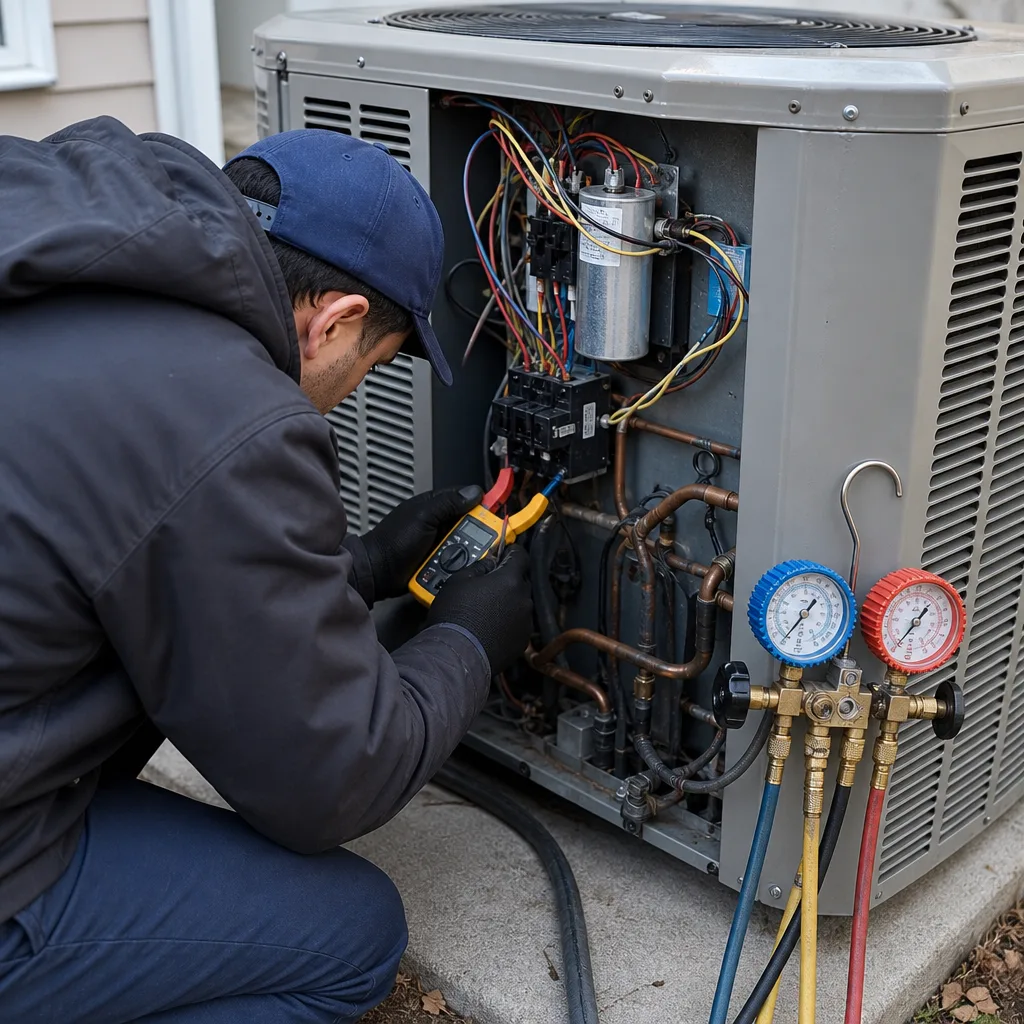 After
AfterReplacement Cost & What’s Included
In Queens, a Rheem capacitor replacement lands between $180 and $340 installed. The capacitor itself runs $20 – $55 depending on rating and whether you go OEM Rheem or a premium aftermarket like AmRad. The rest is labor, the diagnostic check to confirm the capacitor is actually the problem (and not the fan motor or compressor), and the testing we do after the swap to make sure the new part is pulling the right amperage and holding the right charge. Some contractors hide the diagnostic fee or the part markup. We don’t. You get a written price before any work starts, always. Every single job. And the repair is covered by our 365-Day Done Right Promise: if that capacitor fails within a year, we return and replace it at no charge. No argument, no second invoice.
DIY or Call Us?
Capacitors store electrical charge even when the unit is unplugged. This is a genuinely dangerous part. A charged capacitor can deliver a shock severe enough to stop your heart, and the terminals sit right where your screwdriver wants to go. That’s not scare language. It’s the reason every HVAC tech learns to discharge the capacitor safely before touching it. We don’t recommend the DIY route for this one.
What you can safely do: shut the system down at the thermostat and the breaker, clear debris from around the condenser, and write down the model and serial number from the rating plate on the unit. That helps us arrive with the right part. The actual swap takes about 30 to 45 minutes once we’re on site. Leave the electrical to us. Call (845) 328-4955 and we’ll have someone out the same day in most Queens neighborhoods.
FAQs
In Queens, expect 8 to 12 years from a quality capacitor. Our summers push condenser temperatures over 130°F on the metal cabinet, and heat is what kills capacitors. Heat, plus the voltage sags that come with older Queens building wiring, which we see constantly near Jamaica Avenue and in pre-1960 structures across the borough. If your unit is past year 10 and still on its original capacitor, you’re on borrowed time.
No. A capacitor is sealed, filled with dielectric fluid, and built to hold a specific charge. You can’t patch it, refill it, or rebuild it. When it fails, you replace it. The good news is this is one of the least expensive parts on a Rheem system, and replacement gets you back to a fully functional unit in under an hour.
Around 30 to 45 minutes, including the diagnostic check, the swap, and the post-repair amp draw test we do to confirm the new capacitor is working under real load. Add 15 minutes if we’re also washing the coil or checking refrigerant while we’re there, which we’ll always offer but never push. Call (845) 328-4955 and we’ll tell you the exact time window before your tech arrives.
Yes, we stock the common Rheem-compatible dual-run ratings: 35/5, 40/5, 45/5, and 50/5 µF, both 370 and 440 volt, in standard round and oval configurations. If your unit has an unusual single-run or higher voltage requirement, we can usually source it from our Queens parts distributors the same afternoon. We also stock parts for the other brands we service, including Carrier, Trane, and Lennox.
Written by Devin Marlowe, Owner, Brandt HVAC Co Queens at Brandt HVAC Co Queens, serving Queens and nearby areas.