
Last updated October 16, 2026
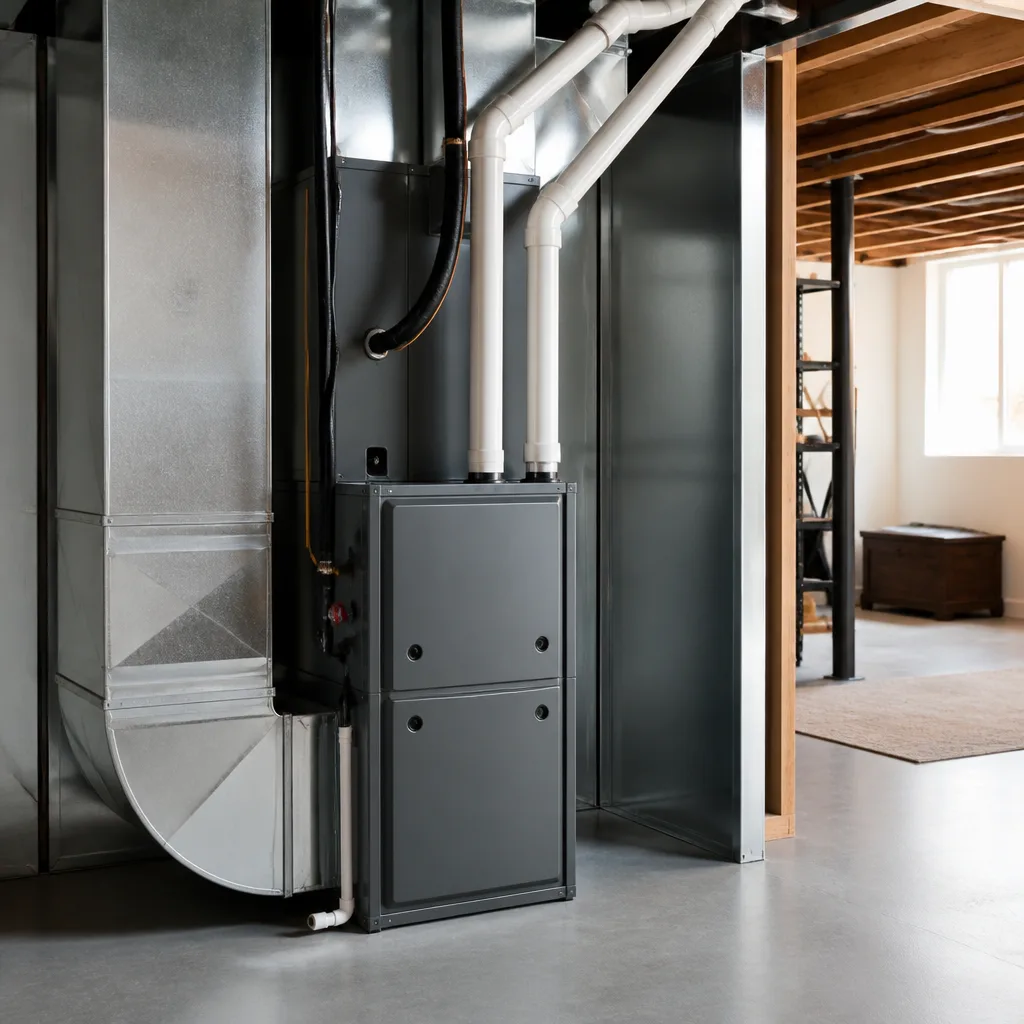 Furnace & heating
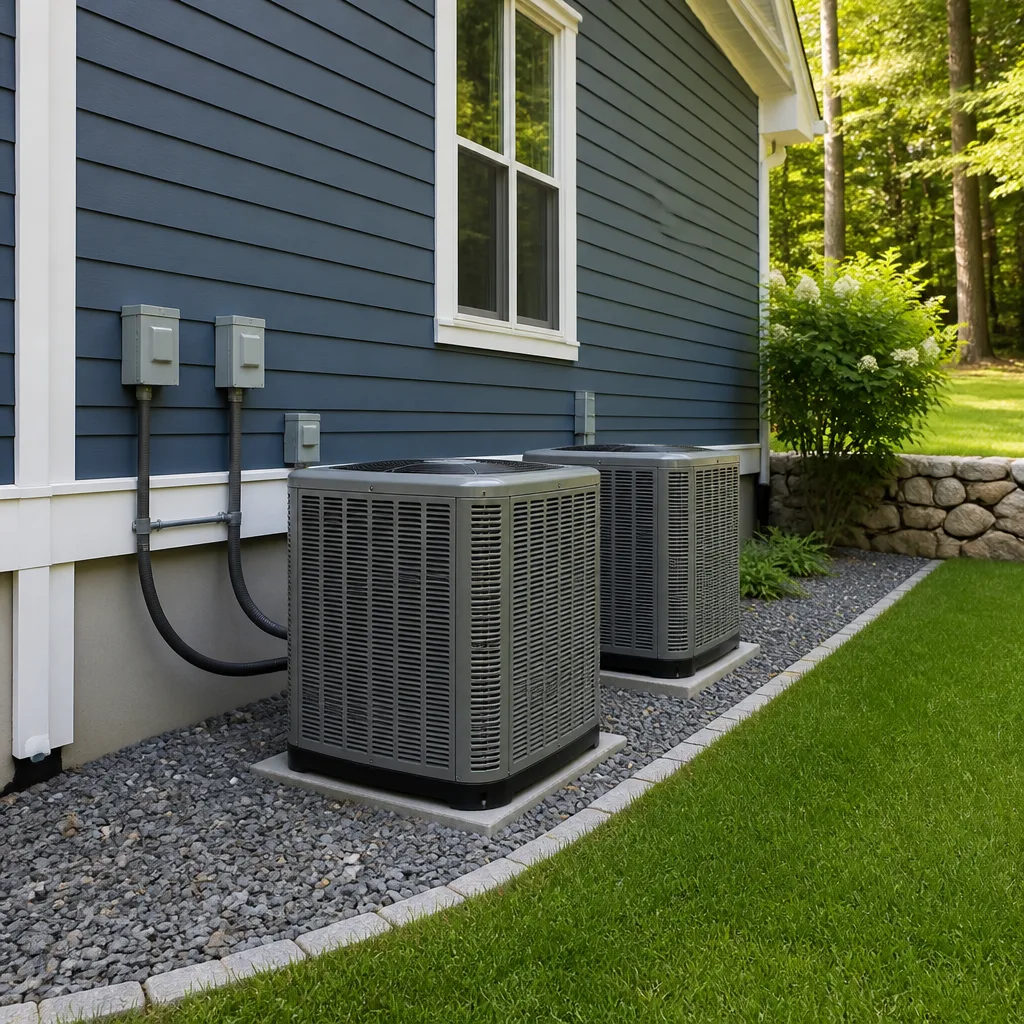 Heat pumps
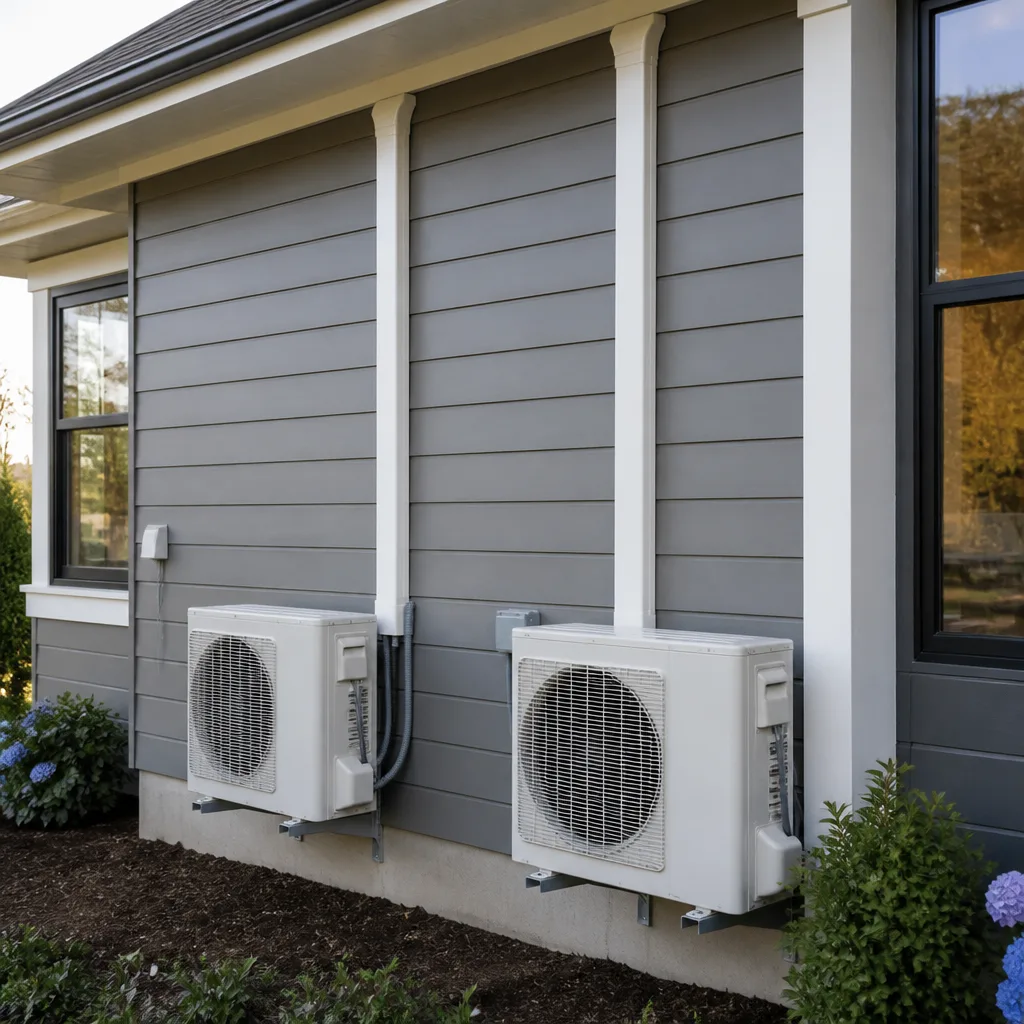 Ductless mini splits
 Carrier
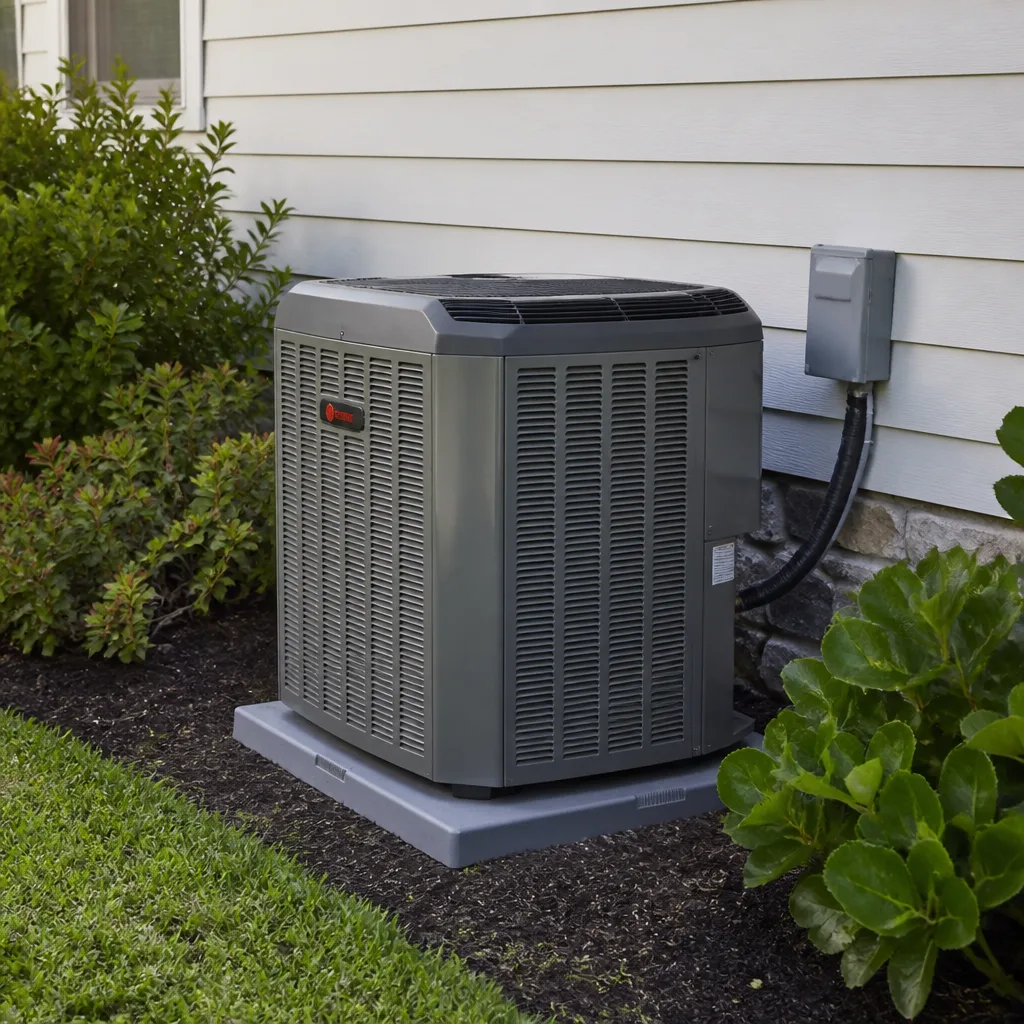 Trane
Trane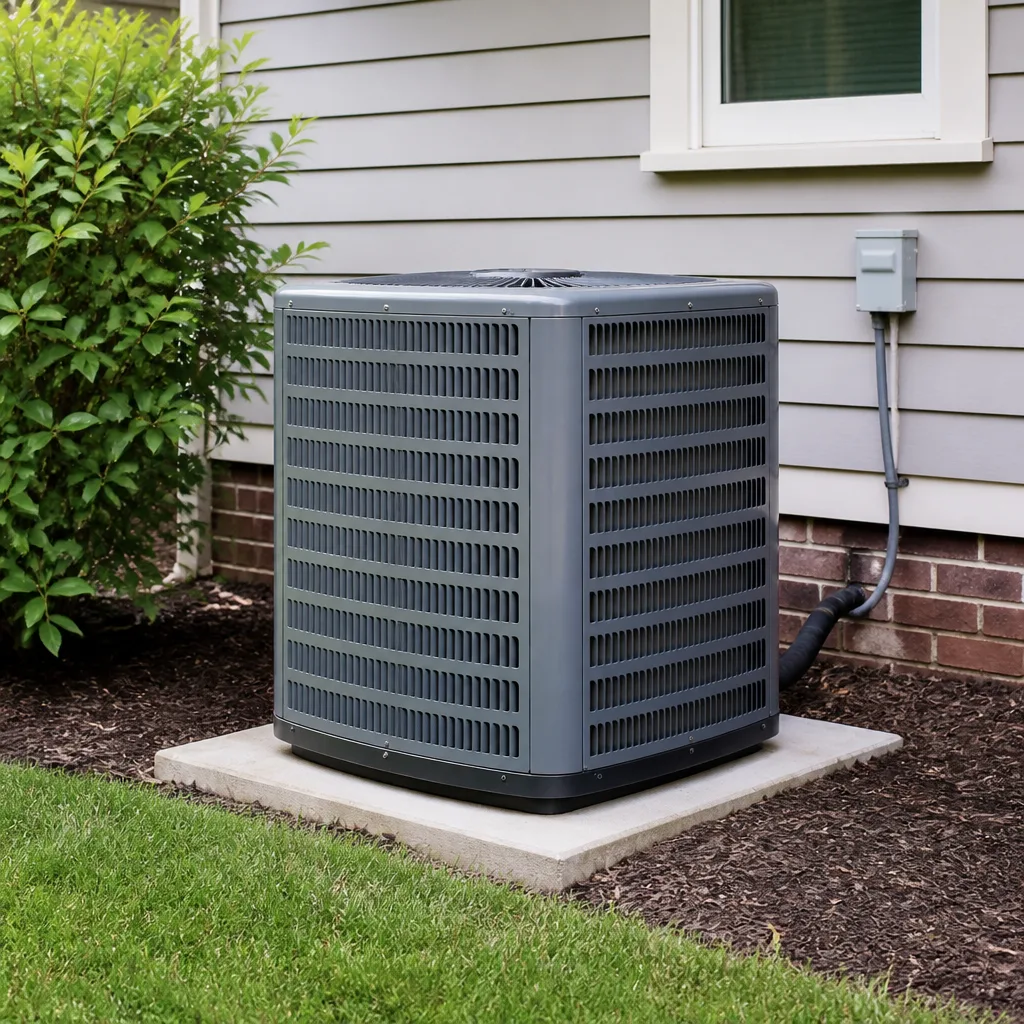 Goodman
Seasonal tune-up and full diagnostic on your Carrier, Trane, or Goodman system - readings shown to you before any repair is proposed
Diagnosis first, numbers second - you approve the repair price before a single part goes in.
Get your free estimateHVAC Warning Signs: A Queens Homeowner’s Reference Guide
That banging noise your Queens rowhouse radiator has made for three winters isn’t the building settling. It’s water hammer in a steam system that, left alone, will crack a valve or rupture a pipe, typically on the coldest night of the year. Most HVAC warning sign guides list the obvious failures: the system won’t turn on, water is pouring out, the thermostat reads 85 in January. This one is different. We’re going to walk through the quieter signals Queens homeowners in older housing stock routinely dismiss as ‘normal old-house sounds’ until they become emergency repairs. By the time you finish this guide, you’ll know which sounds mean nothing, which ones mean something, and which ones mean you should pick up the phone before the temperature drops again. For a broader look at keeping your system healthy, see our Complete Guide to HVAC in Queens.
Quick Answer
HVAC warning signs in Queens homes include banging or hammering in steam radiators (a valve or trapped-water problem that can rupture pipes), short cycling on hot days (often an oversized AC or a failing capacitor), whistling at vents (restricted airflow from clogged filters or crushed ducts), and any gas odor (leave the house and call your utility immediately). A musty sock smell points to biological growth on the evaporator coil, and ice on refrigerant lines means low charge or low airflow. In our experience, the warning signs that matter most in Queens are the ones you hear every day and have learned to ignore.
Styles & brands we work with
Table of Contents
- The Sounds Your Queens HVAC Makes and What They Actually Mean
- Warning Signs Unique to Pre-War Steam Heat in Queens
- Urgent vs. Schedule-Within-Two-Weeks: How to Tell the Difference
- Indoor Air Quality Signals That Point to HVAC Problems
- How to Keep a Simple HVAC Warning Sign Log
- What Warning Signs Look Like Across Major Brands
- Common Mistakes to Avoid
- When to Call a Professional
The Sounds Your Queens HVAC Makes and What They Actually Mean
Every HVAC system makes some noise. A faint whoosh when the blower kicks on, a soft click from the thermostat, a low hum from the condenser outside. Those are normal. The sounds we’re about to describe are not normal, but here’s the thing: Queens homeowners acclimate to them. A banging radiator becomes part of the winter soundtrack. A rattling condenser becomes background noise on the patio. By the time a technician hears it for the first time, the homeowner often can’t remember when it started. Let’s translate the five most common mechanical sounds so you know what you’re dealing with.
Banging or Hammering from Radiators or Pipes
Mechanically, this is water hammer. In a one-pipe steam system, steam pushes through the pipes and condenses back into water. If a pipe has lost its slight pitch (common in Queens homes that have settled over 80 or 100 years), water pools in a low spot. Steam hits that pool at speed and slams it against a fitting. That’s the bang. Over time, this repeated impact can crack a valve body or separate a fitting. In a Queens rowhouse with original piping, a single bad night can turn a banging radiator into a burst pipe and a flooded floor. Our Furnace Repair in Queens page covers what happens when steam problems escalate, but the short version is this: banging is not a personality quirk. It’s a pressure event.
Short Cycling: The System Turns On and Off Every Few Minutes
Short cycling has two primary mechanical causes. The first is an oversized system. In Queens, many pre-war homes were retrofitted with air conditioning in the 1960s and 70s, and contractors often installed units larger than the house actually needed. An oversized AC cools the air so fast that the thermostat is satisfied before the system has run long enough to pull moisture out of the air. The result: short cycles, a clammy feeling inside, and higher humidity. The second cause is a failing run capacitor on the blower motor. The capacitor gives the motor the initial jolt to start. When it weakens, the motor overheats, the system shuts down on thermal overload, then restarts when it cools. It’s a pattern: on, off, on, off, every five to ten minutes. Both causes are fixable, but they need different fixes. Don’t guess.
Rattling from the Outdoor Condenser Unit
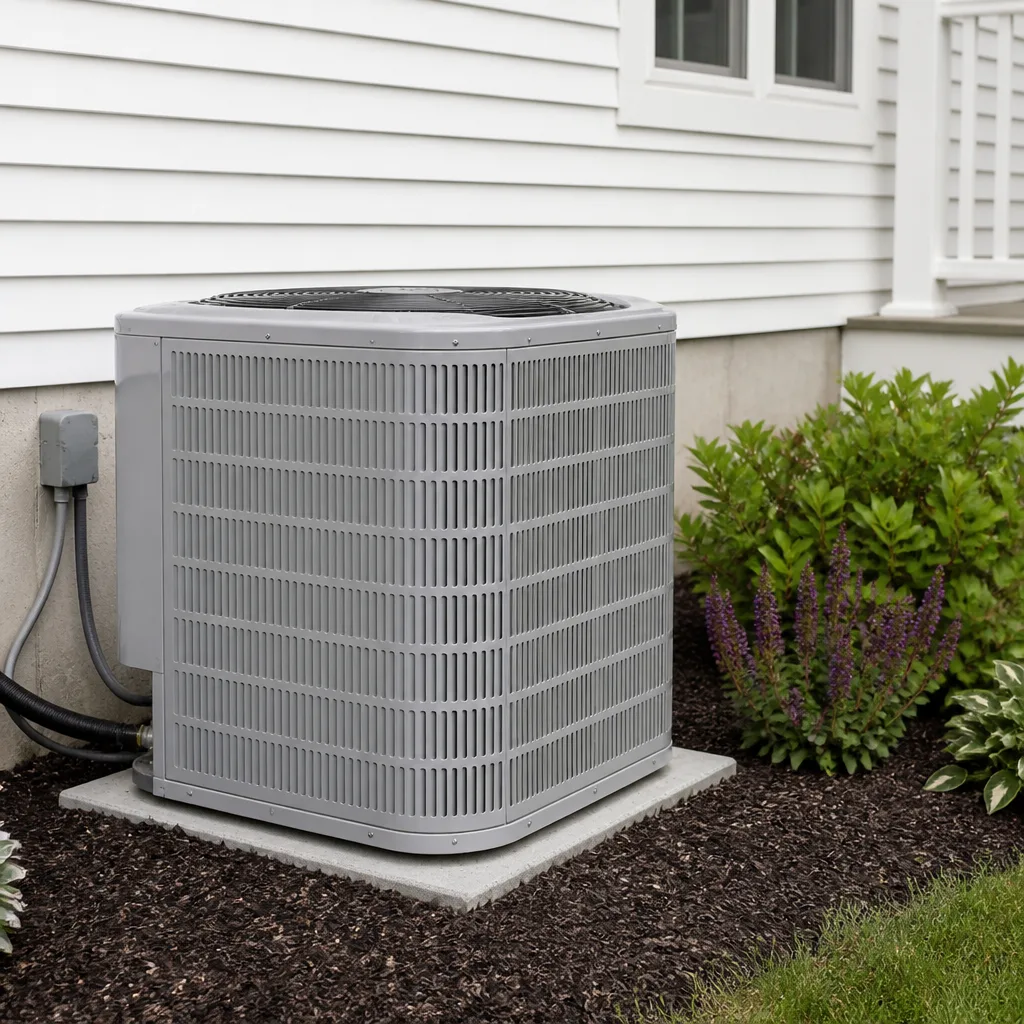
A rattle outside usually means one of three things: a loose panel screw, debris caught in the fan grille, or a failing compressor mount. The third one is the one that matters. Compressors on units from Carrier, Trane, and Lennox ride on rubber isolation mounts that dry out and crack with age. When the mounts fail, the compressor vibrates against the chassis. That vibration travels through the copper lines and into the house. Left alone, it can work-harden the copper and cause a refrigerant leak. If the rattle changes pitch or gets louder when the compressor first starts, get it looked at before the cooling season peaks.
Whistling at Vents or Registers
A whistle means air is being forced through an opening that’s too small. The most common cause in Queens homes is a clogged filter. When a filter loads up with dust, the blower has to pull harder, and air gets sucked through whatever gap it can find. That’s the whistle. The second most common cause is closed or obstructed registers. Many homeowners close registers in unused rooms to save money. The problem: closing more than 10-15% of your registers raises static pressure in the duct system, which strains the blower and creates the whistle. A crushed flex duct in a crawlspace or attic can do the same thing. When you hear a whistle, check the filter first, then the registers. If both are fine, the restriction is in the ducts.
Humming That Gets Louder Over Time
A low hum from the outdoor unit is normal. A hum that changes pitch or gets noticeably louder over the course of a single cooling season usually points to a failing fan motor bearing or a compressor that’s working against high head pressure. High head pressure happens when the condenser coil is dirty (common in Queens, where pollen and construction dust settle on outdoor coils all spring) or when the system is low on refrigerant. A humming unit on a 90-degree day in Jackson Heights isn’t working harder because of the heat. It’s working harder because something is restricting its ability to shed heat. A coil cleaning and a refrigerant check are the diagnostic starting points.
If you’re trying to decide whether a sound warrants a service call, our AC Repair in Queens guide walks through how we diagnose these noises, what the common repairs cost, and what most homeowners can check themselves before making the call. The short version: banging, short cycling, and rattling that gets worse are repair-soon signs. A steady hum on a hot day might just be your unit working as designed.
Warning Signs Unique to Pre-War Steam Heat in Queens
If you live in Astoria, Jackson Heights, Elmhurst, Sunnyside, or any of the other Queens neighborhoods with rowhouses built between 1900 and 1940, there’s a good chance your heat comes from a steam boiler. These systems are durable, but they’re also finicky, and the warning signs they give are different from those of a modern forced-air furnace. The problem is that most HVAC guides are written for forced-air systems. For year-round maintenance tips, see our Seasonal HVAC Care for Queens: Year-Round Homeowner’s Guide. Here’s what a steam-specific guide actually covers.
First, understand the basic cycle. A steam boiler (often a Lennox or older American Standard model in Queens basements) heats water to make steam. Steam rises through pipes to radiators in each room. The steam pushes air out through vent valves, condenses back into water, and the water drains back to the boiler by gravity. Every part of that cycle has to be in balance. When one part fails, the whole system talks to you.
Radiators That Are Hot at the Bottom, Cold at the Top
This is the most common steam complaint we hear from Queens rowhouse owners, and it’s almost always the vent valve on the radiator. Steam can’t enter the radiator until the air inside escapes. The vent valve is supposed to open to let air out, then close when steam reaches it. When the valve fails open, air escapes but steam doesn’t fill the radiator. When it fails closed, air can’t escape and steam never enters. Either way, the radiator heats partially or not at all. The fix is usually a new vent valve, a $20-$60 part plus labor. But there’s a nuance: on a one-pipe system with a single vent valve per radiator, the size of the valve affects how fast each radiator heats, which affects the whole house balance. Swapping valves without checking the system’s pitch and venting pattern can make one room toasty while another stays cold.
Water Pouring Out of a Radiator Vent
If water is spitting or pouring from where the vent valve screws into the radiator, that’s not steam leaking. That’s liquid water backing up in the radiator and being pushed out. The cause is usually a condensate drain problem: the boiler’s return piping isn’t draining water back to the boiler fast enough, often because the boiler water is dirty (which causes foaming and carryover) or because a near-boiler pipe has lost its pitch. This is not a wait-and-see problem. Water at the vent means the boiler is pushing wet steam, and wet steam delivers less heat and more pressure spikes. It’s also how radiators rust out from the inside.
The Boiler’s Sight Glass Is Dirty or the Water Level Bounces
On a steam boiler, you can see the water level through a glass tube on the side. If the water in that glass looks dark brown or the level bounces up and down noticeably while the boiler runs, the boiler is surging. Surging happens when oils and sludge in the boiler water cause it to foam. That foam can carry over into the steam lines, which then pushes water into radiators (and out of vent valves). The water level bouncing is the boiler telling you it needs a skim and a flush. In older Queens homes, this is often a seasonal maintenance item, especially in the first few weeks of the heating season when the boiler water has sat all summer.
Radiators That Gurgle or Sizzle
A sizzling sound at a radiator usually means steam is condensing on the outside of the radiator or that the radiator’s pitch is off and condensate is pooling inside instead of draining. In a properly pitched one-pipe system, each radiator is tilted slightly toward the supply pipe so water drains back. Houses settle. Floors sag. A radiator that was pitched correctly in 1935 might be perfectly level in 2025. The fix is often a shim to restore the tilt. A gurgling sound, by contrast, means water is bubbling where steam should be flowing. That’s usually a near-boiler piping issue or a boiler water quality issue. Both are worth a technician’s eyes.
Paint or Corrosion at Every Pipe Thread
Steam pipes expand and contract with every heating cycle. Over decades, the repeated movement works thread connections loose. A telltale sign of an impending leak is a ring of rust or old paint that’s bubbling or flaking at a pipe joint. In the walls and floors of a Queens rowhouse, these joints are often buried, so you won’t see them until water damage shows up on a ceiling below. What you can see, though, are the joints in the basement near the boiler and at each radiator. If a joint looks crusty or weepy, have it re-dressed before it lets go.
We cover the full repair picture for steam and forced-air furnaces in Queens on our furnace repair page, including what a typical steam boiler service call costs and how long most repairs take. Steam systems reward attention and punish neglect, and the punishment usually arrives on the first 15-degree night of January.
Urgent vs. Schedule-Within-Two-Weeks: How to Tell the Difference
Not every warning sign means you need a technician today. Some mean you need one this week. A few mean you need to shut the system down and make the call. The distinction matters, because it determines whether you’re paying an emergency dispatch fee or a standard service rate. Here’s how we sort them.
Urgent: Act in the Next Hour
- Gas odor. Natural gas has a rotten-egg smell added to it for exactly this reason. If you smell it, open windows, don’t flip switches or use appliances, leave the house, and call your gas utility. Once the utility has cleared the scene, call us to find and fix the source. A gas leak is not an HVAC warning sign you troubleshoot yourself.
- Ice on the refrigerant lines or the outside unit. Ice on the larger copper line outside or on the condenser coil means the evaporator coil is freezing. The system is either low on refrigerant or starved for airflow. If you keep running it, liquid refrigerant can reach the compressor and destroy it, turning a $300 repair into a $3,500 replacement. Shut the AC off at the thermostat and switch the fan to “on” to thaw the coil. Then call.
- A breaker that trips more than once. One tripped breaker on a hot day might be a fluke from grid strain. A breaker that trips again after you reset it is a wiring fault or a failing compressor that’s drawing too much amperage. Running the system against a struggling breaker can damage the electrical panel in an older Queens home. Stop resetting and call.
- Burning smell that doesn’t go away after 30 minutes. A dusty heating system can smell a little like burning when it first fires up for the season. That smell fades in a half hour. If it doesn’t, or if it smells more like electrical burning than dust, shut it down. A failing blower motor or a scorched control board smells distinct and means the system is becoming a fire risk.
Schedule Within Two Weeks
- Short cycling that’s consistent but not constant. If the system runs for five minutes and stops, restarts in ten minutes and stops, you have time, but don’t wait through a whole Queens summer. The constant starting and stopping stresses the compressor and runs up your Con Edison bill.
- A banging steam radiator. As bad as it sounds, a banging radiator in a one-pipe steam system usually doesn’t rupture today. It can, and we’ve seen it happen, but it’s more likely to give you weeks of escalating noise before a fitting fails. That said, if the bang becomes a sharp crack, move it to urgent.
- Uneven cooling between floors. The classic Queens two-bedroom apartment: living room is 72, bedroom is 82. That’s a balancing issue, not a failure. It can wait, but it should be addressed before the peak of summer, when the imbalance will be at its worst.
- Higher-than-normal utility bills without a proportional change in use. A 10% jump one month might be weather. A 20-30% jump that persists through two billing cycles points to a system working harder than it should be: a dirty coil, a refrigerant leak, or a failing blower. Schedule a diagnostic before the small inefficiency becomes a big repair.
If you’re not sure which category something falls into, call us and describe the symptom. A live person answers the phone 24/7, and we’ll help you sort it out. That’s the fastest way to know whether you’re looking at an emergency or a scheduled visit.
Indoor Air Quality Signals That Point to HVAC Problems
Here’s a pattern we see all the time in Queens: a homeowner calls because they can’t figure out why the house feels stuffy, or why the wood floors are cupping, or why there’s a weird smell in one bedroom. They assume the house itself is the problem: old construction, bad windows, a damp basement. Sometimes that’s true. But often, the house is fine and the HVAC system is the signal. Air quality problems that come and go with the heating or cooling cycle are HVAC problems wearing a disguise.
Musty or Dirty-Sock Odor When the AC Runs
That smell is biological growth on the evaporator coil or the drain pan. The evaporator coil sits in a dark, damp environment and condenses water out of the air all summer. If the drain line clogs or the coil isn’t dried properly between cycles, mold and bacteria find a home there. When the blower kicks on, it sends that odor through the ductwork. In a Queens apartment building with shared walls and in-window or through-wall units, a musty smell can also mean growth in the condensate tray under the unit. The fix is a coil cleaning and a drain service, not an air freshener.
Humidity That Spikes in Summer Even With the AC Running
Here’s a truth most people don’t hear: an air conditioner that’s too big for the space will cool the air without dehumidifying it. It brings the temperature down so fast that it doesn’t run long enough to pull moisture out. The result is a home that’s 68 degrees and damp. That clammy feeling is the smell of an oversized system. The longer-term fix is either a properly sized unit or a dedicated dehumidifier. The immediate diagnostic: if your AC cools the house fast and shuts off quickly, that’s the clue.
Dry, Cracked, or Staticky Air in Winter
Forced-air furnaces dry out indoor air as a byproduct of heating. In a tight pre-war Queens apartment, that can push humidity down to 20% or lower, which leads to dry sinuses, cracking wood, and static shocks every time you touch a doorknob. A humidifier (either a whole-house unit on the furnace or a room unit) is the standard fix, but there’s a hidden warning sign here: if the air is both dry and cold in some rooms while others are warm, that’s not just dryness. That’s air distribution or insulation failure, and it points back to the HVAC or the building envelope.
Rooms That Smell Different From Each Other
If the bedroom smells like the bathroom and the living room smells like the kitchen, that’s cross-contamination through the duct system. In older Queens homes with retrofit ductwork, return ducts sometimes pull air from places they shouldn’t, like a musty basement or a wall cavity near a plumbing stack. When the blower runs, those smells get distributed through the house. Sealing the return path or adding filtration is the repair. The first step is identifying where the smell originates and whether it moves through the ducts.
Coughing, Sneezing, or Allergic Symptoms That Improve When You Leave Home
This is the pattern that sends people to the doctor before it sends them to an HVAC technician. If you wake up congested, feel better at work, and worse again at night, the air in your Queens home is part of the problem. High-efficiency filters (MERV 11 or 13, depending on what your system can handle) help, but they only catch what passes through the return. If the ducts themselves are dirty from years of cooking grease, pet dander, and construction dust, the filter can’t fix that. A duct inspection tells you what’s actually in the air path. Our AC Maintenance in Queens page explains what we check during a seasonal visit and how much of it addresses air quality directly.
The pattern to remember: if an air quality symptom appears or worsens when the HVAC runs, it’s probably an HVAC issue. If it’s constant regardless of whether the system is running, it’s more likely the building itself. That distinction saves you from paying for the wrong fix.
How to Keep a Simple HVAC Warning Sign Log
A technician arrives at your Queens home. You say: “It makes a noise sometimes.” The technician asks: “What kind of noise? When? How long? Does it happen when it’s hot out or cold out?” And most homeowners, understandably, can’t answer with any specificity. That’s not a criticism. Nobody sits around cataloging their HVAC sounds. But here’s the thing: the single most useful thing you can do for your system (and for the person who eventually fixes it) is keep a simple log. For a printable reference of what to track, see our AC Repair Maintenance Checklist for Queens Homeowners. Not a spreadsheet. Not a maintenance journal. Just a note on your phone or a page on the fridge. Here’s how to do it.
- Note the date and time. Sounds and smells that happen at 3 a.m. versus 3 p.m. tell a technician different things. A banging steam pipe at 6 a.m. on a 20-degree morning is condensate returning to a cold boiler. The same sound at 3 p.m. on a 45-degree day has a different cause. Time matters.
- Write down what the system was doing. Was it just starting up? Had it been running for an hour? Was it in the middle of a cycle? A rattle on startup is usually a compressor mount. A rattle that builds over 30 minutes of runtime is usually a coil or a fan issue. The context changes the diagnosis.
- Record the outdoor temperature and humidity. A Queens summer can swing from 78 and dry to 95 and sticky in the same week. Symptoms that appear only on the hottest, most humid days point toward a condenser or a charge problem. Symptoms that appear in mild weather point toward controls or a blower.
- Use real words, not “weird.” “It sounds like someone tapping a pipe with a hammer.” “It sounds like a teakettle starting to whistle and then it fades.” “It sounds like gravel in a washing machine.” Specific, descriptive words give a technician a mental recording of the sound before they even arrive.
- Track how long the symptom lasts. Thirty seconds? Five minutes? An hour? Does it stop on its own, or do you have to turn the system off? Duration tells us whether it’s an intermittent electrical issue or a mechanical one that will reproduce on demand.
- Note the room. A sound from the bedroom vent versus the living room vent versus the basement boiler room are three different diagnostic paths. Write it down.
This log doesn’t need to be formal. A Notes app note with six short entries over three weeks gives a technician more diagnostic value than a ten-minute hallway conversation ever will. And it saves you money: when we can identify the likely cause before we arrive, the diagnostic time is shorter, and a written price comes sooner. That’s how you turn “it makes a noise sometimes” into a fix.
What Warning Signs Look Like Across Major Brands
HVAC warning signs don’t respect brand loyalty. A failing capacitor on a Carrier sounds the same as one on a Trane. But different manufacturers do have slightly different failure patterns, and if you know what equipment you have, you can be more precise about what to watch for. Here’s what we see across the brands most common in Queens homes.
Carrier systems, especially the higher-end Infinity series, are sophisticated and give good diagnostic feedback through the thermostat, but their communicating systems can produce a “no communication” error if a sensor or a control board is going. If your Carrier thermostat starts throwing error codes you’ve never seen, that’s the system telling you it has a failing board or a wiring issue, not a software glitch to ignore.
Trane units are known for durable compressors, but their condenser fan motors on older models tend to fail in the 10-15 year range. A Trane that’s humming louder than it used to or the fan is visibly wobbling is a warning sign with a known pattern. Replacing the fan motor early saves the compressor from heat damage.
Lennox furnaces, particularly the mid-efficiency models from the 2000s, have a known issue with pressure switch failures that show up as a “pressure switch stuck open” code on the control board. In a Queens basement with a long flue run, those switches also clog with soot or rust. The warning sign is a furnace that tries to start, runs the inducer for a few seconds, and then shuts off without lighting.
The point isn’t to turn you into a brand-specific diagnostician. It’s to say: the brand name on the unit matters for parts availability, for repair patterns, and for knowing what a given sound usually means. We service all major residential brands, including American Standard, Carrier, Trane, and Lennox, so the make of your system doesn’t change whether we can help. But it does change what we’re listening for. And that’s knowledge worth having.
Common Mistakes to Avoid
- Ignoring a banging steam radiator because “it’s always done that.” What it’s always done is send a pressure spike through your piping. Every winter that passes without a fix is another year of fatigue on the fittings. When one lets go, it won’t be convenient.
- Closing registers in unused rooms to save money. In a forced-air system, this doesn’t save meaningful energy and it raises static pressure, which strains the blower and shortens its life. In a Queens rowhouse with shared duct runs, you’re also shifting airflow to rooms you didn’t intend to overheat.
- Resetting a tripped breaker more than once without finding out why it tripped. A breaker is a safety device. If it trips twice, the system is drawing too much current or there’s a fault. Resetting it again doesn’t fix the cause; it tests the breaker’s ability to survive.
- Adding refrigerant to “top off” a system without finding the leak. Refrigerant doesn’t get used up. If the level is low, there’s a leak. Adding refrigerant without fixing the leak means you’ll be back in the same spot next season, and by then the leak may have damaged the compressor.
- Using a dirty filter for an entire season because you “meant to change it.” A clogged filter restricts airflow, which causes the evaporator to freeze in summer and the furnace to overheat in winter. Both failures are expensive, and both are preventable with a $15 filter changed every 60-90 days.
- Trusting a low humming noise because “it’s quiet, so it’s fine.” Quiet doesn’t mean healthy. A low hum that gets louder over time is a failing motor or a restricted coil. The longer it runs, the more heat builds up, and the more expensive the eventual repair.
- Using a smart thermostat’s “hold” setting to mask a comfort problem. If you’re constantly adjusting the hold to make one room comfortable, the system isn’t balancing. You’re working around a problem instead of fixing it. The thermostat isn’t wrong; the airflow is.
When to Call a Professional
Some warning signs are safe to watch and log. Others need a trained eye and ear. Call a professional when you have a gas odor (after leaving the house and calling your utility first), when you see ice on refrigerant lines or the outdoor unit, when a breaker trips more than once, or when a banging sound changes character and becomes a sharp crack. Call when a smell persists beyond the first cycle of a new season, when your system short cycles on the hottest days, or when your energy bills rise two months in a row without a clear cause. And call when the problem is one you’ve been ignoring for a year because it’s “probably fine.” If you’re not certain, call and describe the symptom. Brandt HVAC Co Queens home offers free estimates in Queens, and we’ll always tell you whether something is urgent or can wait. Call (845) 328-4955 and talk to a live person, no matter the hour.
See the difference
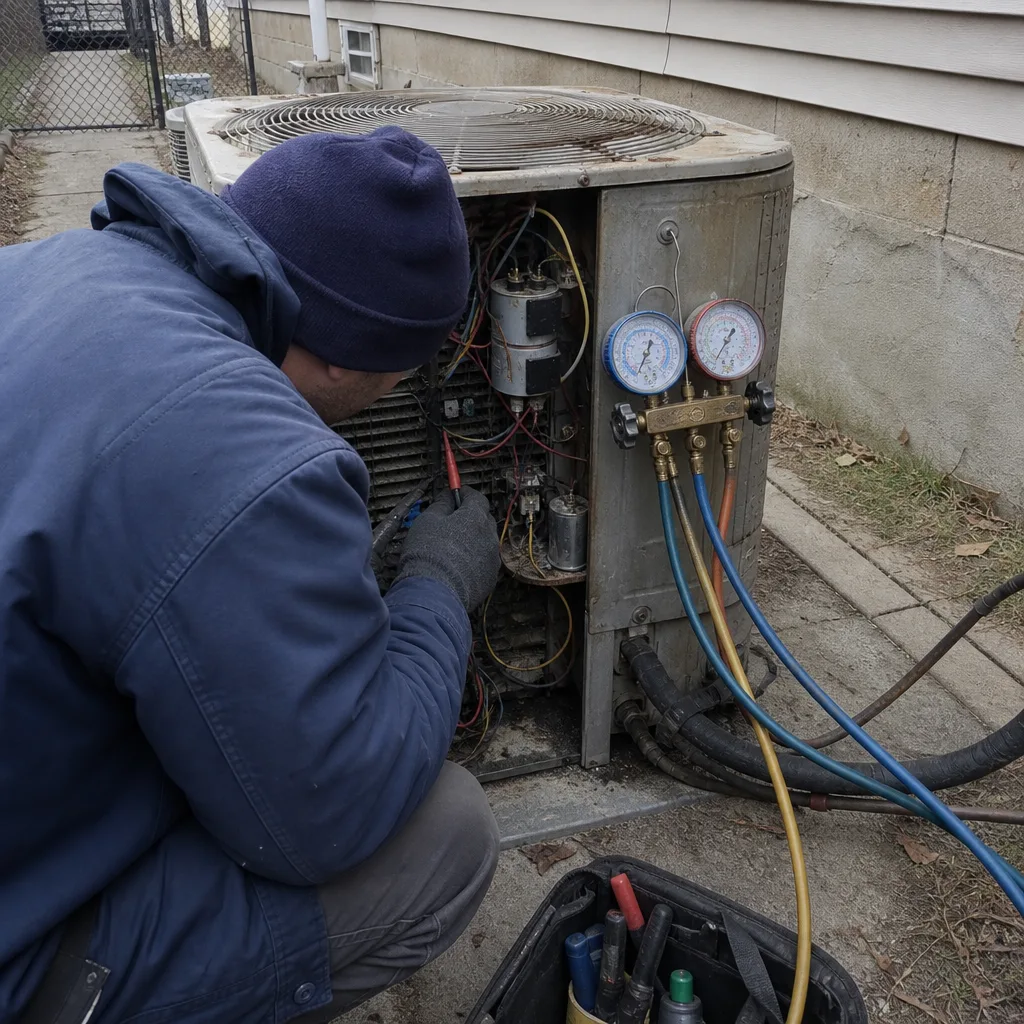 Before
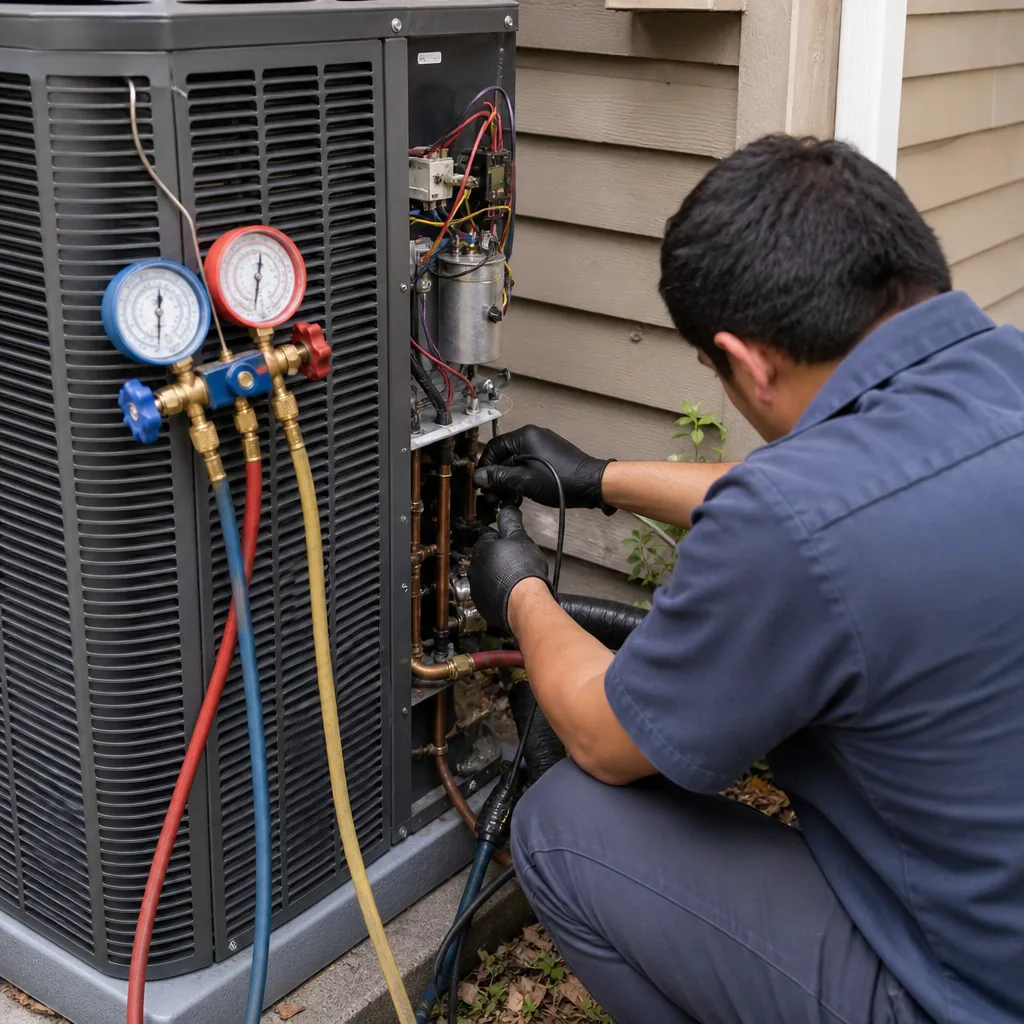 After
After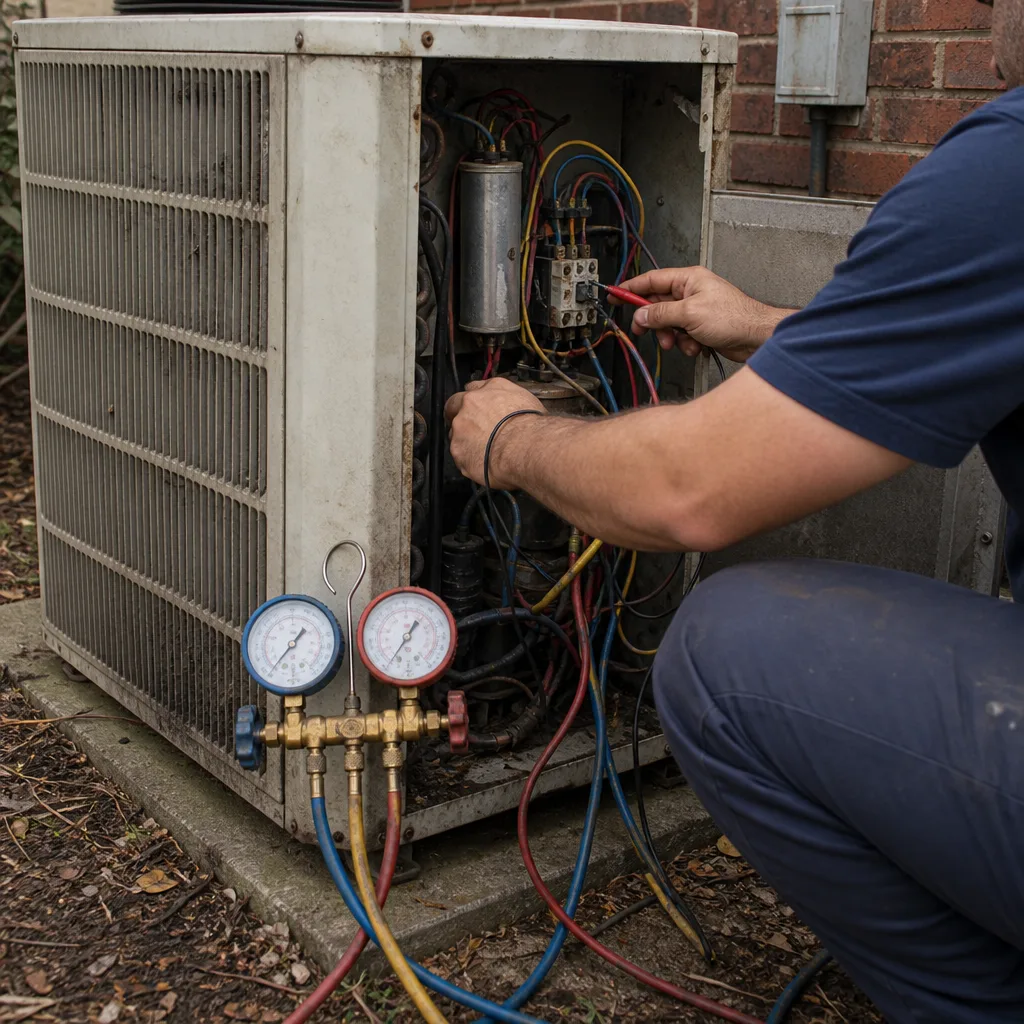 Before
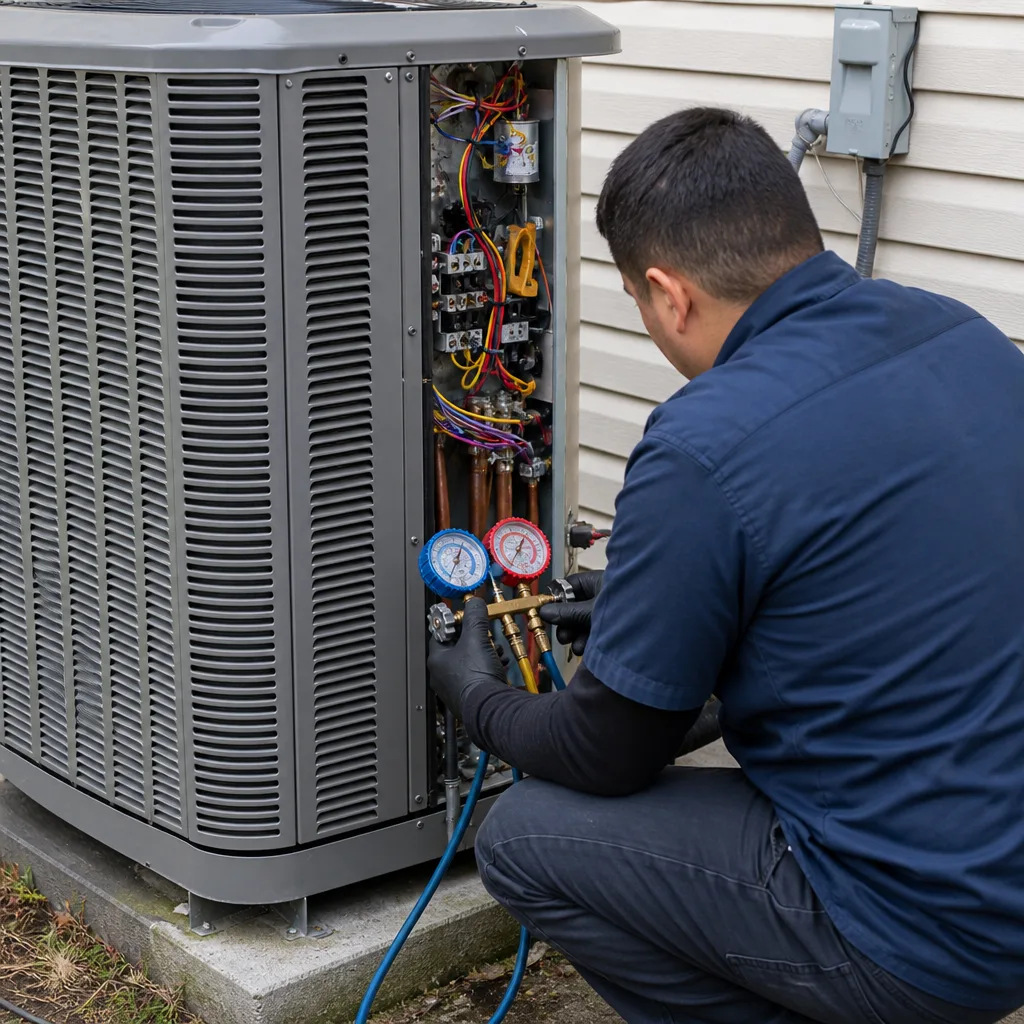 After
After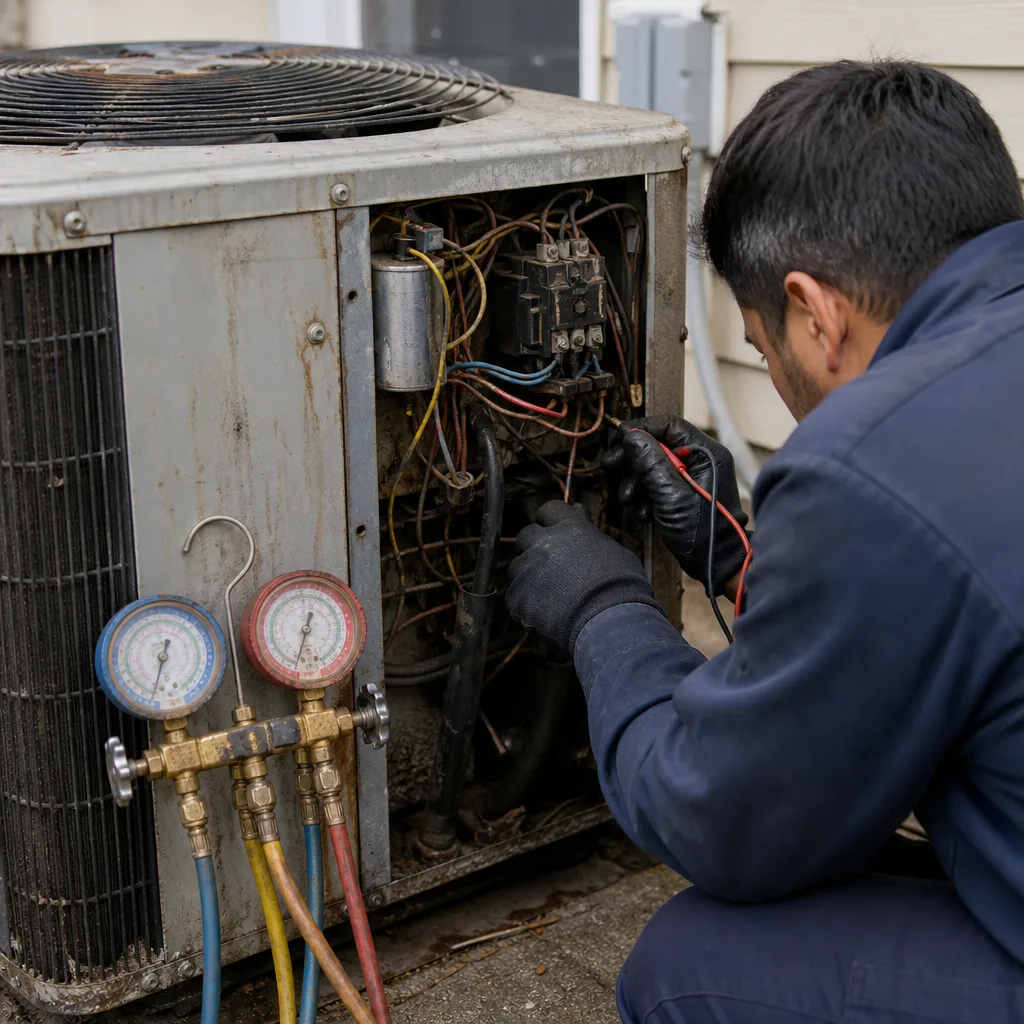 Before
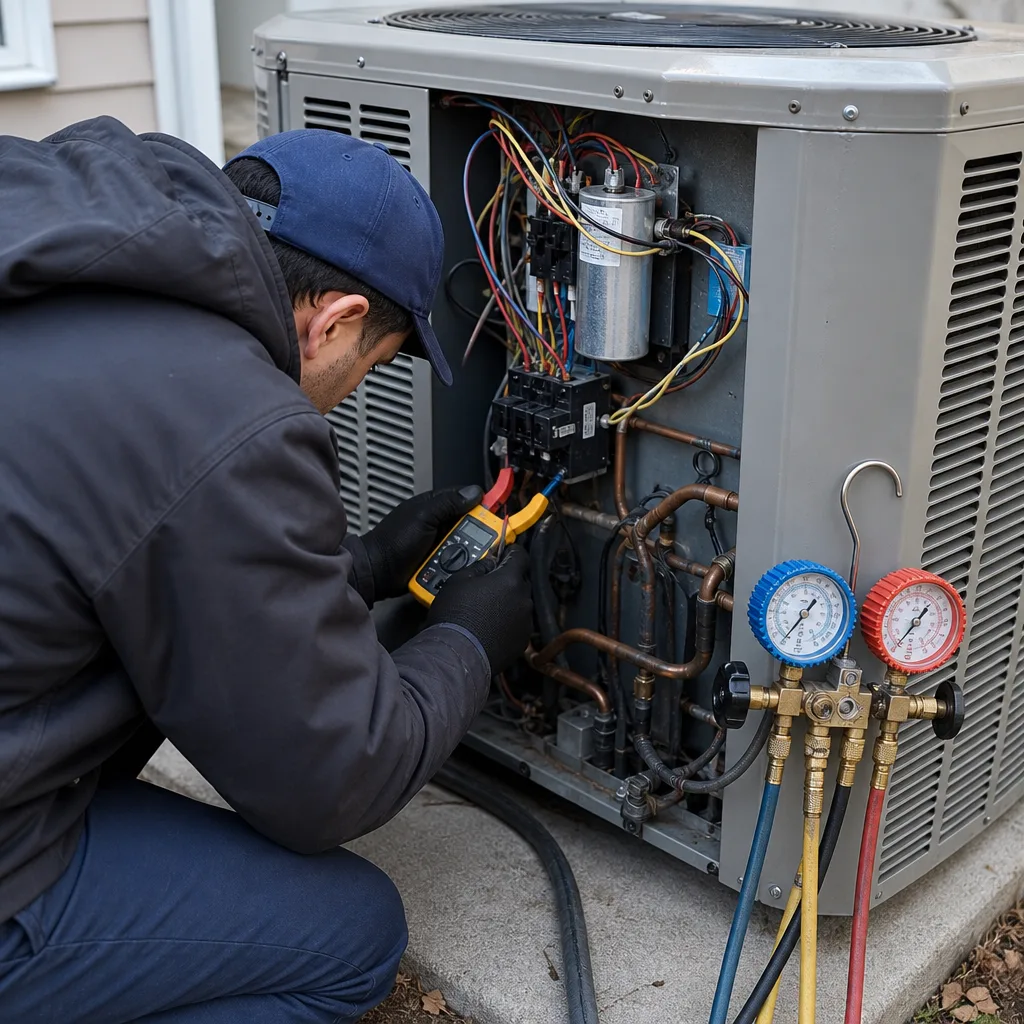 After
AfterFrequently Asked Questions
The most common HVAC warning sign we see in Queens is a banging or hammering sound from steam radiators and pipes, which indicates water hammer in the system. In forced-air homes, the most common sign is short cycling, where the AC or furnace turns on and off every few minutes due to an oversized system or a failing capacitor. Both are easy to dismiss as normal, and both get worse with time.
A banging radiator is a pressure event in the steam system, and while it usually doesn’t rupture immediately, it can crack a valve or fitting if left alone long enough. The banging happens when condensed water gets trapped in a low pipe and steam slams into it. Over years, the repeated impact fatigues the fittings, and the failure typically happens on the coldest night of the year when the system is working hardest.
Urgent warning signs are gas odor, ice on the refrigerant lines or outdoor unit, a breaker that trips more than once, and a burning smell that doesn’t fade after 30 minutes. Those need action within the hour. Signs that can wait up to two weeks include short cycling that’s consistent but not constant, a banging steam radiator, uneven temperatures between rooms, and a utility bill that’s 20-30% higher through two billing cycles.
Whistling at your vents means air is being forced through a restriction, most commonly a clogged filter, closed registers, or crushed flex duct. When a filter loads up, the blower pulls harder and air rushes through gaps, creating the whistle. Check the filter and open any closed registers first. If the whistle persists, the restriction is in the ductwork and a professional should inspect it.
That musty smell is biological growth on the evaporator coil or in the condensate drain pan. The coil sits in a damp, dark environment and condenses water all summer, and if the drain line clogs or the coil doesn’t dry properly between cycles, mold and bacteria develop. When the blower runs, it distributes that odor through the vents. The fix is a coil cleaning and drain service, not an air freshener.
Most HVAC diagnostic visits in Queens run $75-$150 for the service call, which is typically applied toward the repair if you proceed with the work. At Brandt HVAC Co Queens, we give a written price before any work starts, so you know the full cost of the diagnostic and the repair before we begin. Call (845) 328-4955 for an exact quote; estimates are free.
The Bottom Line
Your HVAC system talks to you. The banging steam pipe, the whistle at the register, the musty smell when the AC kicks on: these are signals, not background noise. In Queens, where pre-war steam systems and retrofit air conditioning live side by side, the warning signs are specific and the stakes are real. Learn the sounds. Note when they happen. Call before they become emergencies. For more guides & resources, visit our blog. A written price before any work starts, a live person on the phone 24/7, and a technician who arrives by name and photo are how we work at Brandt HVAC Co Queens. When you hear something, say something, to us at (845) 328-4955.
Written by Devin Marlowe, Owner at Brandt HVAC Co Queens, serving Queens since 2003.